
Introduction
1.1 Background and Research Context
The technology sector has experienced global rapid expansion and innovation, also evidenced in how the sector is driving increased levels of digital development and transformations worldwide (Paunov and Planes-Satorra, 2019; Rasul, 2024). Regardless, the tech sector faces significant challenge (Geroge, 2024) around gender disparities in female leadership, which studies (Mickey, 2022; Biswas, Roberts and Stainback, 2021) have posited to be a major factor limiting the potential of the industry. A recent survey by Belyh (2025) shows that women only make up 28% of global technology, and within roles related to computing, women only make up 25% of positions. These statistics further reflect the growing and significant underrepresentation of women in core technical roles in the global technology workforce. This imbalance according to commentators also reflects deeper structural, cultural and systems barriers challenging women’s equitable participation in work in the tech sector (Kuteesa et al. 2024)
Recent statistics by Pew Research (2023) further indicate that leadership roles within the global technology workforce reinforce gender disparities. Women it seems only make up 29% of leadership positions in technology related positions, while just 10% of Fortune 500 technology companies are led by female CEOs as at 2023 (Duchene, 2025).
These statistics demonstrate that women are largely excluded from strategic decision making, despite studies arguing that organizations that have gender-diverse leadership teams perform better (Bhardwaj, 2022). Yet these gender disparities remain within the global technology workforce it seems given also the lack of mentorship opportunities available to women, constrained career pathways and underlying organisational cultures that divert from supporting platforms where women’s leadership can flourish.
Pay inequality is another significant issue women face in the technology sector, as statistics from Gender Pay Gap Report (GPGR) (2025) shows that women in tech earn 84 cents for every dollar men earn, with the pay gap widening for roles at senior levels, as female leaders earn 20% less than men. Studies (Bowen, 2025; Hasyim and Bakri, 2024) have also linked how this gender pay gap affects intrinsic motivation, retention, morale and job satisfaction among female leaders and employees generally. Despite the challenges women face within technology-based workforce, their innovation and impact within the sector remains increasingly evident (Paunov and Planes-Satorra, 2019; Rasul, 2024). This is demonstrated by statistics that show that technology companies led by women achieve 35% higher return on investment (ROI) and diverse teams generate 30% more patents (Hoffschmidt-McDonnell, 2025). These statistics further reinforce the tangible benefits of gender inclusion in promoting good organisational culture, innovation and improved organisational performance.
The evidence is clear therefore, that gender disparities in the representation of female leadership, associated workplace experience and career progression remain ongoing debates in literature. These issues and gaps further reflect the need for a more context-specific investigation in fully understanding the challenges of women’s leadership within the global technology workforce. To provide a context-specific evaluation of the challenges surrounding women’s leadership in tech, this article examines Microsoft UK as a case study approach.
1.2 Statement of Problem
While studies (Alhassan and Al-Doghan, 2022; Raj et al. 2024; Simionescu et al. 2021) have established the increasing importance of gender diversity within leadership roles especially within the global technology industry, women still remain significantly marginalized and underrepresented within the sector. Empirical studies (Mickey, 2022; Biswas, Roberts and Stainback, 2021) have established how systematic barriers, discrimination at the workplace, limited career opportunity and mentorship and pay gaps collectively continue to enhance this marginalization of women in leadership positions in technology companies. Previous studies have extensively examined these issues though this paper, additionally explores the relationship between ideas of leadership development and pay disparity against the backdrop of this existing commentary. Such exploration is needed, given that organisations such as Microsoft UK, demonstrate an interest in female leadership programs through high profile initiatives (e.g. Women at Microsoft and TechHer). Yet their impact on advancing women into executive positions remains questionable and albeit underexplored.
1.3 Research Aim
Through exploring the effectiveness of leadership development initiatives, the relationship between women’s development as leaders and pay, this study seeks to raise awareness of the organizational cultural and structural constraints that persist around supporting women’s representation in leadership roles in major tech companies. In doing so, the article offers suggestions towards women’s progression into senior executive leadership positions in tech.
1.4 Research Questions
-
What sorts of leadership development initiatives are adopted at Microsoft UK, geared specifically in supporting the progress of women as leaders?
-
To what extent are these initiatives making a difference to women in senior leadership?
-
How does Microsoft UK’s gender pay gap compare with other major tech firms, and women’s leadership progression?
-
What barriers persist in constraining women’s advancement into senior leadership positions?
1.5 Justification for the study
This study is important because of the issues (gender underrepresentation, gender pay gap, lack of diversity, equity and inclusion among others) it seeks to address. This study identifies a critical gap in the global technology workforce that women remain underrepresented in senior leadership roles especially in the technology sector (Islam et al., 2025). Considering Microsoft around some of these ideas is a useful way of raising awareness of the continuing challenges that women’s leadership face in tech.
Article Structure: Next, I present an overview of the literatures around the key concepts addressed in this paper, and this is followed by the methodology section, findings, discussions and conclusions.
Overview of the Literature around key ideas
2.1 Conceptual Review
According to ICPM (2021), organisations that develop programs that encourage gender diversity in leadership benefit from improved decision making, stronger governance and improved organisational performance. Meyer, (2024) also noted that, women in executive roles were challenged with visibility and influence, contributing to the gap in female leadership in the UK.
To tackle this, leading technology companies have integrated into leadership development programs other initiatives aim at tackling gender disparities in leadership, including for example mentorship, sponsorship, training, executive coaching, careering planning (Beaupre, 2022). The evidence suggests (Grocutt et al. (2022) that these initiatives are developed with the specific objective of enhancing leadership skills, readiness and career growth for women. Organisational culture though plays an important role in determining how organisations develop leadership initiatives and the approaches these organisations will adopt (Alvesson, 2012). Alvesson (2012) argued that organisational cultures that are male driven or gender exclusive, initiate values that repeatedly limit women’s leadership visibility further stalling their career progression. This therefore implies that for organisations to have better gender representation, working towards developing cultures that foster values of inclusiveness is essential (Serpa, 2016).
2.2 Overview of Leadership Theories
Leadership theories and frameworks have developed significantly in the past years. These theories provide evidence on how people influence or persuade others to accomplish a defined organisational goal or objective. These theories explored how intrinsic personal traits influence leadership styles and how they can be applied in different organisational contexts (Horner, 1997; Bagley, 2000). One of the earliest leadership theory is the Trait Theory, which argues that effective leaders have inherent attributes such as intelligence, self-assurance, and decisiveness (Richardson, 2011). This theory argues that these innate traits play collective role in forming the foundation of leadership skills. This theory argues that leaderships is mostly innate and leaders are born and not made (Penny, Kelloway and O’Keefe, 2015). Richardson (2011) also argues that individual attributes alone cannot adequately explain leadership effectiveness, further criticizing this viewpoint for ignoring situational and social influences.
Leadership theories also expanded beyond attributing leadership to physical traits, it shifts the focus from leaders’ physical attributes to leaders’ actions in determining their effectiveness. This therefore implies that leadership can be acquired and enhanced through relevant training and mentorship systems, disclaiming the arguments by trait theory that leaders are only born. Leadership as a skill that can be acquired through training also aligns with Institute of Project Management (ICPM) (2024) which defines leadership as a collection of observable skills, especially in project contexts requiring team coordination, collaboration and communication. Based on this, theories of situational; and contingency leadership become more prominent at the organisational level. This further brought about earlier theories such as situational, transformational, transactional leadership theories among others. Studies have argued that varying organisational context, culture, employee readiness and task complexity are some variables that shaps a leader’s effectiveness rather than a single style. In agreement Adam (2009) added that one of the most important attributes of an effective leader is the ability to adapt, motivate and be flexible to change. Table 1 provides an overview of some select earlier leadership perspectives that have informed current contemporary debates. Overall, leadership theories have progressed from static, leader-centered models to more inclusive and adaptive frameworks. This evolution underscores the importance of context, relationships, and values in understanding effective leadership in contemporary organisations, ideas that are very much reminiscent of debate on female leadership qualities.
Table 1 Evolution of some earlier Leadership Theories
| Leadership Theory | Time Period / Development | Key Focus / Idea | Key Authors / Scholars | Notes / Implications |
|---|---|---|---|---|
| Trait Theory | Early 1900s – 1940s | Leaders have inherent traits (e.g., intelligence, confidence, decisiveness) that distinguish them from non-leaders | Richardson (2011) | Criticized for ignoring context and social factors; foundation for later leadership research |
| Behavioural Theory | 1940s – 1960s | Focus on leaders’ behaviors rather than traits; leadership can be learned and developed | Douglas McGregor (1960) | Emphasizes observable competencies; applied in project and organisational management |
| Contingency / Situational Leadership Theory | 1960s – 1980s | No single leadership style works in all situations; effectiveness depends on context and follower readiness | Adams (2009) | Highlights flexibility and adaptability as central to leadership effectiveness |
| Transformational Leadership Theory | 1970s – 1990s | Leaders inspire and motivate followers, foster innovation, and pursue shared vision | Griffiths (2013) | Particularly relevant in fast-changing, competitive, and collaborative organisations |
| Ethical / Servant Leadership Theory | 1980s – Present | Leadership as moral responsibility; prioritizes ethics, trust, and service to followers | Keogh (2011) | Focuses on integrity, stakeholder accountability, and values-driven leadership |
| Relational / Contemporary Leadership | 2000s – Present | Leadership as socially constructed, relational, and collective; not confined to formal authority | Richardson (2011) | Reflects modern organisational realities: teamwork, distributed leadership, and inclusive practices |
2.3 Women Leadership in the Technology Industry
Despite the industry's reputation for innovation and advancement, women are still disproportionately under-represented in the technology sector. Women only make up around 25% of the global tech workforce, according to recent data, and the disparity is even more pronounced in senior roles, where they make up just 11% of executive positions (Skillsoft, 2023). These numbers suggest the need to explore the enduring structural and cultural obstacles that prevent women from progressing in a field dominated by men.
The Skillsoft Women in Tech Report reveals systemic issues like gender bias, a lack of mentorship, and limited access to leadership development opportunities. It offers a thorough understanding of women's experiences across career stages and industries (Skillsoft, 2023). These challenges contribute to high turnover rates among women in technology lending also to slowing career advancement. Due to workplace cultures that limit their contributions and leadership potential, lack of sponsorship, and exclusion from powerful networks, many people quit the sector in the middle of their careers (McKinsey, 2020).
Crucially, the gender gap in technology has significant cultural and economic ramifications and is not just a problem for women. Diverse teams consistently perform better, exhibiting higher levels of creativity, invention, and problem-solving skills, according to research (Hunt et al., 2018). The industry's ability to innovate and maintain its competitive edge may be hampered by a workforce that lacks gender diversity. Economically speaking, reducing gender disparities in leadership and employment could boost global GDP by an estimated $12 trillion by 2025, supporting the claim that gender inclusion is both morally and financially necessary (McKinsey & Company, 2020).
A multi-layered organisational approach is necessary to address these disparities. Strong diversity, equity, and inclusion policies that actively combat prejudice, increase promotion route transparency, and establish fair access to professional growth must be put in place by businesses. Programs for sponsorship and mentoring are especially crucial for boosting awareness and assisting women in assuming leadership positions (Ely et al., 2011). Additionally, highly skilled women, especially those juggling work and family obligations, can be retained in inclusive and flexible work environments. Collectively, these strategies are essential for creating a sustainable female leadership pipeline and transforming the gender landscape within the technology sector.
2.4 Organisational Culture and Structural Barriers
Previous empirical studies have repeatedly argued that the success or failure of leadership development initiatives is inseparable from organisational culture, particularly within the technology industry where gendered norms shape career progression (George, 2024; Kuteesa et al., 2024). Bias in performance evaluation remains particularly influential: assertive behavior in women is often interpreted negatively, while similar behavior in men is viewed as leadership strength, reinforcing long-standing cultural stereotypes that restrict women’s advancement (Alhassan & Al Doghan, 2022). Cultural barriers also manifest through “bro-culture,” lack of psychological safety, and informal gatekeeping within male-dominated teams—conditions widely documented in studies of gender inequality and networking practices in tech organisations (Mickey, 2022).
Work-life balance remains another contested dimension. Although technological firms frequently promote flexible work arrangements, women often report a persistent stigma attached to using such benefits, which in turn affects promotion outcomes (Kuteesa et al., 2024). Senior leadership roles in tech typically demand visibility, long hours, and continuous availability, conditions that disproportionately disadvantage women with caregiving responsibilities and reflect leadership pathways shaped around traditional male career trajectories (George, 2024).
Recent literature also highlights specific leadership qualities that enable women to thrive in senior tech-oriented roles, including strategic communication, political skill, transformational leadership, emotional intelligence, negotiation capability, and self-advocacy (Alhassan & Al Doghan, 2022; Raj et al., 2024). However, researchers caution against framing these competencies as deficiencies in women; rather, women frequently possess these capabilities but struggle to gain recognition within biased organisational systems that reward traditionally masculine leadership behaviors (Biswas, Roberts & Stainback, 2021).
Positioning strategies, how women present and leverage their expertise within organisational power structures, have similarly emerged as a significant determinant of leadership progression. Successful positioning is often dependent on sponsorship, visibility, alignment with organisational priorities, and access to influential networks, elements shown to be unequally distributed in tech organisations (Mickey, 2022). Nevertheless, the literature highlights a structural paradox: the behaviors that secure visibility and influence may simultaneously violate gender expectations, creating a “tightrope” in which women must balance competence with social acceptability (George, 2024). This paradox underscores the cultural and structural constraints within which women navigate leadership development in the technology sector.
2.5 Case Study: Leadership Overview in Microsoft UK and the UK Tech Sector
Microsoft UK, a subsidiary of Microsoft Corporation, provides software, cloud, and technology-driven solutions.
| Aspect | Details |
|---|---|
| Company Name | Microsoft UK |
| Parent Company | Microsoft Corporation |
| Founded | 1975 |
| Founders | Bill Gates and Paul Allen |
| Headquarters | Redmond, Washington, USA (Global HQ); UK offices in Reading, London, and elsewhere |
| Core Services / Products |
|
| Competitors |
|
Industry report shows that leadership in Microsoft UK remains male-dominated, with women representing 25.2% of senior roles in 2025. Although women’s share in leadership has gradually increased from 22.1% in 2019, it remains significantly below the UK corporate benchmark of 35.3% (FTSE 350 average, Richter, 2021) and board-level representation of 41–43% in larger UK tech firms Statista (2025), survey year. These figures indicate a persistent leadership pipeline gap, reflecting broader industry trends where women are underrepresented in executive positions despite strong participation in technical and overall workforce roles.
Reports also reveal that Microsoft UK reports the lowest proportion of women in leadership among major tech firms (26%), despite a relatively high proportion of women in technical roles (46.3%) {Microsoft, 2025). This highlights the challenge of translating workforce representation into senior leadership positions, consistent with Glass Ceiling Theory and Eagly and Carli’s Labyrinth of Leadership, where systemic barriers impede progression.
Microsoft UK has implemented multiple initiatives to support women’s leadership development, including ERGs, DigiGirlz, Codess, TechHer, the Cloud Accelerator, and the Power Women Awards (George, 2024). These programs provide networking, mentoring, visibility, and executive readiness, addressing pipeline gaps from early STEM engagement to senior leadership preparation. Comparative analysis shows Microsoft UK’s approach is more holistic than peers like Google, Amazon, Apple, and Meta, yet the moderate female representation in leadership reflects structural, cultural, and networking barriers that remain unaddressed (Canrun, 2023).
2.6 Theoretical Review
Glass Ceiling Theory
The unseen, structural obstacles that keep competent women and other marginalized groups from rising to senior leadership roles while having the requisite training, experience, and education are explained by the Glass Ceiling Theory. These obstacles are ingrained in organisational cultures, procedures, and power structures rather than being explicitly mentioned. The idea emphasizes how upward mobility is hampered by gender preconceptions, biased promotion procedures, restricted access to powerful networks, and exclusion from decision-making areas (Grout et al. 2009). Women are still under-represented at executive levels in male-dominated fields like technology due to the glass ceiling, which is maintained by subtle discrimination and unequal opportunity. The theory is frequently applied to examine leadership disparities and promote organisational improvements that are structural and policy-based.
| Aspect | Explanation |
|---|---|
| Origin |
• Coined in the 1980s • Developed within gender and organisational inequality studies |
| Core Idea |
• Invisible barriers block advancement • Barriers persist despite qualifications and performance |
| Key Barriers |
• Gender stereotypes • Biased promotion and evaluation systems • Exclusion from networks and mentorship |
| Organisational Factors |
• Male-dominated leadership cultures • Informal decision-making processes • Lack of transparency in career progression |
| Relevance to Tech Industry |
• Explains women’s underrepresentation in senior tech roles • Highlights structural inequality beyond individual capability |
| Implications |
• Need for policy reform • Bias training and inclusive leadership pipelines |
2.7 Gap in literature
The unnoticed, structural obstacles that keep competent women and other marginalized groups from rising to senior leadership roles despite having the requisite training, experience, and education are explained by the Glass Ceiling Theory (Grout et al. 2009). These obstacles are ingrained in organisational cultures, procedures, and power structures rather than being explicitly mentioned. The theory emphasizes how upward mobility is hampered by gender stereotypes, biased promotion procedures, restricted access to powerful networks, and exclusion from decision-making areas. Women are still under-represented at executive levels in male-dominated fields like technology due to the glass ceiling, which is maintained by subtle discrimination and unequal opportunities (Biswas, Roberts & Stainback, 2021). The theory is frequently applied to analyze leadership disparities and the promotion of structural and policy-based organisational reform.
Methodology
3.0 Introduction
This section presents methodological choices guiding this study.
According to Saunders et al. (2019) research onion, this section
addresses the study’s research philosophy and methodology, and
additional the methods of data collection and analysis, ethics and study
limitations.
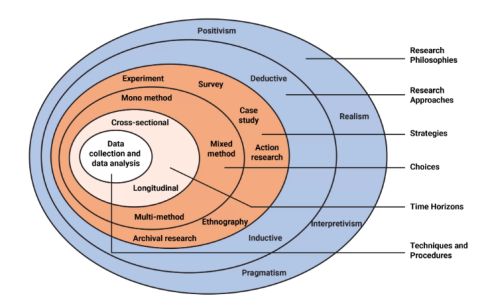
Figure 3.1: Saunders et al. (2019)
3.1 Research Onion Framework
Table 3.1 below highlights the different layers of the research onion and demonstrates how each layer aligns with the objectives of this study towards exploring how women’s leadership development and progression at Microsoft UK have faced transformation.
Table 3.1: Research Onion Table
| Layer | Approach Selected | Justification (Concise) |
|---|---|---|
| Research Philosophy | Pragmatism | Adopts both quantitative and qualitative data in investigating leadership experiences and gender dynamics within Microsoft UK. |
| Research Approach | Inductive | Develops insights and patterns from mixed data rather than testing predefined theories, supporting descriptive research aims. |
| Research Strategy | Case Study (Microsoft UK) | Provides a context-specific examination of leadership development and female leadership pipeline trends within one organisation. |
| Methodological Choice | Mixed Methods – Qualitative and Quantitative | Uses qualitative and quantitative methods based on secondary sources, aligning with interpretivist and inductive foundations. |
| Data Collection Method | Secondary | Gather secondary data from credible sources and reports. |
| Time Horizon | Longitudinal | Examines how leadership development and women’s progression have evolved over time, using historical secondary data across multiple years. |
Sources: Saunders et al. (2018); Rindfleisch et al. 2008
3.2 Data Source
This study uses secondary data drawn from specific, credible sources, including Microsoft UK Diversity, Equity and Inclusion (DEI) reports, the Microsoft Gender Pay Gap Report, Microsoft leadership development program documents, company policy reports, and academic literature from journals such as the International Journal of Human Resource Management and Leadership & Organization Development Journal. These sources are relevant as they provide detailed organisational insights and longitudinal evidence needed to explore how women’s leadership development has evolved over time. Secondary data is cost-effective, accessible, and allows analysis across multiple years, strengthening the study’s descriptive focus (Kelly et al. 2024). Limitations include potential organisational bias, lack of participant perspectives, and reliance on published information, but these sources remain appropriate and sufficient for addressing the research aim and objectives (Baldwin et al. 2022).
3.3 Method of Data Analysis
Data will be collected through secondary qualitative sources, including organisational reports, policy documents, and academic literature, in line with the case study strategy. Analysis will use thematic analysis (for qualitative data) and descriptive statistics (for quantitative data) to identify patterns and trends in leadership development and women’s progression over time.
3.4 Search Strategy
Data will be collected through secondary qualitative sources, including organisational reports, policy documents, and academic literature, in line with the case study strategy. The Bolgain (2014) method will guide the search strategy, using combinations of keywords from the research themes or issues such as:
“women” + “technology firms”
“female leadership” + “career progression” + “Microsoft”
“diversity” + “senior roles” + “UK”
“leadership development” + “Microsoft” + “women”
“gender equality” + “technology industry” + “UK”
“female executives” + “promotion” + “Microsoft UK”
“inclusive leadership” + “career growth” + “technology firms”
“gender pay gap” + “leadership” + “Microsoft”
“diversity and inclusion” + “senior management” + “UK technology firms”
Data will be analyzed using thematic analysis to identify patterns and trends in leadership development, inclusion, diversity, and women’s progression over time. This approach aligns with the interpretivist philosophy and supports the study’s objectives of exploring the evolution, challenges, and organisational factors influencing female leadership at Microsoft UK.
3.5 Ethical Considerations
This study fully adhered to the ethical standards set by the University of Salford. As the research relies exclusively on secondary data, no direct involvement of human participants was required, and therefore informed consent did not apply. All data sources were carefully selected, while citations ensured academic integrity, and respect of intellectual property. The study ensures that personal data or identifying information is not available or disclosed, and that the use of organisational and published data would not cause any harm, risk, or psychological discomfort (Hasan, 2021). The research process follows the ethical principles outlined by Suri (2020), maintaining integrity, transparency, and respect for all original contributions.
3.6 Methodological Limitations
This study acknowledges several methodological and practical limitations that may influence the findings. Methodologically, the reliance on secondary quantitative and qualitative data means the research is constrained by the scope, depth, and availability of existing reports and literature, which may not fully capture the personal experiences or internal organisational dynamics of women in leadership at Microsoft UK. Additionally, secondary sources may contain inherent bias, as organisations often present information in a favorable light. Practically, the study focuses on a single case study within the UK technology sector, which may limit the generalizability of the findings to other organisations, industries, or cultural contexts. These limitations could affect the interpretation of results, as conclusions are drawn from existing published data rather than primary engagement with participants. Nonetheless, careful selection of credible sources and thematic analysis will help mitigate these issues and provide meaningful insights into female leadership development.
Secondary Data Analysis and Findings
This section presents findings from the secondary data that reveals how women’s representation and leadership in Microsoft UK and the broader United Kingdom Technology sector. This study adopts qualitative and quantitative comparative research design, and gathered data from published workplace, leadership, gender pay reports and data from credible sources like Microsoft reports, UK government datasets, and industry reports. Data gathered is further presented in tables and charts, which allows for direct comparison across different time periods.
Table 4.1: Showing Share of Female-Held Leadership Positions in FTSE Companies (UK, 2024)
| Leadership Position | FTSE 100 (%) | FTSE 250 (%) | FTSE 350 (%) |
|---|---|---|---|
| CEOs | 9.4 | 6.1 | 7.3 |
| Executive Directors | 22.0 | 12.0 | 15.6 |
| Non-Executive Directors | 50.1 | 49.8 | 49.9 |
| Boardrooms (overall) | 44.7 | 42.6 | 43.4 |
Source: Statista (2025), survey year 2024
Region: United Kingdom
The foregoing data as seen in table 4.1 shows that women in the past years have made strong progress in non-executive director roles across FTSA firms, reaching over 40% representation. The data also showed how representation of women in executive leadership roles drop sharply, as fewer than one in ten executive directors and CEO positions are occupied by women. This further reveals a persistent leadership pipeline gap in the technology sector. This is also in agreement with empirical studies, these findings suggest that while women are increasingly involved in board-level and oversight roles, there are still significant structural and progression challenges that limits women from advancing to senior operational leadership (Islam et al., 2025).
RQ1: What sorts of leadership development initiatives are adopted at Microsoft UK, geared specifically in supporting the progress of women as leaders?
This is addressed using secondary data to analyze and identify leadership development initiatives implemented by Microsoft UK across different time periods.
Table 4.2: Showing leadership development that currently exists at Microsoft UK to facilitate the progress of women into senior leadership positions
| Time Period | Initiative / Programme (Microsoft UK) | Type of Initiative | Leadership Development Elements |
|---|---|---|---|
| 2000–2010 | Foundational D&I & ERG setup | Internal Diversity & Support | Women at Microsoft ERG established (networking & support) |
| 2010–2016 | DigiGirlz (global, UK participation) | Outreach & pipeline | Encourages girls into tech careers |
| 2013 onwards | Codess (global community) | Networking & coding community | Builds women coder networks |
| 2016–2024 | TechHer (Microsoft UK) | Digital skills & upskilling | Provides free tech training (AI/cloud/career skills) that underpins leadership readiness |
| Late 2010s Onward | Internal Employee Resource Groups (ERGs) – Women & Allies | Internal support network | Community, mentoring, visibility; indirectly supports leadership progression |
| ~2019 | Cloud Accelerator Program (female-led startups) | Entrepreneurship & mentorship | Access to cloud tech, mentorship, business growth |
| 2023–2024 | Microsoft Power Women Awards & Leadership Program | Recognition + executive leadership training | Award winners invited to bespoke Women’s Leadership Program at INSEAD |
| Ongoing (2020s) | International Women’s Day events (UK) | Awareness & empowerment | Senior leaders share insights, celebrate women’s achievements |
| Ongoing global / UK-relevant | Annual Diversity & Inclusion reporting | Transparency & accountability | Tracks representation; informs leadership inclusion focus |
| Other collaborations (2010s–2020s) | Cybersecurity diversity programs (UK region-specific) | Skills & leadership pipeline | Women in cyber communities and leadership in niche technical domains |
(Microsoft Corporation, 2020; Microsoft UK, 2021; Microsoft UK, 2023; Microsoft UK, 2024; GOV.UK, 2024; Catalyst, 2022; McKinsey & Company, 2023)
Findings from table 4.2 shows a longitudinal overview of leadership initiatives for leadership development for women at Microsoft. The data shows that these initiatives have evolved from foundational inclusion structures to targeted leadership acceleration. Data also showed how early efforts focused on pipeline building through outreach and networking (e.g., ERGs, DigiGirlz, Codess), similar to industry peers. More recent programs, such as TechHer and the Microsoft Power Women Awards, place stronger emphasis on leadership readiness and executive development than many competitors.
RQ2: To what extent are these initiatives making a difference to women in senior leadership?
The effectiveness of the leadership initiatives is evaluated through longitudinal leadership representation data and comparison with national benchmarks.
Table 4.3: Showing Microsoft UK Leadership Representation (2019–2025)
| Year | Men% | Women% |
|---|---|---|
| 2025 | 75.5% | 25.2% |
| 2024 | 75.5% | 25% |
| 2023 | 77.7% | 23.3% |
| 2022 | 79.1% | 20.9% |
| 2021 | 77.8% | 22.2% |
| 2020 | 77.5% | 22.5% |
| 2019 | 77.9% | 22.1% |
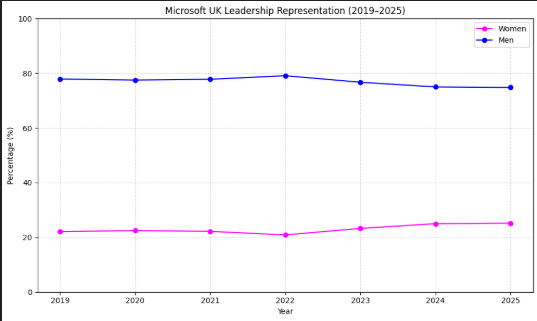
Figure 1.1: Showing Microsoft UK Leadership Representation (2019–2025)
The foregoing data as seen in table 4.3 and Figure 1.1 shows that between 2019 and 2025, Microsoft UK leadership remained male-dominated, though women’s representation shows gradual improvement. In 2019, women accounted for 22.1% of leadership roles, compared with 77.9% held by men. Women’s share fluctuated slightly in the early years, dipping to a low of 20.9% in 2022, before increasing steadily thereafter. By 2023, women represented 23.3% of leaders, rising to 25% in 2024 and 25.2% in 2025. Despite this upward trend, men consistently occupied around three-quarters of leadership positions, indicating persistent gender imbalance at senior levels.
Table 4.4: Showing UK Corporate/Tech Leadership Benchmarks (2024–2025)
| Benchmark Group | Women in Leadership (%) | Context / Notes |
|---|---|---|
| FTSE 350 companies (average) | 35.3% | Senior leadership roles across 350 largest UK firms |
| FTSE 100 companies (avg exec) | ~36.6% | Exec committees; UK broader corporate benchmark |
| UK tech sector senior leaders | ~20–21% | Women in senior UK tech leadership roles broadly |
| Tech company boards — FTSE tech firms | ~41–43% | Women on boards of larger UK-listed tech firms |
| UK tech scale-ups (board roles) | ~18% | Smaller tech firms lag on gender board diversity |
| UK fastest-growing tech boards (varied) | ~22% | Revenue >£50m firms — boards |
Source: Gov.UK, 2025; Brand, 2024; Williams, 2025
The data (table 4.4) indicates that women’s representation in UK corporate leadership varies significantly by sector and firm size. In large publicly listed companies, such as FTSE 350 and FTSE 100 firms, women hold roughly 35–36% of senior leadership roles, reflecting progress in governance-focused diversity initiatives. In the tech sector, women are underrepresented in senior leadership (~20–21%), though board-level representation in larger tech firms is higher (~41–43%). Smaller tech scale-ups and high-growth firms lag further, with only ~18–22% of board positions held by women. Overall, the data highlights persistent gaps, particularly in operational and senior leadership roles within tech.
Table 4.5: Showing Microsoft UK vs. Broader UK Benchmarks
| Representation Metric | Microsoft UK (2024) | UK Benchmarks | Comparison/Insight |
|---|---|---|---|
| Women in Leadership Roles | 25.2% | FTSE 350 avg 35.3% | Below the UK corporate average, lagging broader business leadership standards |
| Women in Workforce | 32.2% | UK tech workforce leadership ~20–21% | Above typical senior tech leadership % (but this mixes levels) |
| Women on Boards (tech firms) | N/A | ~41–43% in larger firms | Microsoft UK does not publicly disclose board breakdown; broader tech boards outperform at this level |
| Women in Technical Roles | 46.3% | UK tech general leadership ~20–21% | Strong representation in technical pipeline but not translating equally to leadership |
Source: Microsoft, 2025; Gov.UK, 2025; Bloomberg, 2025
Table 4.5 shows that Microsoft UK’s women representation is mixed compared with UK benchmarks. Women hold 25.2% of leadership roles, below the FTSE 350 average of 35.3%, indicating underrepresentation in senior management. However, women comprise 32.2% of the overall workforce and 46.3% of technical roles, exceeding typical UK tech sector senior leadership averages (~20–21%), highlighting a strong talent pipeline. Board-level representation is not publicly disclosed, though larger UK tech boards average ~41–43% women. Overall, Microsoft UK demonstrates strong gender participation in technical and workforce roles, but progress into leadership and board positions remains limited.
RQ3: How does Microsoft UK’s gender pay gap compare with other major tech firms, and what women’s leadership progression?
To examine whether pay equity reflects leadership progression opportunities, gender pay gap data across major UK technology firms was comparatively analyzed.
Table 4.6: Gender pay gaps between Microsoft UK and four other major UK tech companies
| Company (UK) | Median Gender Pay Gap | Interpretation | Source |
|---|---|---|---|
| Microsoft UK | 6.3% (women earn ~94p per £1) | Women’s median hourly pay ~94p for every £1 men earn | Microsoft UK report |
| Amazon Digital UK | 6.5% (women earn ~94p per £1) | Women’s median hourly pay ~94p for every £1 men earn | Amazon Digital UK pay gap report |
| Facebook UK | 3.8% (women earn ~96p per £1) | Women’s median hourly pay ~96p for every £1 men earn | Facebook UK pay gap report |
| Apple UK | 19% median | Women’s median hourly pay ~81p per £1 men earn | Apple UK Gender Pay Gap Report |
Source: Microsoft, 2025; Gov.UK, 2024; Gov.UK. 2025; Office of National Statistics, 2024
Table 4.6 shows that Microsoft UK, Amazon Digital UK, and Facebook UK have relatively small median gender pay gaps (3.8–6.5%), meaning women earn roughly 94–96p for every £1 men earn. This indicates near pay parity in median hourly wages. In contrast, Apple UK’s gap is substantially higher at 19%, with women earning only ~81p per £1, highlighting a significant disparity. These figures reflect median hourly earnings and provide a snapshot of pay equity in the UK tech sector, showing that while some firms approach parity, others still have notable gender-based pay imbalances. We see from tables 4.5 and 4.5 concerns around both female leadership and women’s pay in Microsoft, raising questions about the underlying structural, perhaps cultural barriers lending to such trend,
RQ4: What barriers persist in constraining women’s advancement into senior leadership positions?
To identify structural and systematic barriers limiting leadership progression, industry-wide comparative datasets are analyzed alongside thematic synthesis of secondary literature.
Table 4.7: Showing the Percentage of Female Representation across Workforce, Technical Roles, and Leadership Positions in Major Technology Companies
| Company | Women in Leadership Jobs (%) | Women in Tech Jobs (%) | Women in Total Workforce (%) |
|---|---|---|---|
| Amazon | 29% | N/A | 45% |
| 34% | 24% | 37% | |
| Apple | 31% | 24% | 34% |
| 28% | 25% | 33% | |
| Microsoft | 26% | 23% | 29% |
Source: Richter, (2021)
The data in table 4.7 shows persistent gender disparities across major technology companies. All major tech companies reveal an under representations of women’s employment, in terms of overall workforce, women in tech and leadership roles. Employment and recruitment practices around employing more women in tech, alongside a shift or overhaul towards gender inclusive cultures is needed it seems. Facebook records the highest proportion of women in leadership roles (34%), followed by Apple (31%) and Amazon (29%), while Microsoft reports the lowest leadership representation at 26% (though this percentage constitutes a high proportion of women employed overall) . Women’s participation in technical roles remains limited across firms, averaging around 23–25%, highlighting a narrow pipeline into senior positions. Overall workforce representation is higher, particularly at Amazon (45%), indicating that although women are well represented overall, this presence does not proportionately translate into technical or leadership roles across the sector. The gap between total workforce participation and leadership representation demonstrates that enhancing entry-level diversity does not correspondingly lead to advancement in senior leadership roles. These results perhaps corroborate assertions that organizational structures, promotion trajectories, and occupational segregation hinder female leadership opportunities, raising questions about the purpose and perhaps efficacy of leadership development programs in cultures which questionably point towards systemic inequities (McKinsey & Company, 2025).
These disparities can further be explained by structural, cultural, pipeline, pay and perception barriers, captured and evidenced by the study’s qualitative analysis (table 4.8).
Table 4.8: Thematic Qualitative Analysis of Barriers Contributing to Gender Disparities in Major Technology Companies
| Theme | Subtheme | Coded Interpretation | Evidence / Observation | Illustrative raw data from literature sources | Studies / References |
|---|---|---|---|---|---|
| Structural Barriers | Organisational bureaucracy | Slow Promotion cycle | Slow promotion cycles, limited access to executive decision-making, hierarchical structures impede women’s progression despite development programs (see Table 4.3 & 4.5) | “Structural barriers persist as Women continue to encounter less career assistance and limited advancement chances when organizations exhibit a waning commitment to their professional development” (Krivkovich et al., 2025). | Worall, 2012; Crompton and Le Feuvre, 1991; Whawell, 2022; Ren and Clarke, 2025. |
| Cultural Barriers | Male-dominated culture | Male-centric norms | Persistent male-centric leadership norms reduce women’s visibility and influence in senior roles |
“The cultural barriers that lend to the lack of representation of women in the technology industry include gender dynamics that lean to the favor of men.” “Historically, this field has been represented predominately by Male staff which poses a structural imbalance that is deeply embedded within the technology sector, leaving the minority group less visible or unseen.” (Banton et al., 2025). |
Berglind and Tarkian, 2025; Thelma and Ngulube, 2024; Rajha and Ruiter, 2025; Luna, 2025. |
| Pipeline & Networking Gaps | Limited access to informal networks | Lack of Mentoring and Networking | Women’s lower participation in high-visibility projects and mentorship networks hinder translation of skill development into career advancement (Table 4.2) |
“Despite advancements in aiding women in technology sectors, enduring obstacles such as inadequate mentoring, gender prejudice, Networking and exclusion persistently hinder growth and promotion.” (Banton et al., 2025). “Women frequently report their exclusion from strategic discussions typically held within informal male networks.” (Chanda & Ngulube, 2024). |
Eswaran et al. 2024; Yarberry, 2024; Muthiah, 2025 |
| Pay & Reward Discrepancies | Compensation not aligned with seniority | Underrepresentation in high-paying roles | Even with low median pay gaps (Table 4.6), women are underrepresented in top-paying executive roles |
“Despite comprising nearly half of entry-level position, women are markedly underrepresented in senior leadership positions.” “This decline indicates structural obstacles in promotion procedures and organizational frameworks that hinder women's progression.” (World Economic Forum, 2023). |
Webster, 2025; Chaudhry, Wall and Wall, 2019; Malladi and Mean, 2021; Merluzzi and Dobrev, 2015 |
| Perception & Bias | Stereotypes and unconscious bias |
Stereotypes Heightened scrutiny |
Women face scrutiny, tokenism, and undervaluation of leadership potential; formal initiatives like ERGs insufficient to overcome bias |
“The notion of gender dynamics in leadership engenders detrimental effects such as stereotypes, power imbalances, and pervasive inequities.” (Banton et al., 2025). “Female leaders are assessed more stringently for assertive behaviors than their male counterparts.” (Griffin, 2025). |
Webb, 2025; Griffin, 2025 |
Discussion and Recommendations for HR Practice and Further Research
Research Question One: What sorts of leadership development initiatives are adopted at Microsoft UK, geared specifically in supporting the progress of women as leaders?
Findings from the secondary data shows that Microsoft UK has in the past years adopted a multi-layered, evidence-based HR strategy that supports the progression of women into senior leadership roles. This is boldly expressed in how the company integrates early inclusion programs, leadership pipeline development strategies and executive-level readiness (Carden, 2025). Findings as seen in table 4.2 shows that between 2000 and 2010, Microsoft UK implemented foundational Diversity and Inclusion structures, like the Women at Microsoft Employee Resource Group (ERG), which was designed to create psychologically safe spaces for networking, mentoring, and peer learning. Consistent with Bandura’s Social Learning Theory (Bandura and Hall, 2018), ERGs enable observational learning and enhance women’s leadership confidence. Pipeline programs like DigiGirlz and Codess (2010–2016) support early STEM engagement, normalizing women’s participation in leadership pathways in line with Rogers’ Diffusion of Innovations Theory. From 2016 onward, initiatives such as TechHer, the Cloud Accelerator, and the Power Women Awards provide integrated skills development, mentoring, visibility, and executive readiness, offering a scalable model for fostering senior-level gender diversity.
In comparison with other leading technological firms like Google, Meta, Amazon, and Apple, Microsoft UK’s approach appears more holistic and institutionally embedded, particularly in its structured progression from early pipeline initiatives to executive development. Nevertheless, the persistence of moderate female representation in senior leadership mirrors wider sector challenges, indicating that developmental programs must be reinforced by stronger accountability mechanisms, succession planning reform, and systemic bias reduction to achieve sustained leadership parity.
Research Question Two: To what extent are these initiatives making a difference to women in senior leadership?
While findings show that Microsoft UK in the past years has implemented a broad range of leadership development programs to support women’s advancement into senior leadership (see table 4.2), critical evaluation shows that the effectiveness of these programs remains limited. This is seen in how, despite sustained investment in ERGs, TechHer upskilling programs, DigiGirlz outreach, and the Power Women Awards, women accounted for only 25.2% of leadership roles in 2024 (see Table 4.3). This figure falls significantly below FTSE 350 averages of 35.3% and broader technology sector board benchmarks of 41–43% (see Table 4.4), indicating a persistent leadership pipeline gap that current interventions have not adequately resolved.
The discrepancy between pipeline development and senior leadership outcomes points to the existence of a "glass ceiling," in which power dynamics and unofficial organisational practices prevent women from rising above a particular threshold. From a critical standpoint, these programs might provide developmental advantages and visibility without adequately addressing the structural and cultural obstacles that prevent women from advancing into senior positions. These initiatives strengthen Microsoft UK's external diversity narrative, but by emphasizing skill development and recognition over systemic change, they run the risk of operating symbolically. Women's influence in senior decision-making structures is still constrained by persistent issues, such as unofficial networks dominated by men, discriminatory promotion procedures, and restricted access to executive sponsorship.
Moreover, the emphasis on individual capability-building aligns with critiques from critical management studies, which argue that diversity initiatives may shift responsibility onto women while leaving organisational power structures largely unchanged (Ahmed, 2012). Comparative analysis with wider UK technology benchmarks further reinforces this limitation: although Microsoft UK demonstrates relatively strong technical pipeline representation, this has not translated proportionally into senior leadership or board-level presence (see Table 4.5). Overall, the findings suggest that while Microsoft UK’s initiatives contribute positively to development and visibility, their impact on addressing entrenched senior-level barriers remains constrained without deeper organisational change.
Research Question Three: How does Microsoft UK’s gender pay gap compare with other major tech firms, and women’s leadership progression?
Analysis of gender pay gap data across major UK technology firms (see Table 4.6) indicates that Microsoft UK’s median gender pay gap stands at 6.3%, meaning women earn approximately 94 pence for every £1 earned by men. This positions Microsoft UK broadly in line with Amazon Digital UK (6.5%) and Facebook UK (3.8%), reflecting relatively narrow pay disparities at the median level. In contrast, Apple UK reports a substantially higher median gender pay gap of 19%, with women earning approximately 81 pence per £1, highlighting more pronounced inequity.
Despite this comparatively modest pay gap, women account for only 25.2% of leadership roles within Microsoft UK (see Table 4.3), significantly below the FTSE 350 average of 35.3% (see Table 4.4). This divergence illustrates a key insight of Glass Ceiling Theory: formal equality in pay and policy does not necessarily dismantle invisible barriers that restrict women’s advancement into senior leadership. While compensation structures may appear equitable at lower and mid-career levels, access to senior roles remains constrained.
Eagly and Carli’s Labyrinth of Leadership (2007) further explains this pattern by highlighting the cumulative and complex obstacles women face throughout their careers, including limited access to sponsorship, exclusion from strategic assignments, and biased leadership evaluations. These barriers may slow women’s progression into senior roles without necessarily widening median pay gaps, thereby masking deeper inequality.
Moreover, relatively favorable gender pay gap figures may create a misleading perception of progress, reducing organisational urgency to address structural leadership barriers. Women may be well compensated in junior and middle-management roles yet remain underrepresented in executive and board-level positions, where remuneration, influence, and decision-making power are concentrated.
Overall, the findings suggest that while Microsoft UK has made progress in narrowing median gender pay disparities, this alone does not facilitate women’s advancement into senior leadership. Addressing glass-ceiling-related barriers, including promotion bottlenecks, leadership pipeline leakage, and unequal access to sponsorship, remains essential to ensuring that pay equity translates into meaningful representation at the highest organisational levels.
Research Question Four: What barriers persist in constraining women’s advancement into senior leadership positions?
The relationship of structural, cultural, networking, compensation, and perception-related obstacles limits the efficacy of Microsoft UK's leadership development programs (see Table 4.8). Women's ability to apply skills acquired through programs like ERGs or executive training into real leadership roles is hampered by organisational bureaucracy, which includes slow promotion cycles and hierarchical decision-making structures (Worall, 2012; Crompton & Le Feuvre, 1991; Whawell, 2022). Despite participation in development initiatives, women's visibility and influence are diminished due to a male-dominated organisational culture that favours men through informal power networks and leadership norms (Berglind & Tarkian, 2025; Thelma & Ngulube, 2024).
Pipeline and networking gaps are intersected by structural and cultural dynamics. The impact of bureaucracy and male-centric norms is exacerbated by women's restricted access to high-visibility projects, mentorship, and sponsorship networks, which creates a barrier to career advancement (Eswaran et al., 2024; Yarberry, 2024). Even in cases where development programs are successful in improving skills, their translation into leadership advancement is diminished in the absence of informal support and exposure. Pay and reward disparities make this worse. While median pay gaps seem small (Table 4.6& 4.7), women are still under-represented in high-paying executive positions, indicating that fair compensation at lower levels does not address disparities in leadership influence or promotion (Webster, 2025; Chaudhry, Wall & Wall, 2019).
Perception and bias overlay these factors, where stereotypes, tokenism, and undervaluation of women’s leadership potential weaken the impact of formal interventions (Webb, 2025; Griffin, 2025). Consequently, initiatives designed to develop skills and visibility operate within a system where structural, cultural, and relational barriers limit their practical outcomes. The combined effect of these interrelated barriers demonstrates that leadership development programs alone are insufficient; their success depends on systemic reforms that address organisational hierarchies, male-dominated cultures, networking inequities, and embedded bias simultaneously.
5.1 Broader Implications for HRM Policy And Professional Practice
These findings from Microsoft UK’s gender-focused leadership programs highlight important implications for HRM policies and professional practice, HR policies must move beyond formal development initiatives to directly addressing systematic challenges such as hierarchical process, male driven and dominant work cultures, and limited opportunities to networking for women. Leadership development initiatives, while valuable for skills acquisition and visibility, are insufficient in isolation; HR practitioners should integrate these with structural reforms, including transparent promotion criteria, inclusive succession planning, and sponsorship programs that actively connect women with decision-makers.
Cultural change is equally important. To create an atmosphere where women's contributions are acknowledged and rewarded at all levels, HR policies should incorporate methods to combat unconscious bias and stereotyped leadership norms. To guarantee alignment between salary, accountability, and influence, especially in executive and board roles, pay equity rules must go beyond median level indicators.
Practically, HR specialists should take a data-driven, all-encompassing technique, keeping an eye on outcomes related to representation and advancement while customizing actions to the organizational setting. Transferable techniques, such as pipeline programs, visibility campaigns, and structured mentorship, can be implemented across organizations, but to have a long-lasting effect, they must be aligned with systemic policy reforms. Overall, the data shows that to convert diversity programs into true leadership parity, HRM must integrate developmental, structural transformational, and cultural change.
5.2 Implications for Future Studies
Based on the foregoing findings, this study proposes the following implications and recommendations for future studies;
-
Conduct longitudinal studies tracking the career trajectories of women participating in leadership development initiatives to assess their long-term impact on senior leadership representation.
2. Explore comparative analyses across multiple technology firms and regions to identify which combinations of HR interventions are most effective in overcoming structural, cultural, and network barriers.
3. Investigate the role of informal networks, sponsorship, and organizational culture in mediating the effectiveness of formal leadership programs, including qualitative insights from participants and senior executives.
4. Examine intersectional factors such as ethnicity, age, and disability alongside gender to understand how multiple dimensions of identity influence the outcomes of development initiatives and career progression into executive roles.
Conclusion
Therefore, it is possible to conclude that Microsoft UK's leadership development programs for women have only partially succeeded in advancing women into senior leadership roles, despite being comprehensive and strategically planned. The organization's multi-layered strategy includes executive development interventions like the Power Women Awards, sponsorship and mentorship programs, pipeline programs like DigiGirlz and TechHer, Employee Resource Groups (ERGs), and visibility-boosting initiatives. These efforts have undoubtedly increased women's abilities, self-assurance, and visibility within the company, which is consistent with theoretical positions like Glass Ceiling Theory. ERGs and mentoring platforms have facilitated observational learning, while pipeline programs promote early engagement and broaden career paths.
Despite these initiatives, the percentage of women in leadership roles is still only 25.2% in 2024, which is below the FTSE 350 averages and benchmarks for the technology sector. This persistent leadership gap highlights the limitations of developmental programs when structural, cultural, networking, pay, and perception-related barriers are not addressed. Hierarchical organizational structures, male-dominated leadership norms, restricted access to sponsorship and high-visibility projects, and subtle biases all hinder the conversion of skills and visibility into executive advancement. This demonstrates that there is a glass ceiling even when median pay is fairly equal.
Industry-wide issues persist even though Microsoft UK's integrated
and sustained approach is relatively advanced when compared to other
significant technology companies, such as Google, Meta, Amazon, and
Apple. These findings underscore the necessity of formal initiatives to
achieve gender-equitable senior leadership outcomes, as well as
structural reforms, cultural transformation, and systemic accountability
mechanisms.
The study advances professional practice and knowledge by emphasizing
the connection between formal HR interventions and organizational
context. It highlights how crucial it is for HR professionals to align
leadership development initiatives with inclusive promotion policies,
sponsorship opportunities, performance evaluation criteria, and
strategies for culture change. It also emphasizes the significance of
intersectional approaches and data-driven monitoring to ensure that
initiatives are noteworthy, sustainable, and capable of converting
development and pay equity into executive representation.
Based on the data, it is feasible to conclude that while Microsoft UK has made measurable strides in developing female leadership talent, these efforts are limited in their efficacy by systemic and cultural barriers. Sustaining gender parity at senior levels requires integrated HR strategies that incorporate skill development, visibility, structural reform, and cultural transformation. Given that such change is costly and challenging, questions remain over whether women’s leadership will ever achieve gender parity in the tech sector.
References
Adams, A. (2009). Adaptive leadership in complex organisations: Theory and practice . London: Routledge.
Ahmed, S. (2012). On Being Included: Racism and Diversity in Institutional Life. Duke University Press.
Åkerström, I. and Svanberg, F., (2023). Moving up the ladder: a mixed-method case study of barriers to gender diversity in leadership pipelines.
Alhassan, S. and Al Doghan, M.A., (2022). Gender differences in leadership: Role of gender diversity, leadership style, cultural influence and leadership behavior. Croatian International Relations Review , 28 (90), pp.332-347.
Amazon, (2025). AMAZON DIGITAL UK LIMITED 2024-25 Gender pay gap report. Available at: https://gender-pay-gap.service.gov.uk/employers/15502/reporting-year-2024
Baldwin, J.R., Pingault, J.B., Schoeler, T., Sallis, H.M. and Munafò, M.R., (2022). Protecting against researcher bias in secondary data analysis: challenges and potential solutions. European Journal of Epidemiology , 37 (1), pp.1-10.
Bandura, A. and Hall, P., (2018). Albert bandura and social learning theory. Learning theories for early years , 78 , pp.35-36.
Banton, C., Garza, J. A., & Jones, T. (2025). Exploring Gender Dynamics and Diversity in the Technology Industry: A Qualitative Examination of Women’s Experiences. American Journal of Qualitative Research, 10(1), 332–349. https://doi.org/10.29333/ajqr/17875
Beaupre, J.G., (2022). To lead or not to lead: exploring how young women’s early career experiences impact their leadership ambition. Gender in Management: An International Journal , 37 (8), pp.1064-1079.
Becker-McNabola, T., (2018). An exploratory study of the barriers and enablers that influence the career advancement of women to leadership roles in Fintech (Doctoral dissertation, Dublin, National College of Ireland).
Begley, P.T., (2000). Values and leadership: Theory development, new research, and an agenda for the future. Alberta Journal of Educational Research, 46(3).
Belyh. (2025). 63 Women in Tech Statistics for 2025. Keevee . Available at: https://www.keevee.com/women-in-tech-statistics
Berglind, E. and Tarkian, M., (2025). Gender diversity in Male-dominated industries: The role of organizational culture in shaping opportunities for women. Available at: https://hdl.handle.net/2077/88205
Bhardwaj, S., (2022). Decision-making in the recruitment of women on corporate boards: does gender matter?. Equality, Diversity and Inclusion: An International Journal , 41 (6), pp.813-830.
Biswas, P.K., Roberts, H. and Stainback, K., (2021). Does women's board representation affect non‐managerial gender inequality?. Human Resource Management , 60 (4), pp.659-680.
Bloomberg, (2025). Companies Take Action on Diversity and Inclusion in Bloomberg’s 2023 Gender-Equality Index Available at: https://www.bloomberg.com/company/press/bloomberg-2023-gei/
Bowen, N.J., (2025). Are Pay Satisfaction and Job Satisfaction Predictors of Motivation Among Black Women Employed in the Financial Sector? (Doctoral dissertation, Capella University).
Brand, A. (2024). Only 20% of Senior Tech Leaders are Women. Diversity News. Available at: https://hrreview.co.uk/hr-news/diversity-news/only-20-of-senior-tech-leaders-are-women/376171?
Carden, L.L., (2025). Diversity and inclusion: Multilevel recommendations. Journal of Management & Organization , 31 (3), pp.1316-1328.
Catalyst (2022) Women in leadership at technology companies . Catalyst.
Chanda, T. C., & Ngulube, L. (2024, May 15). Women in Leadership: Examining Barriers to Women’s Advancement in Leadership Positions. ResearchGate; Sciencedomain International. https://www.researchgate.net/publication/380575541_Women_in_Leadership_Examining_Barriers_to_Women
Chaudhry, H., Wall, A.E. and Wall, J.L., (2019). Exploring the Gender Gap in Tech Companies: Why Aren't There More Women?. In Competition Forum (Vol. 17, No. 2, pp. 275-280). American Society for Competitiveness.
Crompton, R. and Le Feuvre, N., (1991). Gender and bureaucracy: women in finance in Britain and France. The Sociological Review , 39 (1_suppl), pp.94-123.
CUNRAN, Z., (2023). THE RELATIONSHIP BETWEEN TEAM LEADERSHIP AND VIRTUAL TEAMS IN MULTINATIONAL CORPORATIONS–A CASE STUDY OF MICROSOFT (Doctoral dissertation, SIAM UNIVERSITY).
Davis, A., (2021). Barriers, Enablers, and Strategies Influencing Female Leaders' Career Advancement in the Nuclear Industry.
Duchene, K. (2025). The Transformative Power Of Women In Leadership Roles. Leadership Strategies Available at: https://www.forbes.com/sites/kateduchene/2025/01/22/the-transformative-power-of-women-in-leadership-roles/
Eagly, A.H. and Wood, W., (2012). Social role theory. Handbook of theories of social psychology , 2 (9), pp.458-476.
Eswaran, U., Eswaran, V., Murali, K. and Eswaran, V., (2024). Barriers and Challenges: Examining Systemic Barriers Impeding Women's Advancement in Leadership Positions. In Empowering and Advancing Women Leaders and Entrepreneurs (pp. 1-16). IGI Global.
Gender Pay Gap Report (GPGR), (2025). Available at: https:// www.payscale.com/featured-content/gender-pay-gap
George, A.S., (2024). Bridging the gender gap in STEM: Empowering women as drivers of technological innovation. Partners Universal Innovative Research Publication , 2 (2), pp.89-105.
Gov. (2025). UK Businesses lead the way with record number of female leaders. Available at: https://www.gov.uk/government/news/uk-businesses-lead-the-way-with-record-numbers-of-female-leaders?
GOV.UK (2024) Women in leadership and board representation in UK companies . UK Government.
Gov.UK. (2024). Microsoft 2023 to 2024 Gender Pay Gap Report. Available at: https://gender-pay-gap.service.gov.uk/employers/8428/reporting-year-2023
Griffin, B., (2025). The Leadership Development Process Among Senior-Level Minority Women Who Overcome Barriers of Race and Gender: A Case Study (Doctoral dissertation, Capella University).
Griffiths, M. (2013). Transformational leadership in modern organisations . Oxford: Oxford University Press.
Grocutt, A., Gulseren, D., Weatherhead, J.G. and Turner, N., (2022). Can mentoring programmes develop leadership?. Human Resource Development International , 25 (4), pp.404-414.
Grout, P., Park, I.U. and Sonderegger, S., (2009). An economic theory of glass ceiling. CMPO.
Islam, R., Ali, M., & French, E. (2025). Enhancing women’s representation in information technology through gender equality policies: A qualitative comparative analysis. European Management Journal . https://doi.org/10.1016/j.emj.2025.03.003
Hasan, A., (2021). Ethical considerations in the use of secondary data for built environment research. In Secondary Research Methods in the Built Environment (pp. 26-39). Routledge.
Hasyim, H. and Bakri, M., (2024). Pay and Incentive Inequality: A Systematic Review of Their Effects on Work Motivation. Paradoks: Jurnal Ilmu Ekonomi , 7 (1), pp.69-84.
Hoffschmidt-McDonnell, (2025). HOW WOMEN HELP COMPANIES MAKE 35% MORE MONEY. Available at: https://eurogendex.org/how-women-help-companies-make-35-more-money/
Horner, M., (1997). Leadership theory: past, present and future. Team Performance Management: An International Journal, 3(4), pp.270-287.
Institute of Project Management (ICPM). (n.d.). Leadership competencies and project management excellence . ICPM Publications.
Jones Yarberry, S., (2024). Investigating the Perceived Invisibility of the Black Woman Leader in Fortune 500 Companies: Understanding Career Pathways Based on Insight and Intersectionality.
Kelly, M.M., Martin-Peters, T. and Farber, J.S., (2024). Secondary Data Analysis: Using existing data to answer new questions. Journal of Pediatric Health Care , 38 (4), pp.615-618.
Keogh, C. (2011). Ethical leadership in contemporary organisations . New York: Palgrave Macmillan.
Krivkovich, A., Goldstein, D., & McConnell, M. (2025, December 9). Women in the Workplace 2025. McKinsey & Company. https://www.mckinsey.com/capabilities/people-and-organizational-performance/our-insights/women-in-the-workplace?
Krueger, S.F., (2020). The Glass Ceiling: Exploring the leadership journey of men and women in High-Tech.
Kuteesa, K.N., Dagunduro, A.O., Ajuwon, O.A. and Favour, C., (2024). Addressing gender inequality in tech workplaces: Challenges and opportunities. Comprehensive Research and Reviews in Multidisciplinary Studies. , 2 (01), pp.019-026.
Kuzmanov, I., (2025). Antisocial traits in leadership: Exploring dilemmas and impacts. Journal of Novel Research and Innovative Development , 3 (2), pp.a164-a178.
Lazenby, C.L., (2015). Assertiveness and leadership perceptions: the role of gender and leader-member exchange . University of Lethbridge (Canada).
Luna, R.A., (2025). Gender Stereotypes and Their Impact on Female Leadership Style: A Phenomenological Study (Doctoral dissertation, National University).
Malladi, R.K. and Mean, J.D., (2021). Is it a gender representation issue or a gender pay gap issue? A study of the replaced executives in the USA. Business Economics , 56 (2), pp.67-80.
Mann, S.T.A., (2021). A qualitative study exploring the effect of women's leadership programs on women's advancement to senior leadership roles in the technology industry (Doctoral dissertation, Northcentral University).
McKinsey & Company (2023) Women in the workplace 2023 . McKinsey & Company.
Merluzzi, J. and Dobrev, S.D., (2015). Unequal on top: Gender profiling and the income gap among high earner male and female professionals. Social science research , 53 , pp.45-58.
Meyer, D.J., (2024). Identifying the Environmental and Systemic Factors Contributing to the Underrepresentation of Women Leaders in the Male-Dominated Information Technology Sector in the United States (Doctoral dissertation, University of Southern California).
Meyer, D.J., (2024). Identifying the Environmental and Systemic Factors Contributing to the Underrepresentation of Women Leaders in the Male-Dominated Information Technology Sector in the United States (Doctoral dissertation, University of Southern California).
Mickey, E.L., (2022). The organization of networking and gender inequality in the new economy: Evidence from the tech industry. Work and Occupations , 49 (4), pp.383-420.
Microsoft Corporation (2020) Global diversity and inclusion report 2020 . Microsoft. Available at: https://www.microsoft.com/en-us/diversity/inside-microsoft/annual-report
Microsoft Corporation (2021) Global diversity and inclusion report 2021 . Microsoft. Available at: https://www.microsoft.com/en-us/diversity/inside-microsoft/annual-report (Accessed: 10 January 2026).
Microsoft Corporation (2022) Global diversity and inclusion report 2022 . Microsoft. Available at: https://www.microsoft.com/en-us/diversity/inside-microsoft/annual-report (Accessed: 10 January 2026).
Microsoft Corporation (2023) Global diversity and inclusion report 2023 . Microsoft. Available at: https://www.microsoft.com/en-us/diversity/inside-microsoft/annual-report (Accessed: 10 January 2026).
Microsoft Corporation (2024) Global diversity and inclusion report 2024 . Microsoft. Available at: https://www.microsoft.com/en-us/diversity/inside-microsoft/annual-report (Accessed: 10 January 2026).
Microsoft Limited (2020) Gender pay gap report 2020 . Microsoft UK. Available at: https://www.microsoft.com/en-gb/about/gender-pay-gap/
Microsoft Limited (2021) Gender pay gap report 2021 . Microsoft UK. Available at: https://www.microsoft.com/en-gb/about/gender-pay-gap/
Microsoft Limited (2022) Gender pay gap report 2022 . Microsoft UK. Available at: https://www.microsoft.com/en-gb/about/gender-pay-gap/
Microsoft Limited (2023) Gender pay gap report 2023–2024 . UK Government Gender Pay Gap Service. Available at: https://gender-pay-gap.service.gov.uk/employers/8428/reporting-year-2023
Microsoft Limited (2024) Gender pay gap report 2024 . Microsoft UK. Available at: https://cdn-dynmedia-1.microsoft.com/is/content/microsoftcorp/microsoft/final/en-us/microsoft-brand/documents/RW1khFm.pdf
Microsoft Limited (2025) Gender pay gap report 2025 . Microsoft UK. Available at: https://cdn-dynmedia-1.microsoft.com/is/content/microsoftcorp/microsoft/final/en-us/mcaps/dau/documents/fy25/GenderPayGapReport-2025.pdf
Microsoft, (2025). Microsoft in the UK. Gender Pay Report. Available at: https://cdn-dynmedia-1.microsoft.com/is/content/microsoftcorp/microsoft/final/enus/mcaps/dau/documents/fy25/GenderPayGapReport-2025.pdf
Muthiah, P., (2025). The Role of Empowerment in Breaking Career Barriers–A Study of Middle Management Female Engineers in Malaysian Manufacturing Sector (Doctoral dissertation, University of East London).
Office of National Statistics. (2024). Gender pay gap in the UK: 2024. Available at: https://www.ons.gov.uk/employmentandlabourmarket/peopleinwork/earningsandworkinghours/bulletins/genderpaygapintheuk/2024
Paunov, C. and Planes-Satorra, S., (2019). How are digital technologies changing innovation?. OECD Science, Technology and industry policy papers .
Penney, S.A., Kelloway, E.K. and O’Keefe, D., (2015). Trait theories of leadership. In Leadership in sport (pp. 19-33). Routledge.
Raj, V.J.P., Kaur, G., Pachiyappan, S. and Vellaiyan, S., (2024). Do Gender Diversity and Leadership Style Influence Team Performance and Innovation Among the Employees: Evidence From the IT Sector. In Employee Performance Management for Improved Workplace Motivation (pp. 441-458). IGI Global.
Rajha, B.L. and Ruiters, M., (2025). Exploring men’s perceptions of implicit bias and exclusion on women’s advancement to senior leadership roles. South African Journal of Economic and Management Sciences , 28 (1), p.6193.
Ramirez, N.D., (2025). Quantifying Barriers to Leadership: An Analysis of Factors Contributing to the Underrepresentation of Women in Technology Leadership Roles in the United States (Doctoral dissertation, California Baptist University).
Rasul, M., (2024). The Digital Revolution: How Technology Is Shaping the Global Economy. In Energy Crisis and Its Impact on Global Business (pp. 256-287). IGI Global.
Ren, X. and Clarke, A., (2025). Shifting Currents of Power: Navigating Gender Inequalities, Internal Networks, and Diversity and Inclusion Policy Effectiveness in an Energy Sector Workplace. Gender, Work & Organization .
Richardson, L. (2011). Leadership theory and organisational practice: A review . Journal of Leadership Studies, 5(2), 23–35.
Richter, F. (2021). Women's Representation in Big Tech. Statista. Available at: https://www.statista.com/chart/4467/female-employees-at-tech-companies/
Rindfleisch, A., Malter, A.J., Ganesan, S. and Moorman, C., (2008). Cross-sectional versus longitudinal survey research: Concepts, findings, and guidelines. Journal of marketing research , 45 (3), pp.261-279.
Serpa, S., (2016). An overview of the concept of organisational culture. International business management , 10 (1), pp.51-61.
Simionescu, L.N., Gherghina, Ş.C., Tawil, H. and Sheikha, Z., (2021). Does board gender diversity affect firm performance? Empirical evidence from Standard & Poor’s 500 Information Technology Sector. Financial Innovation , 7 (1), p.52.
Thelma, C.C. and Ngulube, L., (2024). Women in leadership: Examining barriers to women’s advancement in leadership positions. Asian Journal of Advanced Research and Reports , 18 (6), pp.273-290.
Webb, S.M., (2025). Beyond Barriers: Understanding Intersectionality’s Impact on Advancing African American Women Into Executive Leadership Roles (Doctoral dissertation, Indiana Wesleyan University).
Webster, S., (2025). Exploring the Gender Pay Gap and Impacts on Retention of C-Suite Women Executives, Organizational Performance and Profitability.
Whawell, S., (2022). Why women in senior positions choose to step away: An investigation into the career motivations, experiences and decision-making of senior female legal professionals in England and Wales (Doctoral dissertation, Manchester Business School).
World Economic Forum. (2023, June 20). Global Gender Gap Report 2023. World Economic Forum; world economic forum . https://www3.weforum.org/docs/wef_gggr_2023.pdf
Williams, S. (2025). A third of UK Tech Scale-ups lack women on boards, Study Finds. Available at: https://itbrief.co.uk/story/a-third-of-uk-tech-scale-ups-lack-women-on-boards-study-finds?
Worrall, L., (2012). Organizational cultures: Obstacles to women in the UK construction industry. Journal of psychological issues in organizational culture , 2 (4), pp.6-21.
Yarberry, S.J., (2024). Investigating the Perceived Invisibility of the Black Woman Leader in Fortune 500 Companies: Understanding Career Pathways Based on Insight and Intersectionality . University of Arkansas.