
1. Introduction
As the global energy landscape undergoes a profound transformation, the emergence of domestic prosumers—individuals who both produce and consume renewable energy—has become a defining feature of decentralised energy systems. In the United Kingdom, this shift is being driven by financial benefits, policy incentives, the ‘smart home’, technological innovation, and growing environmental awareness (Leal et al., 2024; Inderburg et al., 2018; Li et al., 2021 and Bleicher and Gross, 2015). However, the success of prosumerism hinges not only on the availability of renewable technologies but also on the usability and effectiveness of the digital platforms that facilitate energy production, consumption, and exchange.
Digital energy platforms serve as the primary interface between prosumers and their energy data, enabling real-time monitoring, control, and optimisation of home energy systems. These platforms are increasingly powered by smart technologies such as artificial intelligence (AI), Internet of Things (IoT), and blockchain, which facilitate secure transactions, predictive analytics, and personalised energy management (Accenture and the World Economic Forum, 2022; Becker, 2024 and Kloppenburg & Boekelo, 2019). Yet, despite their technical sophistication, many platforms fall short in delivering a seamless user experience (UX), leading to disengagement and underutilisation.
This paper critically examines the role of UX design in shaping prosumer engagement with digital energy platforms in the UK. It explores how interface design, accessibility, personalisation, and system integration influence usability and satisfaction. Drawing on empirical data from a UK-based survey of domestic prosumers, the study identifies key factors that contribute to a positive user experience and offers actionable recommendations for platform enhancement.
The business rationale for this research is grounded in the strategic imperative to optimise digital platforms for the end user—UK-based domestic prosumers—ensuring usability, satisfaction, and sustained engagement in renewable energy systems. As decentralised energy systems become more prevalent, the ability to engage users effectively through intuitive and responsive platforms is essential for scaling adoption and achieving low-carbon energy goals (Ford et al., 2016; Leal et al., 2024). Poor UX can act as a barrier, while well-designed platforms can empower users to make informed decisions, participate in energy markets, and advocate for sustainable practices.
Academically, this study addresses a critical gap in the literature. While existing research has extensively examined the technical, economic, and social dimensions of prosumerism, limited attention has been paid to the experiential aspects of digital platform use (Bleicher & Gross, 2015; Bergman & Eyre, 2011). This oversight is significant, as UX directly influences platform adoption, sustained engagement, and behavioural change. By integrating theoretical insights with empirical findings, this paper contributes to a more holistic understanding of prosumer empowerment in the digital age.
The significance of this research is underscored by the UK’s legally binding commitment to achieve net-zero greenhouse gas emissions by 2050 (UK Climate Change Act, 2008). The significance of research in the field of UK prosumerism is underscored by the fact that buildings account for 23% of the nation's carbon emissions with notably, 77% of these emissions originating from residential homes (Climate Change Committee, 2020). Today in England only 5.4% of homes have solar PV installed (Department for Energy Security and Net Zero (DESNZ), 2024). Enhancing the usability and appeal of digital platforms is therefore not merely a design challenge—it is a policy and sustainability imperative.
In summary, this paper aims to:
-
Identify and analyse the key factors that contribute to a positive user experience for UK-based prosumers engaging with digital platforms.
-
Evaluate current digital platforms and propose evidence-based improvements that enhance usability and satisfaction among domestic prosumers in the UK energy sector.
By focusing on this overlooked interface between prosumers and their energy systems, this study seeks to inform the development of inclusive, effective, and user-centric platforms that support the transition to a low-carbon energy future.
2. Literature Review
The literature on prosumerism and digital energy platforms reveals a dynamic and evolving field shaped by technological innovation, behavioural change, and policy reform. This review synthesises key themes related to prosumers motivation and barriers and the empowering role of digital technologies.
2.1 Defining the Prosumer
The term “prosumer” was first coined by Toffler (1980) to describe individuals who both produce and consume goods and services. In the energy sector, prosumers generate renewable energy—typically via solar PV or wind turbines—and may store, consume, or sell surplus energy (Ford et al., 2016). Oliveira et al. (2022) argue that prosumerism represents a transformative pathway toward sustainable development, enabling decentralised energy production and active participation in energy markets.
2.2 Motivations for Prosumption
Financial savings are consistently cited as the primary motivator for prosumer adoption (Leal et al., 2024; Wuebben & Peters, 2022). By generating their own energy, prosumers reduce reliance on the grid and lower energy bills. Incentive schemes such as the Feed-in Tariff (FiT) and Smart Export Guarantee (SEG) further enhance financial viability (Inderberg et al., 2018).
Energy efficiency is another key driver. Smart homes equipped with IoT devices can optimise consumption through automation and intelligent control systems (Li et al., 2021; Balakrishnan et al., 2018). Social motivations, including environmental concern and community engagement, also play a role (Bergman & Eyre, 2011; Bleicher & Gross, 2015). Self-sufficiency and technological interest round out the motivational landscape (Ford et al., 2016; Steadman et al., 2023).
2.3 Barriers to Adoption
Despite these benefits, several barriers impede widespread prosumer adoption. High upfront costs and uncertain return on investment remain significant challenges (Hardy & Mazur, 2020; Steadman et al., 2023). Technological anxiety, including concerns about reliability, efficacy and compatibility, also affects user confidence (Ford et al., 2016; Capper et al., 2022).
Regulatory complexity further complicates adoption. Streimikiene et al. (2021) highlight how policy frameworks often favour incumbent fossil fuel providers, while Leal et al. (2024) note that inconsistent regulations can deter investment. Limited public awareness and understanding of prosumerism exacerbate these issues (Bergman & Eyre, 2011; Parra-Dominguez et al., 2023).
2.4 Digital Platforms and Empowerment
Digital platforms are central to the prosumer experience, enabling energy monitoring, trading, and optimisation. Kloppenburg and Boekelo (2019) describe these platforms as digital frameworks that connect micro-producers and consumers, facilitating transactions and data exchange. Emerging business models such as peer-to-peer trading and local flexibility markets are reshaping energy dynamics (Becker, 2024; Electricity North West, 2025).
Battery energy management systems (BEMS) like Tesla Powerwall and GivEnergy Home Energy Management System allow users to store and manage energy efficiently, supporting grid stability and reducing costs (Ilieva & Rajasekharan, 2018; GivEnergy, 2025). Utility tariffs such as Octopus Flux and Good Energy Solar Savings incentivise smart energy behaviour (Octopus, 2025; Good Energy, 2025).
2.5 Understanding User Behaviour
User-centric design is critical to platform success. Khaled and Abaoub (2024) emphasise the importance of adapting to user needs through personalised interfaces and predictive analytics. Gram-Hanssen and Darby (2018) argue that smart homes must align with domestic routines and preferences to be effective.
Gamification offers a promising avenue for enhancing engagement. Cravinho et al. (2023) demonstrate how game-like elements—points, challenges, feedback—can promote energy literacy and behavioural change. Lim et al. (2023) suggest that users perceive gamified platforms as effective tools for managing energy consumption.
2.6 Gaps in UX Research
Despite the proliferation of digital platforms, research on UX in the energy sector remains limited. Most studies focus on technical or economic aspects, overlooking how design features impact usability and satisfaction. This gap is significant, as poor UX can deter engagement and undermine platform effectiveness.
2.7 Summary
The literature underscores the multifaceted nature of prosumerism, shaped by financial, environmental, and technological factors. Digital platforms play a pivotal role in enabling prosumer participation, but their success depends on intuitive design, robust support, and user-centric features. Addressing barriers and enhancing UX is essential for scaling adoption and achieving sustainability goals.
3. Methodology
The empirical study adopted a mixed-method survey approach to explore user experience and satisfaction among UK prosumers – households which generate, store and sell surplus energy - using digital energy platforms. The survey primarily collected quantitative data to enable statistical analysis and generalisation of findings, offering measurable insights into satisfaction levels, platform usage frequency, and the impact of specific features (Bryman, 2016). In addition to capturing prosumer motivations and experiences, the research assessed multiple dimensions of user satisfaction. Open‑ended questions were included only to provide contextual clarification and illustrative examples rather than to generate standalone qualitative findings. Respondents were asked to rate their overall satisfaction with renewable energy investment, the perceived ease of reselling energy, and the effectiveness of digital platforms in managing production and consumption. Further items explored satisfaction with the usability of platform interfaces, the quality of customer service, and the frequency of technical issues encountered. These measures provided a structured view of satisfaction across both infrastructural and digital touchpoints, enabling the qualitative narratives to be contextualised against quantifiable indicators of ease, effectiveness, and support (Creswell & Poth, 2016).
3.1 Research Philosophy, Design and Approach
This study adopts a positivist research philosophy, reflecting its emphasis on objective measurement, quantifiable data, and deductive reasoning. Positivism assumes that social phenomena can be observed, measured, and analysed systematically, making it well‑suited to a survey‑based design (Bryman, 2016). Although the survey included optional open‑ended questions, these were used solely to provide contextual clarification and illustrative examples rather than to generate inductive or interpretive insights. Participants’ comments were therefore treated as instructive perspectives that supported and enriched the quantitative findings, not as data for interpretive or thematic analysis.
The research strategy selected for the empirical study was the survey method. Surveys provide a structured and efficient way of gathering information from a subset of a population to produce quantifiable insights about broader trends (Groves et al., 2011). In this research, the predefined population consisted of renewable energy prosumers—homeowners and households who have invested in technologies such as solar panels, wind turbines, or battery storage systems, and who may use digital platforms to manage production, consumption, and reselling. Clearly defining this population ensured that the survey targeted individuals with direct experience of renewable energy management, thereby enhancing the relevance and validity of the data collected.
The survey method was considered appropriate for its ability to capture measurable indicators of user satisfaction, usability, and engagement, and for its alignment with a positivist approach that prioritises structured data and hypothesis‑driven inquiry (Quinlan et al., 2019). Research questions were derived deductively from the study’s objectives, following established guidance on survey design and operationalisation (De Leeuw et al., 2012).
-
What factors — including usability, functionality, customer support, and perceived benefits — contribute to a positive user experience for UK prosumers using digital platforms?
-
How can digital platforms be improved to enhance both user satisfaction (perceptions of quality and ease) and engagement (frequency, depth, and continuity of use)?
Within this research, satisfaction and engagement are treated as related but distinct constructs. Satisfaction refers to users’ perceptions of quality, usability, and support when interacting with digital platforms, while engagement reflects behavioural patterns such as frequency of use, depth of interaction, and long-term commitment. Although satisfaction may encourage engagement, the two do not operate in a simple causal relationship: individuals may be satisfied with a platform yet choose not to engage regularly, while others may engage frequently out of necessity, incentives, or lack of alternatives despite being dissatisfied. Clarifying this distinction is important, as it allows the study to explore both the attitudinal and behavioural dimensions of prosumer experiences with renewable energy platforms, and to identify areas where improvements may enhance either or both.
3.2 Data Collection
The survey focused on identifying the research population to ensure that all necessary information was captured to address the research objectives. As surveying the total population was impractical, random sampling was considered; however, convenience sampling was ultimately employed to gather data from a relevant subset (Gill & Johnson, 2010). This non-probability method involved selecting participants based on their availability and willingness to participate. While this approach was subject to bias and did not allow for statistical assessment of sampling error or validity, it was appropriate given the study’s constraints (Stratton, 2021; Novielli et al., 2023).
Participants included UK-based individuals engaged in the renewable energy sector as prosumers. This encompassed homeowners with solar panels, wind turbines, or battery storage systems; those producing and selling surplus energy; individuals involved in peer-to-peer energy trading; and members of community energy schemes. The target sample size ranged from 80 to 100 participants. Recruitment was conducted via relevant Facebook groups (with moderator approval), LinkedIn, and email outreach. Of the total respondents, the majority were recruited through Facebook groups, with smaller numbers via LinkedIn and direct email contact. Participants varied in key characteristics: some had invested solely in solar panels, while others combined solar with battery storage or wind turbines; selling practices ranged from net metering to peer‑to‑peer trading and community schemes; and digital engagement differed between those using mobile apps, online portals, to no platform at all. Demographic variation was also present, with respondents spanning multiple age bands, household sizes, and energy providers. This diversity ensured that the sample reflected a range of prosumer experiences and perspectives relevant to the study’s objectives.
3.3 Data Analysis
The data was analysed to identify trends and patterns in user experiences related to energy consumption, production, trading, and purchasing. IBM SPSS was used to analyse the data and interpret survey results (Groves et al., 2011).
Open-ended responses were reviewed to identify initial themes. A coding framework was developed to categorise responses, converting unstructured feedback into actionable insights (Blumberg et al., 2014). A coding framework was developed to categorise comments, enabling qualitative insights to contextualise quantitative findings without forming a separate qualitative dataset. Thematic analysis was applied to uncover deeper meanings and recurring patterns (Medelyan, 2019). A full coding table is provided in Appendix 1. Verbatim quotations were used to illustrate key themes and enhance the richness of the findings (Corden & Sainsbury, 2006).
A pilot study was conducted with a small sample group to identify design flaws and improve question clarity. Feedback informed revisions to the final survey (Blumberg et al., 2014).
3.4 Study Constraints
The study was constrained by the exclusive use of a survey design, which limited the depth of insight into prosumer motivations and experiences. Time and resource limitations prevented the inclusion of interviews or focus groups, which may have provided richer interpretive data. The reliance on self‑reported responses introduced potential recall and social desirability bias. Recruitment through online platforms restricted participation to digitally active prosumers, potentially excluding less engaged or digitally excluded groups. Additionally, the use of convenience sampling limited generalisability.
3.5 Study Limitations
Convenience sampling, used in this study, did not represent the entire population, limiting the generalisability of findings due to participant self-selection based on availability (Davies& Hughes, 2014). Beyond the choice of recruitment channels such as Facebook groups, LinkedIn, and email outreach, the researcher had no control over individual participation. Response rates were therefore unpredictable, with engagement facilitated by emphasising the voluntary nature of the study in the accompanying project information sheet. This sheet outlined the purpose of the research, assured respondents of anonymity and confidentiality, and encouraged participation without obligation, ensuring that consent was fully informed. Holtom et al. (2022) emphasised the importance of evaluating response rates, while Meterko et al. (2015) noted that low rates could still yield valid insights if nonresponse bias was assessed.
Closed-ended questions, though efficient, risked missing nuanced experiences and introducing bias (Desai & Reimers, 2019). Hadler (2023) found that embedded open-ended probes improved understanding but increased survey break-off rates. Hansen and Świderska (2024) recommended combining question types to balance depth and analytical ease.
Recruitment was challenged by the low uptake of solar PV in England (5.4%) and the exclusion of council-owned homes (UK Government, 2024; DESNZ, 2024). Facebook’s declining trust and bot activity further complicated data integrity (Thales Digital Trust Index, 2024), necessitating diversified recruitment strategies.
3.6 Ethical Considerations
Participants were informed of the study’s purpose, procedures, data use, and potential risks. Participation was voluntary, and informed consent was obtained prior to survey completion, ensuring respondents could make a free and informed decision (Nijhawan et al., 2013). Respondents were permitted to skip questions or withdraw at any time without consequence. All data remained anonymised and was used solely for research purposes, as outlined in the Participant Information Sheet.
To protect respondent privacy, email addresses were separated from survey data at the point of analysis to safeguard privacy. Privacy was protected by storing data securely on a password-protected Salford University OneDrive, accessible only to the researcher and supervisor. Data handling complied with GDPR and Caldicott Principles, ensuring confidentiality and the destruction of personal data post-assessment. Participants remained unidentified in all outputs, and anonymised data may be retained by the university for future research.
Surveys were completed online to ensure comfort and security. Ethical approval was granted by the University of Salford’s ethics committee prior to data collection.
4. Findings
This section presents the empirical findings from a UK‑based survey of domestic prosumers and examines how user experience (UX) design shapes engagement with digital energy platforms. The analysis focuses on four interrelated UX dimensions—usability, reliability, support, and personalisation—while also exploring the growing importance of system integration. These findings respond directly to the study’s research questions by identifying the factors that contribute to a positive user experience and highlighting opportunities for platform improvement. The results combine quantitative measures with rich qualitative insights to provide a nuanced understanding of prosumer expectations and behaviours.
4.1 Usability and Interface Experience
Usability emerged as a central determinant of prosumer satisfaction. Quantitatively, respondents expressed strong approval of platform interfaces: 86% reported being satisfied or very satisfied with the user interface, and the mean satisfaction score was 4.24 out of 5.
However, qualitative responses revealed a more complex picture. Many users praised the simplicity and clarity of their platforms, describing them as “easy to navigate and understand” (R57) and appreciating the “ease of use and use of bright colours” (R36).
Yet beneath these positive assessments lay persistent frustrations. Several respondents highlighted issues with fragmented dashboards and disjointed user journeys. One user expressed frustration with the “reliability of inverter manufacturer’s app & reliance on its servers” (R32).
A recurring theme was the desire for unified systems. Users frequently expressed the need to manage their energy systems through a single, integrated interface rather than switching between multiple apps. As one respondent put it, “Better integration with the inverter so I can use either the GivEnergy software or the Octopus app” (R60).
Overall, while usability scores were high, many comments referenced integration, coherence, and system‑level simplicity.
4.2 Technical Reliability and Data Trustworthiness
Reliability was another critical factor shaping user experience. Quantitatively, most respondents reported that they “rarely” encountered technical issues, with a mean score of 2.29. However, cross‑tabulation showed a clear pattern: satisfaction declined sharply among users who experienced more frequent issues.
Qualitative responses provided deeper insight into the nature of these issues. Several users described early or ongoing problems with platform stability. One respondent explained, “Initially it was consistently offline and now has a 10‑minute refresh is useless as you need to know what is happening at any time” (R14).
Update‑related issues also emerged as a source of frustration, with some users reporting problems after installing updates. Comments included being “reluctant to install updates… as so many report problems after updating” (R55) and experiencing “a couple of days of missing export data” (R23).
4.3 Customer Support and Onboarding Experience
Customer support emerged as one of the most significant and consistently negative themes in the dataset. Quantitatively, support received a mean score of 3.42, with responses ranging widely from very poor to excellent.
Qualitative responses painted a clearer picture of dissatisfaction. Many users described slow, unresponsive, or inaccessible support channels. Comments included “Customer support can be slow and variable” (R57), “GivEnergy no longer accept customer phone calls” (R50), and “Lack of support and information from Fox ESS” (R72).
Onboarding challenges were also common. Several respondents described difficulties during initial installation or configuration. One user noted, “Initial set up was taxing” (R16), while another explained, “Learning the optimal settings for my usage… was difficult” (R69).
A strong preference emerged for multi‑channel support, including phone, chat, and email options. Users expressed frustration with providers that relied solely on asynchronous or automated channels, particularly when dealing with urgent issues.
4.4 Integration and Interoperability Across Systems
Integration was one of the strongest and most distinctive themes in the dataset. Respondents consistently expressed a desire for platforms that integrate seamlessly with inverters, batteries, smart meters, and other home energy systems.
Several users highlighted the need for cross‑platform compatibility. Comments included “Integration of different inverters” (R9) and “Cloud monitoring, configuration and settings management via API” (R73). Others described frustrations with systems that failed to communicate effectively, such as the “lack of harmony between the Powerwall and the meter” (R21).
4.5 Personalisation, Automation, and Predictive Features
Personalisation was frequently mentioned in responses, with many users describing features they would like to customise or automate.
Automation was a recurring theme. Users described wanting the “ability to create my own personal automations” (R33), “more AI‑driven automations for solar” (R36), and “automated charge and discharge based on predetermined parameters” (R31).
Predictive features were also highly valued. Respondents requested tools such as “solar prediction of tomorrow’s energy production” (R74) and real‑time visibility of system status, including “being able to see current state of battery charge” (R28).
Personalisation was not limited to automation. Users also expressed interest in customised dashboards, tailored alerts, and flexible interface options that reflect their specific needs and usage patterns.
4.6 Awareness and Understanding of Energy Markets
Although not a primary UX dimension, awareness and understanding emerged as an important contextual factor influencing engagement. Respondents reported learning about selling energy primarily through online research (34), electricity providers (13), and installers (11). Very few learned from government or community channels.
4.7 Cross‑Theme Synthesis
Across all themes, four UX dimensions emerged as the strongest determinants of prosumer engagement: usability, reliability, support, and personalisation. Integration was mentioned across multiple themes.
Usability was shaped not only by interface design but by the coherence of the wider system. Reliability depended on real‑time accuracy, update stability, and data completeness. Support influenced confidence and long‑term engagement, particularly during onboarding and troubleshooting. Personalisation comments frequently referenced intelligent, adaptive, and automated features. Integration tied these elements together, enabling a seamless and holistic user experience.
Together, these findings suggest that prosumer engagement is shaped by the interplay of multiple UX factors rather than any single dimension.
5. Discussion
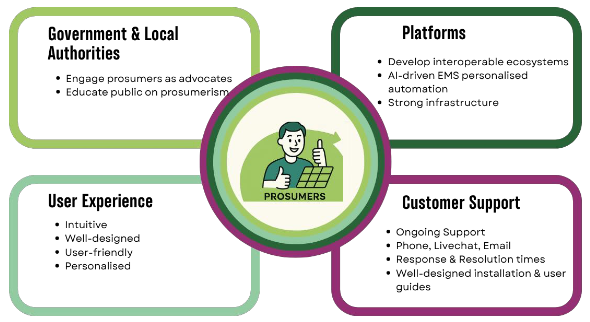
This chapter interprets the empirical findings in relation to the two research questions and situates them within the wider literature. It highlights where the study confirms existing knowledge, where it extends or nuances current understanding, and where it offers novel contributions to the field of digital prosumerism. The discussion also introduces the Empirical Framework for Enhancing Prosumer Experience through Digital Platforms (Figure 1), which synthesises the study’s findings and provides a practical model for industry and policy application.
5.1 RQ1: Factors Contributing to a Positive User Experience
5.1.1 Usability and Interface
The literature offers only limited insight into prosumer usability, interface quality, and satisfaction. While concepts such as personal digital assistants (Khaled & Abaoub, 2024), user‑centric design (Gram‑Hanssen & Darby, 2018; Giulietti et al., 2019), and gamification (Cravinho et al., 2023) are discussed, empirical evidence on how prosumers actually use digital energy platforms is scarce. This positions the present findings as a novel contribution.
The study found strong satisfaction with platform usability: 86% of users engage daily, and 68 respondents reported being satisfied or highly satisfied with platform effectiveness. Users valued intuitive navigation, clear visualisation, and the ability to manage energy flows easily. These preferences align with the most valued features identified in the findings—real‑time monitoring, battery control, solar forecasting, automation, and clear visual design.
However, respondents also identified areas for improvement. Neutral satisfaction scores and qualitative feedback pointed to the need for more intuitive layouts and clearer user journeys. Visual design was highlighted as central to usability, with users emphasising optimised colour, layout, icons, and graphical cues to support rapid comprehension and reduce cognitive load.
5.1.2 Customer Support
Customer support is sparsely addressed in energy‑UX literature, yet it emerged as a significant determinant of user satisfaction in this study. Although many respondents rated support as good or excellent, six users rated it poor or very poor, and onboarding challenges were frequently mentioned.
Initial setup was described as difficult, with users calling for clearer documentation, guided setup wizards, and more responsive support channels. These findings position customer support as a strategic component of user experience, not a peripheral service. This extends the literature by demonstrating that support quality directly shapes digital empowerment, confidence, and long‑term engagement.
5.1.3 Technical Reliability
Existing research identifies reliability as a barrier to prosumer engagement (Botelho et al., 2021). The present findings confirm this relationship but add nuance. While most respondents rarely encountered issues (41 users), qualitative comments revealed concerns about data accuracy, update stability, and real‑time visibility.
This suggests that reliability is multidimensional: beyond uptime, users expect temporal precision, trustworthy data, and stable connectivity. These expectations are reinforced by the high value placed on real‑time monitoring, forecasting, and automation—features that depend on reliable data flows. This nuance extends the literature by showing that reliability is not merely technical performance but a foundation for informed decision‑making and trust.
5.1.4 Integration, Interoperability, and AI‑Driven Automation
Integration is only lightly referenced in existing literature, yet it emerged as one of the strongest expectations among respondents. Users consistently expressed a desire for unified systems, seamless compatibility across brands, and access to all energy functions within a single platform. Integration was also one of the most valued features and one of the most requested improvements.
A novel insight from the qualitative data is that users increasingly view interoperability and automation as core components of usability. Fragmented dashboards, multi‑app journeys, and inconsistent data flows were major sources of frustration. Users want platforms that automatically synchronise data, coordinate devices, and optimise energy flows without manual intervention.
This expectation naturally extends to AI‑driven automation, which respondents described as a desired next step. Users want systems that can:
-
anticipate needs
-
optimise battery charging and discharging
-
manage export timing
-
adjust behaviours based on solar forecasts
-
automate repetitive tasks
-
personalise routines based on lifestyle patterns
These expectations align with literature suggesting that digital platforms can learn user behaviour and anticipate needs (Khaled & Abaoub, 2024), but the present study provides empirical evidence that prosumers actively desire such capabilities.
Overall, the findings indicate that prosumers increasingly expect holistic, interoperable, and automated energy ecosystems, where devices, platforms, and data streams operate as a coherent whole. This represents a meaningful contribution to the literature and suggests that interoperability—enhanced through AI‑enabled automation—is becoming a baseline requirement for positive user experience.
5.2 RQ2: Enhancing User Satisfaction and Engagement
5.2.1 Personalisation
Although personalisation is widely discussed in general UX literature, it remains underexplored within digital energy platforms. The findings from this study reveal a strong and consistent demand for personalised automation, adaptive controls, and predictive features. Users increasingly expect platforms to move beyond passive monitoring and towards active optimisation, where systems anticipate needs, adjust behaviours, and automate energy decisions in real time.
This shift reflects a broader evolution in prosumer expectations: digital platforms are no longer viewed solely as informational tools but as intelligent energy managers capable of learning from user routines and system performance. The desire for AI‑driven automation—expressed through requests for personalised charging rules, export timing, and behaviour‑based routines—represents a novel contribution to the energy literature, extending emerging discussions on AI‑enabled home energy management and demonstrating clear user appetite for these capabilities.
5.2.2 Customer Support as a Driver of Engagement
Customer support reappears under RQ2 as a determinant of ongoing engagement, reinforcing its importance beyond initial usability. Respondents emphasised the need for multi‑channel support, clearer documentation, and improved onboarding processes. These expectations highlight that support is not merely a troubleshooting function but a core enabler of digital empowerment.
This finding extends the literature by demonstrating that customer support influences both satisfaction and sustained engagement. Effective support helps users navigate complex systems, build confidence, and maintain long‑term use of digital platforms. Conversely, poor support—slow responses, limited channels, unclear guidance—creates friction that undermines empowerment. The study therefore positions customer support as a strategic component of prosumer engagement, rather than a peripheral service.
5.2.3 Awareness and Understanding
The literature identifies low public awareness as a barrier to prosumer adoption (Steadman et al., 2023). This study confirms this but adds important nuance: even among existing prosumers, awareness of schemes such as the Smart Export Guarantee (SEG) was limited. Most respondents learned through online research, installers, or energy providers, with very few citing government or community channels.
This finding strengthens the literature by providing empirical evidence of the limited effectiveness of official awareness mechanisms. It also highlights a gap in public communication: prosumers are motivated and engaged, yet their understanding of available schemes, optimisation strategies, and digital tools is largely self‑directed. This underscores the need for targeted, accessible communication strategies from government bodies, local authorities, and industry stakeholders to support both adoption and ongoing empowerment.
5.2.4 Empirical Framework
The findings culminate in the Empirical Framework for Enhancing Prosumer Experience through Digital Platforms (Figure 1). This model translates the conceptual foundations of the literature into a practical structure derived from the study’s data. It positions prosumers at the centre of four interrelated domains:
Table 1: Strategic Implications for Enhancing Prosumer Experience through Digital Platforms
| Domain | Core Focus | Key Implications |
|---|---|---|
| Government & Local Authorities | Engage prosumers as advocates; educate the public on prosumerism | Policy and outreach must leverage prosumers as communicators to close awareness gaps |
| Platforms | Develop interoperable ecosystems; enable AI‑driven personalised automation; ensure strong infrastructure | Integration and automation are now baseline expectations for usability and engagement |
| User Experience | Intuitive, well‑designed, user‑friendly, personalised interfaces | Usability extends to ecosystem coherence and personalisation |
| Customer Support | Ongoing multi‑channel support; clear installation and user guides; rapid response and resolution | Support quality directly influences satisfaction and sustained platform use |
This framework represents the final applied output of the research, integrating the findings from both research questions. It moves beyond the theoretical conceptual model presented in the literature review by embedding the lived experiences and expectations of UK prosumers. The model provides a foundation for practical implementation by industry, policymakers, and developers seeking to enhance digital engagement and accelerate prosumer adoption.
Figure 1 Empirical Framework for Enhancing Prosumer Experience through Digital Platforms
6. Conclusion
This study set out to examine how user experience (UX) design shapes prosumer engagement with digital energy platforms in the United Kingdom. By analysing survey data from domestic prosumers, the research identified the key factors that contribute to a positive user experience and highlighted opportunities for improving platform usability, satisfaction, and long‑term engagement. The findings demonstrate that prosumer interaction with digital platforms is shaped by the interplay of four core UX dimensions—usability, reliability, support, and personalisation—underpinned by a strong and recurring expectation for system‑level integration.
The study makes several contributions to knowledge. First, it confirms established insights from the literature regarding the importance of usability, reliability, and public awareness in shaping prosumer engagement. Second, it offers novel contributions by identifying customer support, interoperability, and personalisation as critical yet underexplored dimensions of digital energy platforms. These findings extend existing research by demonstrating that prosumers increasingly expect holistic, integrated ecosystems rather than isolated applications, and that support quality is a strategic determinant of satisfaction rather than a peripheral service function. Third, the study provides nuanced evidence that reliability is multidimensional, encompassing not only system uptime but also real‑time data accuracy, update stability, and trust in platform outputs.
A key output of this research is the Empirical Framework for Enhancing Prosumer Experience through Digital Platforms, which synthesises the findings into a practical model for industry, policymakers, and platform developers. By positioning prosumers at the centre of four interdependent domains—Government and Local Authorities, Platforms, User Experience, and Customer Support—the framework offers a structured foundation for designing more intuitive, integrated, and user‑centred digital energy systems.
While the study provides valuable insights, it also highlights several opportunities for further research. Future studies could employ qualitative methods such as interviews or ethnographic observation to explore prosumer experiences in greater depth, particularly around behavioural routines, trust formation, and long‑term engagement. Comparative research across different countries or platform types could examine how cultural, regulatory, or infrastructural differences shape UX expectations. Additionally, as AI‑driven automation and predictive analytics become more prevalent, further investigation is needed into how these technologies influence user autonomy, decision‑making, and perceptions of control.
Overall, this research contributes to a more holistic understanding of prosumer engagement in digital energy systems and underscores the importance of user‑centred design in supporting the UK’s transition to a decentralised, low‑carbon energy future.
7. References
Blumberg, B., Cooper, D., & Schindler, P. (2014). Business research methods. McGraw Hill.
Bryman, A. (2016). Social research methods. Oxford University Press.
Corden, A., & Sainsbury, R. (2006). Using verbatim quotations in reporting qualitative social research: researchers' views (pp. 11-14). York: University of York.
Creswell, J. W., & Poth, C. N. (2016). Qualitative inquiry and research design: Choosing among five approaches. Sage publications.
Davies, M. B., & Hughes, N. (2014). Doing a successful research project: Using qualitative or quantitative methods. Bloomsbury Publishing.
De Leeuw, E. D., Hox, J., & Dillman, D. (2012). International handbook of survey methodology. Routledge.
Connor Desai, S., & Reimers, S. (2019). Comparing the use of open and closed questions for Web-based measures of the continued-influence effect. Behavior research methods, 51, 1426-1440. https://doi-org.salford.idm.oclc.org/10.3758/s13428-018-1066-z
Department for Energy Security and Net Zero. (2024). Renewable electricity by local authority 2014 – 2023. https://www.gov.uk/government/statistics/regional-renewable-statistics
Gill, J., & Johnson, P. (2010). Research methods for managers.
Giulietti, M., Le Coq, C., Willems, B., & Anaya, K. (2019). Smart consumers in the internet of energy: Flexibility markets and services from distributed energy resources. Centre on Regulation in Europe asbl (CERRE).
Groves, R. M., Fowler Jr, F. J., Couper, M. P., Lepkowski, J. M., Singer, E., & Tourangeau, R. (2011). Survey methodology. John Wiley & Sons.
Hadler, P. (2023). The Effects of Open-Ended Probes on Closed Survey Questions in Web Surveys. Sociological Methods & Research, 54(1), 106-139. https://doi.org/10.1177/00491241231176846 (Original work published 2025)
Hansen, K., & Świderska, A. (2024). Integrating open-and closed-ended questions on attitudes towards outgroups with different methods of text analysis. Behavior research methods, 56(5), 4802-4822. https://doi.org/10.3758/s13428-023-02218-x
Holtom, B., Baruch, Y., Aguinis, H., & A Ballinger, G. (2022). Survey response rates: Trends and a validity assessment framework. Human relations, 75(8), 1560-1584.
Imperva. (2024). What is data anonymization: Pros, cons & common techniques. Retrieved from https://www.imperva.com/learn/data-security/anonymization
Medelyan, A. (2019). Coding qualitative data: How to code qualitative research (2023). From https://getthematic.com/insights/coding-qualitative-data/[3 ].
Meterko, M., Restuccia, J. D., Stolzmann, K., Mohr, D., Brennan, C., Glasgow, J., & Kaboli, P. (2015). Response rates, nonresponse bias, and data quality: results from a national survey of senior healthcare leaders. Public Opinion Quarterly, 79(1), 130-144. https://doi.org/10.1093/poq/nfu052
Novielli, J., Kane, L., & Ashbaugh, A. R. (2023). Convenience sampling methods in psychology: A comparison between crowdsourced and student samples. Canadian Journal of Behavioural Science/Revue canadienne des sciences du comportement. https://psycnet.apa.org/doi/10.1037/cbs0000394
Quinlan, C., Babin, B. J., Zikmund, W. G., Carr, J. C., Griffin, M. (2019). Business Research Methods.
Regen (2018). The role of a local flexibility market [Image]. In Community Energy England. https://communityenergyengland.org/files/document/457/1601647376_Regen_Local-flexibility-guide.pdf
Stratton, S. J. (2021). Population research: convenience sampling strategies. Prehospital and disaster Medicine, 36(4), 373-374. https://doi.org/10.1017/S1049023X21000649
Thales. (2024). Thales 2024 Digital Trust Index. https://cpl.thalesgroup.com/digital-trust-index
UK Government. (2024). Renting Social Housing. https://www.ethnicity-facts-figures.service.gov.uk/housing/social-housing/renting-from-a-local-authority-or-housing-association-social-housing/latest/