
1.0 Introduction
Universities are under increasing pressure to enhance student employability, due to external factors, such as rising enrolment figures and governmental pursuit on economic returns on completing a degree (Sin et al, 2019). Cawood et al. (2019) note that “universities are expected to produce graduates with future-orientated capabilities that align with changes to globalisation and digitalisation” (Jackson & Tomlinson, 2022).
Graduate employability has become a key subject of debate in UK Higher Education (Maxwell et al, 2008), with two key aspects; one relating to employabillity as ‘job-getting’ - the ability of the graduate to secure a job after graduation; the second relating to the development of attributes, qualitiies and skills considered to be essential by employers that help graduates to secure a graduate job (Minocha, et al., 2017). Key UK government reports on HE have emphasised the role universities have in addressing graduate employability, to meet employer needs and to support future growth, highlighting the importance of developing graduate skills and experience. (Minocha, Hristov, & Reynolds, 2017) – shifting graduate employability towards a demand driven as opposed to the more conventional supply-led approach (Leitch, 2006).
Another key element related to employability lies with students themselves; some being more employable than others due to having some form of work experience or indeed job prospects related to their chosen area of study (Minocha, et al., 2017). A second key theme relates to the range of qualities and characteristics employers look for to recruit and support career progression and lifelong learning (Miller, Baggart, & Newton, 2013).
The Governments Department for Business, Innovation and Skills concluded that whatever the definition of employability skills is put in place, there is a need to ensure that the definition is aligned with employer expectations (BIS, 2011).
The third theme is the commitment of universities to integrate employability themes across curricula and pedagogy (Minocha, Hristov, & Reynolds, 2017). Yorke and Knight (2006) contended that a full spectrum of pathways to embedding employability in the curriculum features “a number of overlapping approaches”:
-
Embedding employability in the core curriculum
-
Using work-based curriculum components
-
Adopting employability-related modules
-
Work based learning in parallel with curriculum
Though the first three are suspected to have the greatest potential for enhancing employability, Yorke & Knight (2006) argue that the last two are more applicable. Within the authors Accounting and Finance Directorate within Salford Business School, employability is embedded into all levels of provision; Level 4 Accounting, Employability and Commercial Awareness, Professional Development at Level 5 and Reflective Practice and Career Development at level 6 (SBS, 2023).
According to Kornelakis & Patrakaki (2020, p. 290), “developing employability skills within HE, as part of the learning process, has become increasingly important and can be attributed to the growing marketisation of the education sector, labour market trends and shifts in public policy”. Graduate unemployment as a result of a more competitive labour market, alongside associated skills gaps noted by employers, has made the graduate market increasingly diffcult for many students.
Tomlinson (2008) noted that human capital theory views participation in education and training as an investment that yields both social and private returns, whereas Ashton & Green (1996) noted the social benefits of being a highly skilled and flexible workforce, alongside the private returns related to individual earnings over time and career progression opportunities. Higher education “being seen as a shared investment between the individual graduates and the state, with both benefitting from continued expansion” (Tomlinson, 2008, p.50).
In their study of graduate recruitment Brown and Hesketh (2004) noted the declining importance employers are attaching to academic credentials, and the increasing importance given to personal attributes and skills. The report goes on to say that higher education students see themselves as being in a positional competition amongst a growing supply of graduates entering into the marketplace, with similar profiles and ambitions. On that basis, the task facing students is to gain a personal advantage in a competitive labour market that places less emphasis on academic credentials (Brown & Hesketh, 2004). It is clear that HE students see the importance of adding value to their credentials “in light of their weakening currency” (Tomlinson, 2008, p. 59) Students and many HE establishments are attaching the so-called softer-skills to employability modules around personal and social credentials, thus meeting the demands of employers.
A number of studies (Smith et al, 2018; Atfield, 2021; BIS, 2016; Brookes & Youngson, 2016) emphasise the benefits of placements accruing to students and graduates, placements are also key factors in producing work-ready graduates who can translate easier into the world of work.
Placements, co-operative education and internships, where students extend knowledge and skills gained at university in the workplace, are increasingly being seen as the panacea for bridging expectations between employer needs, and how universities provide the necessary skills (Smith et al, 2018). Furthermore, that employment experience, such as a work placement, is inextricably linked to improved rates of employment in comparison to those students who didn’t complete a work placement (Smith et al, 2018). The report by Smith et al. (2018) goes on to say there are many benefits related to gaining work experience while studying; however, not all students have access whilst on their course. Moreover, as the placements tend to be very competitive, not all students are successful and others don’t fully appreciate the advantages that work experince can have on their future careers.
According to a report by Atfield et al (2021) work placements during undergraduate study tend to link positively to student outcomes. However the report does go on to say that though the associations appear to be positive, little research has been done on the problem of self-selection. Positive graduate outcomes might be related to the students ability and that even without the placement the outcome would be the same.
There is limited knowledge and understanding on the impact student backgrounds have on their decision-making process, around seeking work placement opportunities. This study will focus on Salford Business School’s alumni who successfully completed a work placement, against those students with similar academic outcomes who didn’t, and measure the impact they felt it had in securing a graduate position. Furthermore, in line with suggestions made by Smith et al (2018) who stated the social background of the students, whether they were ‘first in the family’ graduates, their parental social class, with reference to job roles and student aspirations, should be taken into account.
The Office for Students (OFS) is an independent regulator of higher education in England, one of its responsibilities is to ensure graduates are equipped with the skills, knowledge and experience to succeed in their chosen careers, and contribute to the UK’s economy and society. The OFS collect data on graduate outcomes from a variety of sources, including the Higher Education Statistics Agency (HESA), the Longitudinal Education outcomes (LEO) database, and graduate surveys.
Condition B3 of the Office for Students (OFS) regulatory framework “states that the provider must deliver successful outcomes for all its students, which are recognised and valued by employers, and or/enable further study” (OfS, 2019) According to the framework “the following student outcomes would be considered for assessing the condition:
-
Student continuation and completion
-
Degree outcomes, including differential outcomes for students with different characteristics
-
Graduate employment and, in particular, progression to professional jobs and postgraduate study” (OfS, 2019, p. 1) after six months, one year, or three years
-
The average earnings of graduates in different subject areas and regions, compared to non-graduates.
These conditions assess a providers performance in aggregate, over a time series for a period of up to five years from when the data could be derived. Furthermore, ‘split-indicators’ show the performance with each indicator based on a variety of demographical factors such as, age, POLAR quintile, and other EDI factors, including race and sex.
In the UK the Wilson Review re-enforced the importance of work placements as part of the students learning experience, however, the Whitepaper (2011) notes “there has been a decline in the percentage of undergraduate students taking placements at a number of UK universities as part of their degree” (Jones, et al., 2017, p. 976). In 2002/2003, 8.2% of students completed a sandwich degree, whereas in 2012/2013 the comparative figure was 5%. According to the White Paper (2011) this is mainly due to employers investing in fewer resources in creating good placements, and students feeling that the extra year of study was not producing enough added benefit. Jones et al. (2017) state that this is disappointing as placements allow employers to identify and to trial potential employees. Internationally, Arthur and Little (2010) note that in 1999/2000 55% of all European graduates had undertaken some form of work placement, with over 80% in Finland, Germany, and the Netherlands.
The author has a vast amount of experience of working with students and employers, and has witnessed the impact work placements and employer support has had on student progression. For over 10 years the author implemented and embedded Career Ready provision within Further Education environments: Oldham College, Nelson and Colne college a laterly Future Skills – part of the Salford City Group.
Founded in 2002 by leading business figures, Career Ready is a charity whose aim is to “boost social mobility by empowering young people and giving their talents a platform to flourish” (CareerReady, 2023). In 2020 and 2021 the charity was shortlisted for Charity of the Year and won Corporate Partnership of the Year in 2020 for their work with Citi. (CareerReady, 2023)
At Future Skills a Career Ready in Accounting course was set up to support 16 to 18 year old students from various schools from in and around the Salford area within Greater Manchester. An employer-led Advisory Board was set up with leading professionals from within the accounting and financial services sector: chaired by Lloyds Banking Group, alongside senior personnel from organisations such as BDO, Grant Thornton, ITV, Kellogg’s, Salford City Council and RSM. The role of the board was to secure work placements for students on the course, arrange business mentors and use their HR departments to arrange and implement advice and guidance clinics related to recruitment; including mock interviews and assessment centre activities.
Over a five year period around 18 students a year were enrolled yearly onto the two year course, studying BTEC Level 3 Business, and AAT (Association of Accounting Technicians) Levels 2 and 3. All students had a six-week paid internship and access to a business mentor (structured and timely meetings being set). The placement takes place between years 1 and 2 and students have to attend formal interviews against students from other colleges who run a Career Ready Programme. At the end of the placement students have to do a presentation to their ‘colleagues’ and lecturers about what they have learnt, all need to keep an assessed logbook of work carried out on a week-by-week basis. The impact on students levels of confidence is immense. The authors first experience of the provision was at Oldham College around 10 years ago where one of the students, 17 years of age of Bangladeshi background, did her end of placement presentation on what she had learnt to colleagues with The Co-opertative Bank in Manchester. As an educator, witnessing the impact placements have on students lives, had a significant impact on my role as a teacher, believing that my role is not just about teaching but preparing students for the world of work, but also meeting the recruitment needs of our supportive employers. Many students after finishing college, worked for their placement provider and achieved Chartered status, without the debt afforded to university graduates.
On that basis, it could be argued that the author has a biased opinion of the research question, about the benefits of work placements. All of the literature highlights the benefits of work placements, but then discusses was it the placement that helped students progress into work, or would they have done that anyway (self-selecting) with their level of social capital, education and family background and support.
For the purposes of this report, and use of secondary data, a spreadsheet containing students who graduated in 2016/17 and 2017/18, produced by Salford University’s management information systems, will analyse those students who went on a professional placement year, or not, their degree and social-economic classifications and Polar quintile. Primary research will be conducted to assess students starting points; A level, BTEC, Access or other and whether they were the first students in their family to attend university.
The aim of the research is to conduct a study that puts forward recommendations on how best to support all students into graduate jobs: through work placements or not, and provide the necessary skills and support, that improve overall graduate outcomes within Salford Business School. To meet the aims, the objectives are detailed below:
-
To evaluate current graduate outcomes data from 2016/17 and 2017/18
-
To examine the impact work placements, have on graduate recruitment
-
To assess the social background of students who progressed from Salford Business School into employment
-
To identify the key behavioural and motivational factors that lead to successful graduate outcomes and employment
-
To put forward recommendations on how best to support ALL students in the pursuit of a graduate position
The following chapter will provide an in-depth review of relevant literature
2.0 Literature Review
The literature review will highlight research that has taken place, on the impact work placements have on graduate outcomes and employment, and how acquired skills and behaviours enable students to progress directly into employment.
2.1 The impact of work placements
According to Jackson & Tomlinson (2022, p.1120) that despite “considerable literature on tools, resources and approaches to developing student employability through curriculum based, co-curricular or extra-curricular practices, there is no real evidence on how they enhance students employability from a students perspective (Tymon, 2013). Jackson & Tomlinson (2022) go on to say that this is surprising given employability outcomes attract performance indicators.
In a study conducted by Smith et al. (2018) on the impact work placements had on computer graduates’ employment prospects, factors influencing students ability to secure work placements, including recognition of the benefits gained from completing a placement, and parental experiences of higher education. The study found that graduates’ had benefited from work experience financially, earning more than students’ who didn’t embark on a work placement
From a students point of view, placements provide valuable real-life learning experiences that improve their employment prospects and inform them of their future career plans (Smith et al, 2018).
In a report conducted by BIS (2016), a number of students felt that any work experience would improve their employability prospects overall, especially those related to a subject of interest that helped in the development of specific skills. In fact, “the majority of those who didn’t take part in any form of work experience later rued that decision.” (BIS, 2016, p.8)
From an employer’s point of view, work placements bring new skills into the organisation and provide good quality and valuable workers, that are often later recruited to permanent positions (Smith et al, 2018). Incidentally, feedback from an employer-led working group at SBS, stated that they prefer taking students on a part-time permanent basis, whilst on level 4 through to the Professional Placement Year, and eventually employing the student as a graduate. This method is preferred to a 4 to 6-week internship placements as it gives the employer more time to assess and develop the ‘new recruit’ and become a valuable asset to the organisation.
A report entitled Employability: a review of the literature 2016-2021 by Dalrymple et al (2021, p.6) noted that “the diversification of employability discourse has gathered pace in the 5 years since 2016, with an increasingly broad array of theoretical lenses brought to bear on questions of pedagogy for employability”, on “learning cultures and processes of employability development, and perceptions of capability and efficacy amongst graduates themselves”. The authors contend that the period has seen “profound economic and political reconfigurations exerting far-reaching social impact, with fundamental and disruptive shifts within European and international geopolitics”, The global pandemic has also had a significant impact on the environment in which increasing numbers of graduates seek employment opportunities.
On that basis the secondary data relates to students who graduated in 2016/17 and 2017/18 without the additional constraints on students in later years; at the height of the pandemic and working from home, many students on the Professional Placement Year were unable to get the full experience of the benefits available of working in an office environment.
Given that work placements, according to (BIS, 2016), improve students employability prospects, what about the students themselves. What impact does the environments in which they live or socio-economic background have on the choices they make.
2.2 Human capital
Useem & Karabel (1986) considered human capital theory within higher education, stating three distinctive types of human capital onto its students: social, cultural and scholastic. Donald et al (2019, p.600) suggested that “social capital should include, amongst other things, contacts, parents, educational establishments, friends, and memberships/affiliations”.
Cultural capital includes factors such as “university reputation, extra-curricular activities, attire, networking and volunteering” (Donald et al, 2019, p.4), moreover, Jaeger (2011) in recognition of a changing world, included the use of social media and going to the gym. Social media is increasingly an important aspect of student’s life and for searching for job opportunities, and by organisations to offer opportunities and to profile candidates. Donald et al. (2019) goes on to say that going to the gym, body image and healthier life choices are particularly important in client facing roles and that students with more social and cultural capital have greater social mobility and are more employable.
Scholastic capital is related to the value of educational school/university grades, in determining graduate employability in the labour market. Incidentally, from an accounting point of view PWC, one of the top 4 global accounting firms, have removed the 2:1 criterion for undergraduate roles, “to ensure it doesn’t miss out on talent” (PWC, 2022). PWC state that the move is expected to drive progress in the social-economic background of recruits by drawing from a wider talent pool, with a view to increasing the breadth of candidates from a more socially diverse environment and to improve social mobility. The organisation removed UCAS points as part of their entry criteria for graduate roles believing that academic qualifications alone, were not an indicator of workplace potential. By removing the 2:1 criterion over 70,000 more students have access to PWC’s graduate programmes (PWC, 2022).
Tibby & Norton (2020) more recently suggested the need to broaden the remit of HCT beyond student and graduates’ attainment and performance, towards a language incorporating words such as, ‘career and life transitions’ that relates to a range of achievements obtained at university beyond specific skills determined by employers. Their report goes on to say that “all stakeholders, including academic and support staff, students, careers services and employers have a role to play in embedding employability into the culture of the institution” (Tibby & Norton, 2020, p. 5)
According to Dalrymple et al. (2021), literature since 2016, has increasingly seen as an identity-based views where employability is seen as a way of doing, rather than a set of attributes or capacities. Tymon & Bastistic (2016, p. 927) incorporated elements of proactivity theory when evaluating the experiences of 166 Business students, inferring that beneficial outcomes derive from “experienced pedagogies that develop proactivity traits of anticipation, planning and striving”. Moreover, “these ideas can be incorporated into modules that encourage critical inquiry and participative learning”.
Furthermore, Tuononen et al (2019) found that students who grasp the concept of their employability as an undergraduate, were able to articulate in preparation for their working lives three years later.
2.3 Self-selection and attainment
As noted by Atfield et al. (2021) undergraduate work placements tend to be linked to positive outcomes for students’, supported by a broad range of research activities. The report goes on to say that if students’ ability is positively linked to outcomes, it might be that the more able students are inclined to undertake work placements, the positive outcomes might be more to do with students’ ability rather than the work placement: they would have achieved the outcome anyway. A few studies tried to address the self-selection issue, though the correlation between the two was lower, the link was still a positive one.
The report goes on to say that if placements are voluntary then students with a lower level of ability and levels of motivation are more inclined not to do the placements, whereas students with higher levels of both may lead to biased results and findings when looking into the impact on student outcomes. (Atfield, et al., 2021) The percentage of students within the authors data sets who did work placements is less than those who didn’t – some with poor levels of motivation and/or levels of attrition/resilience,
There is a variety of literature attempting to assess the impact of self-selection and assessing the progress of the more able students (Atfield, 2021; Leone, 2022; Snyder et al,1988), but it does appear to be a research opportunity to track students starting points through GCSE/A level grades, socio-economic background, into a work placement, or not and then into the chosen career. How can students be motivated into doing a placement year, when they lack motivation and fail to see the advantages? What is evident from the authors experience is that some students who are very able, are pro-active in their approach to getting a job, don’t appear to be disadvantaged by not doing a placement year, progressing directly into employment at graduation. It is also interesting to note that many of those students are not first in the family to go to university, tended to have studied A levels and come from a higher socio-economic group.
With reference to academic attainment, there is substantial research related to the positive correlation between students having completed a work placement and academic attainment (Atfield et al, 2021). Furthermore, Brookes & Youngson (2016) found that students undertaking a placement year not only achieved higher grades but were more likely to gain employment and favourable wages, than students who opted not to do a placement. It is fair to note that the study did not attempt to address the self-selection issues noted above.
With reference to ethnicity and black and ethnic minority students, some research found the attainment gap reduced in final year students especially males, who had a placement experience (Moores, et al., 2017) The study evaluated the performance of 3051 Black, Asian and White students at Aston University over a three year period, noting that students who successfully completed a placement year, improved their marks by more in the final year compared to those who did not (Moores, et al., 2017). The report concluded that placements may offer a mechanism to help bridge the BME achievement gap, though not eliminate it.
Brookes & Youngson (2016) tracked the effects of career progression of undergraduate placements. The authors also found improved levels of academic performance, with higher levels of salary, upon completion of the degree over a three-year period, for those students completing a placement year; “completing a sandwich placement has a long-term impact on employment and career progression” (Brookes & Youngson, 2016, p. 1566)
2.4 Graduate attributes
A considerable amount of literature is concerned about the balance between ‘hard’ and ‘soft’ skills, with many suggesting the soft skills elements; personal qualities, and capacities, support successful workplace behaviours and relationships, noting their value in relation to the graduate labour market. Batistic & Tymon (2017, p.25) focused on social capital theory related to networking behaviours of a sample of 400 Business students, noting that “good networkers enjoy high levels of self-perceived employability, through to increased tendency to gather and access information and resources”, Furthermore, according to Simon (2013, p2) networking provides various forms of social-capital, including “advocacy, introductions and mentoring that would otherwise require both financial and human capital”. The conclusion of the report suggests developing methods that support networking behaviours within Higher Education to support students’ employability prospects.
Graduate attributes and capacities are something that students expect to develop in the course of their studies, through all levels within SBS Accounting and Finance provision, as a means of “translating achievements between the academic and employment environment” (Dalrymple, et al., 2021, p. 25). Moreover, Dunne (2017, p.54) noted that students who took part in a placement experience, in terms of improving attributes, were better able “to articulate their skills in a more explicit and concrete manner and find evidence for their development.” Karunanayaka & Naidu (2021, p246) noted the importance of authentic assessments in developing graduate attributes, with a particular focus on “critical thinking and problem solving, self-regulation, digital literacy, teamwork and communication skills, multicultural competence and empathy and compassion”.
A number of authors expressed an interest in multicultural competence as a graduate attribute, with Page et al (2019) pointing out that graduate attributes play a crucial role in advancing social justice and advancing ethical commitments.
2.5 Inequality
In the UK and elsewhere, a lot of work has gone into supporting students from disadvantaged groups (ethnic minorities and groups from with a lower socio-economic status, however evidence suggests they do less well when entering the labour market or subsequent career progression (Dalrymple, et al., 2021). Arguably, according to Wright & Mulvey (2021, p353) HE expansion has led to decline in HE credentials as a “currency of opportunity”, indicating that a university education alone does not necessarily correlate to upward social mobility.
Parutis & Howson (2020) considered how and why students from different backgrounds obtain and make use of the capital and how the 5 constituents of capital in Tomlinson’s model (human, social, cultural, identity and psychological capital) work together. The authors study noted that students from lower socio-economic groups perceived knowledge and understanding about professions were limited, due to not having access to peers who operated in particular professions. Though most students knew about the advantages of internships and work placements, they were unable to afford to take unpaid placements, due to working and other family commitments, lacking confidence in their academic ability, and had an awareness of the potential negative social impact.
Lehman (2019) studied Canadian working-class, first-generation university students, who relied on the human capital gained through their degrees, but struggled to develop and make use of other forms of capital in their search for jobs and careers. One of the aims of the research was to analyse the different forms of capital (human, social, financial and personal) in the students transition from education into employment. There appeared to be a schism between students target career (high status professions in medicine and law) and their actual employment 5 years later (mostly vocational roles, some unemployed). It was noted that many felt they lacked the social and economic capital in taking an internship or placement that would have enhanced their earlier chosen career path, in comparison to those who had opportunities to advanced access to employment in these positions.
Wright & Mulvey’s (2021) research sought to look into the status of different social class backgrounds experiences of internship placements and how they might contribute to class inequalities within the workplace. Of the largest 100 employers, 40% stated they would be ‘very unlikely’ or ‘not at all likely’ to recruit students without work experience, resulting in providing students from a lower social class with less currency when entering the job market. The authors conducted 100 interviews with final year students from three different social groups: upper middle class, mass middle class and working class (50 from a Russell Group university and 50 from a post 1992 university). The findings indicated that upper-middle class students “mobilised social capital resources available, through family and by complementary university resources”, managing to secure multiple internships with high-status employers, thus gaining an advantage in access to the employment market. Some students, a familial culture meant they were aware of the benefits internships can provide, prior to starting university. For others, some were less aware of those benefits and therefore less likely to pursue or obtain them, opportunities that would help build their social capital needed to support their access into the employment market.
Despite the broad popularity of work placements, Dobbins & Fell (2020) noted, that for some students there can be some emotional and interpersonal challenges, such as students stress whilst on placement, for some lack of financial renumeration for work done, repetitive work and the challenges related to new roles and meeting unfamiliar supervisors and colleagues. However, the vital role supervisors can play in supporting and mentoring students in developing the interpersonal skills and strategies involved (Dobbins & Fell, 2020). From the authors point of view of supervising a number of students on their Professional Placement Year, the nominated organisational supervisor has been instrumental in ensuring students feel settled in and made to feel welcome by the rest of the team.
2.6 Opportunity
Gazdula & Atkin (2017, p128) “identified five key factors supporting learning transfer (to and from the classroom and placement contexts) and enhance academic attainment: pressure to learn, critical personal learning events, seeing the setting as a learning environment, personal attachments, and space to learn”.
With reference to the various points made related to Human Social Capital, inclusion and embedding employability within curriculum, a number of students don’t take the opportunities available for a variety of reasons. Some students decide that they would prefer to progress from level 5 into the final year of their course, instead of taking a year out in industry, therefore completing their degree a year earlier. Many, usually those who can’t find a graduate position, progress onto a Master’s Degree in the belief it will enhance their career advancement and opportunities.
Holmes & deMain (2022) noted their frustration of students not engaging within the vast array of experential learning opportunities availble: careers workshops, academic writing classes, webinars and guest speakers. The authors go on to say that recruiters tend to use extra-curricular engagement for identifying the most committed students. However, many students have a variety of other responsibilities alongside their studies, with limited financial support or indeed having to support their families, sometimes going to work after class or skipping classes altogether. Some students are often carers for their siblings or have children themselves.
Holmes & deMain (2022) go on to argue that it is essential to embedd employability into the curriculum to ensure no student is excluded. AdvancedHE (2020) in their framework for embedding employability suggest that developing strategies to support students mental health and well-being have significantly more benefit when placed within the curriculum, within personal and continuing professional development modules.
The author also supervises students on their Professional Placement Year, and again witnesses the positive impact placements have on students progression; not just in their grades but also their job prospects. At a recent student presentations event in Media City, all students who self-selected on a PPY course, shared their experinces and lessons learnt on their placements, thus far. Their levels of confidence and drive was tangible for all to see, some already securing a graduate position after their degree. The key point is how do we encourage and prepare all students for the world of work within our curriculum and support services.
What is also evident, from the authors experience is that employability provision arranged outside of the classroom does not work, as noted by the lack of student engagement and attendance. On many occasions SBS’s employability and alumni team have arranged guest speakers outside of timetabled hours, only to see poor attendance and engagement.
On that basis the next element of the literature review will focus on various employabilty models and how best to implement them within a Higher Educational setting
2.7 Employability models
AdvancedHE (2020, p.5) “views embedding employability as providing the opportunities to develop the knowledge, skills, experiences, behaviours, attributes and attitudes that enable graduates to make successful transitions, benefitting them, the economy and their communities”. The report goes on to say that employability is relevant to all students at all levels of study and should be embedded into all learning and teaching policies, processes, and practices, throughout the student’s lifecycle, from the start through to graduation, As noted earlier, it is the responsibility of all stakeholders to ensure employability is integrated into the culture of the institution.
In 2013, the Higher Education Academy developed a resource; Defining and developing your approach to employability: a framework for higher education institutions (Cole & Tibby, 2013) – to support HEI’s “with a rationale and approach for embedding employability”. (AdvancedHE, 2020, p. 6) The Framework for Embedding Employability was updated in 2015/16 in collaboration with a number of stakeholders drawing on extensive evidence, expertise and experience.
2.8 Applying the Framework
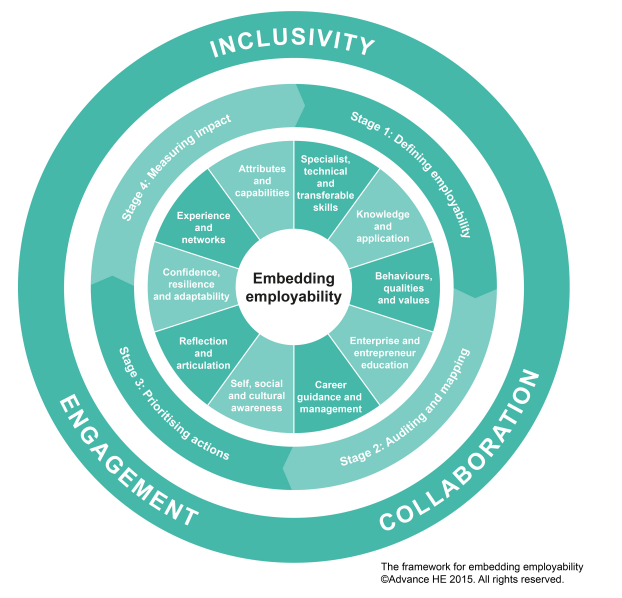
The Framework (Figure 3.1) is designed to be used at a range of levels, from senior management to academic departments, course teams and the student’s union
Figure 2.1 The framework for embedding employability
Source: Tibby and Norton, (2017)
Stage 1 of the framework requires colleagues and relevant internal and external stakeholders working together to define employability priorities, and create a shared point of reference. This will help develop a clearer view of the areas of focus that are most appropriate to the organisations model of employability
Stage 2 is the auditing and mapping of employability provision. Reflect on the specific features of employability being addressed, such as, subject-specific skills, subject knowledge, graduate attributes and personal development and reflection. By auditing current provision, one can ascertain what works well, how is employability embedded within the programme and how do you measure the impact of employability activity and support.
Stage 3 Priority actions related to developing a process of employer engagement, engaging with professional bodies and how students are currently supported to “reflect on, record and articulate their academic and personal development planning”. (AdvancedHE, 2020, p. 11) By reflecting on stages 1 and 2 will help to identify and address any gaps that need to be filled. Do we need specific resources or staff development, how will progress and impact be measured and who are the key stakeholders to consider. The report goes on to note key issues to consider:
-
Gather evidence, as part of the review process with research and scholarly activities. How can best practice be recorded, stored, and shared across the institution and externally.
-
Engaging with employers to maximise opportunities for work based and work-related learning. What support is available to support students pre-and post-placement. How do you support students to ensure all opportunities are inclusive and caters for all?
-
Making the most of alumni support using case studies or encourage dialogue with current student groups who will be able to listen, ask questions and learn from their experiences
-
Mapping your employability network to consider and map out who can support you and your students within the institution and external to it
Stage 4 is related to measuring the impact of your employability provision and how will you generate evidence. What evidence is there to demonstrate your approach to employability is effective and by what methodologies have been used?
The report then provides a number of appendices to help the organisation gather the necessary evidence of the impact their employability provision has on students and the wider audience of stakeholders.
Coffield et al (2023) note that there are a number of reports that highlight the benefits of embedding employability within Higher Education to enable students to make successful transitions into employment (Minocha et al, 2017; Norton and Tibby, 2020; Scott et al, 2017), however, the authors feel “that discourses of employability shape students understanding of self” (Coffield, et al., 2023, p. 113). Coffield et al (2023) suggest that some students can perceive themselves as being unfit for work, or lacking, resulting in feelings of hopelessness and anxiety, particularly those unable to access forms of privilege. On that basis, and whatever model is used, students’ individual needs have to be addressed,
It is important to embed employability within the curriculum, including addressing the key factors that address students’ levels of self-awareness and enhances levels of confidence and self-esteem.
2.9 The Career Edge Model
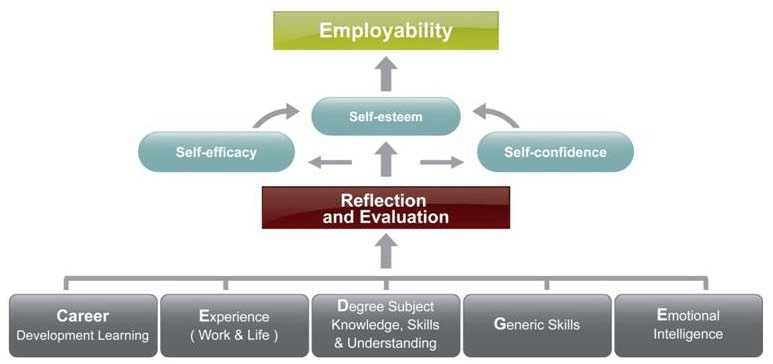
The CareerEdge model by Dacre-Pool (2020) (Figure 3.2) was first introduced 13 years ago as a model to support graduate employability, highlighting the importance of each component and its relationship with other elements of the model. The article that introduced the CareerEdge model “was the result of an in-depth, rigorous research into the concepts of graduate employability “. (Dacre-Pool, 2020, p. 51). At the center of the CareerEdge model is the ‘D’ for the degree subject knowledge, skills and understanding, an essential element of employability development. According to Dacre-Pool (2020) Career development Learning, a career management and development plan, is important in preparing students well for job applications and interviews, but a great deal of important work takes place before graduation.
The model is used to support the five components on the lower tier, and enables students to assess, develop and reflect on these experiences, leading to the acquirement of the higher levels of self-efficacy, self-confidence, and self-esteem: crucial links to employability.
Figure 2.2 CareerEdge model
Source: Dacre-Pool, (2020)
Developing self-awareness, alongside guidance on opportunities available to students in helping then to make career decisions, essential for a successful life beyond university, that help secure and retain occupations they will find fulfilling. Students also need support in presenting themselves in digital spaces such as LinkedIn and other social media platforms preparing them for modern-day recruitment processes, including video interviews.
The Emotional intelligence element of the model has become and an essential part of employability development and included in a number of personal specification and job descriptions. Work carried out by Dacre-Pool (2020) in 2007 and 2011, demonstrated the importance of EI and how it can be taught to enhance students’ level of confidence in their EI ability. “A recent meta-analysis has shown a clear, positive association between EI and academic performance, supporting a growing consensus among educators, researchers and policy makers, of its importance for wellbeing and future workplace success for students” (Dacre-Pool, 2020, p. 8)
An additional feature of the model that overlaps with EI is the concept of Cultural Intelligence , defined as an individual’s capability to function and manage effectively in culturally diverse settings (Ang & VanDyne, 2009) an essential skill in today’s diverse workplaces and global society.
At the next level of the model, Reflection and Evaluation, where students are given the opportunities to reflect on and evaluate their employability learning experiences by using reflective logs, journals, or portfolios. These deep learning experiences have the potential to increase levels of Self-Efficacy, Self-Confidence, and Self Esteem, vital to employability development.
Closely related to the three S’s and EI, is resilience and a growing concern about students’ mental health and wellbeing, dealing with the set back on rejection of applications, or when making mistakes within the workplace. By reflecting on these experiences and being guided to learn from them, students can see mistakes and challenges are part of everyday life. These types of experiences and challenges help build self-efficacy, self-confidence, self-esteem, and resilience to be recalled when future challenges arise.
Since its original publication in 2007, the CareerEdge model has been used in a number of educational establishments, such as Nottingham Trent University to help staff understand and teach employability development (Dacre-Pool, 2020). David Eade, (2019) Director of Employability at Nottingham Trent stated that “as the future of work develops at an even faster pace, we cannot hope to prepare our graduates for jobs that in all likelihood have not yet been invented. Our ambition is to equip graduates to be adaptable in a changing world and secure successful and fulfilling futures for themselves, then the CareerEdge is probably more relevant now that it has ever been” (Dacre-Pool, 2020, p. 55). Moreover, Wujema et al (2022) noted that the CareerEdge model was an effective tool when investigating the factors influencing undergraduate employability in six universities in North-East Nigeria, especially relayed to self-efficacy. Furthermore, Yawson and Yamoah (2023) noted that the model is a good tool to be used for employability development with students for assessing and measuring employability, though they argued that entrepreneurship knowledge should be added, to develop an entrepreneurial mindset.
The lower elements of the model are essential for employability development as is the importance of reflection in the development of the three S’s, especially in the current economic climate and uncertainty of the precarious job market. (Dacre-Pool, 2020)
From the research noted above, arguably, it seems clear of the importance of embedding assessed employability provision within the curriculum. In an attempt to address these issues, the level 4 module entitled Accounting, Employability and Commercial Awareness has been implemented at SBS. The module has two forms of assessment: one being a group presentation related to the recruitment processes of accounting firms, key elements of CV’s and LinkedIn profiles and job opportunities available within Greater Manchester. The presentation is recorded using the functions available on PowerPoint: sound and video. The second assessment is an individual 2000-word report where students provide a critical reflection of their own skills, using a Skills Wheel,to identify areas for development, and produce a detailed action plan of what they need to do to improve their employability skills. Throughout the module, guest speakers including alumni, share their own experiences from education to employment (and obstacles along the way) and graduate recruitment personnel from accounting firms within Greater Manchester explain their recruitment processes and internship and work placement opportunities available: the module is timetabled and students are required to attend.
Alongside the provision, an employer-led advisory group has been formed to help support students’ progress with reference to their employability needs: work placements, job opportunities and to provide subject specific guest speakers. A LinkedIn group of accounting alumni has also been developed to support current students in their own learner journey from education into employment.
2.10 Graduate Capital Model
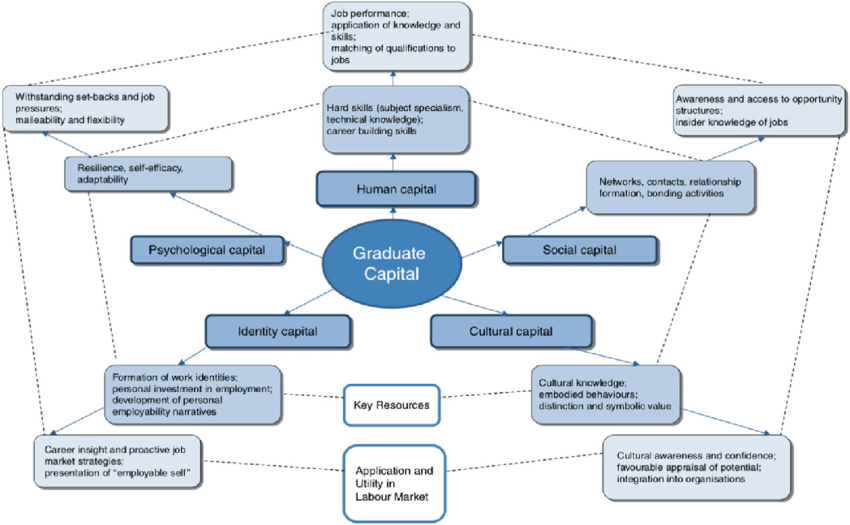
Tomlinson (2017) introduced the Graduate Capital Model (Figure 3.3) noting that graduate capital consists of Human, Social, Cultural, Identity and Psychological and that there are “two important dimensions for each: the key resources related to each and how they are utilised when graduates enter the job market.” (Tomlinson, 2017, p. 340)
Figure 2.3 Graduate Capital Model
Source: Tomlinson, (2017)
-
Human capital refers to the knowledge and skills graduates have acquired, and instil wider technical knowledge, that is embedded and utilised in higher-end professional job roles. Student studying on SBS Accounting and Finance provision complete modules that are accredited by various accounting awarding bodies, such as the Association of Certified Chartered Accountants (ACCA), Chartered Institute of Management Accountants (CIMA) and the Institute of Chartered Accountants for England and Wales (ICAEW). After graduating students can progress in the workplace and complete their remaining professional modules in order to achieve Chartered status
-
Social capital refers to building on those existing human capital skills that have been acquired, by building relationships and expanding networks to facilitate graduates access and awareness of job opportunities available, and how best to exploit them.
-
Cultural capital refers to the formation of “culturally valued knowledge, dispositions and behaviours that are aligned to the workplaces graduates seek to enter.” (Tomlinson, 2017, p. 343) Moreover, research by Bathmaker et al (2013) and Burke (2015) on graduates from different socio-economic backgrounds is the different understanding of the field rules, as well as the knowledge and confidence in being able to negotiate them. Moreover, according to Tomlinson this has an impact on students from lower socio-economic backgrounds decision making process, precluding them from areas of the job market that middle class graduates feel comfortable approaching.
-
Identity capital to the level of personal investment and time graduates make in order to develop their future career and employability; forming a personal narrative and being able to articulate one aligned to the jobs roles they seek. How students/graduates present themselves to prospective employers through CV’s, LinkedIn profiles and other forms of autobiographical practices, highlighting lived experiences relative to employment value.
-
Psychological capital refers to how graduates respond and adapt to inevitable career challenges they will no doubt experience. Koen et al (2012) noted that the more graduates can internalise the significance of managing their responses to career challenges, the more equipped they will become in managing adverse situations
The ONS (2019) reported that around 40% of UK graduates are working in positions that fall below graduate skills and knowledge, a mismatch between graduate skills and the demands of the employer (Tomlinson, et al., 2022). Maccabe (2023) notes that the graduate capital model is short term and static in nature and focusses more on the exchange value of graduate labour over long-term employment fulfilment. The author goes on to say that Human Capital theory has been criticised in the literature due to its lack of realism (Baptiste, 2001; Tan, 2014; Marginson, 2019) and for regarding education as a commodity to satisfy business demands, implying that people with more education are always more productive than people with less education.
Key themes and concepts identified within the various models will be analysed to address the main aims of the report, namely, how best to support all students into graduate jobs and provide the necessary skills and support, that improve overall graduate outcomes within Salford Business School
As noted earlier in the report, some students self-select onto a programme,as they do at SBS by enrolling onto the PPY, recognising the benefits of work placement and experience; others don’t. The various models noted above attempt to address key factors related to employability with a view to ensuring students are ready for the world of work. However, there are students who need more support and encouragement, who lack confidence and feeling of worth. As noted by Maccabe (2023) some students when analysing the components of the various models as weaknesses in their own skills and attributes, not as areas for development. On that basis, those elements of the models that focus on enhancing students levels of confidence will be used, as they have a significant impact on the other areas of each model
As noted by Smith et al (2018) students who complete a placement year improve their chances of obtaining employment on graduation, though not all students manage to secure a placement, due to the competitive nature of the process, but also, as pointed out by Atfield et al (2021), there is little knowledge about the impact of students backgrounds related to certain levels of psychological and identity capital. Many students don’t have access to a role model who has worked in the accounting sector, and lack confidence in their ability to secure a placement.
There is limited knowledge and understanding on the impact student backgrounds have on their decision-making process, around seeking work placement opportunities. This study will focus on Salford Business School’s alumni who successfully completed a work placement, against those students with similar academic outcomes who didn’t, and measure the impact they felt it had in securing a graduate position. Furthermore, in line with suggestions made by Smith et al (2018) who stated the social background of the students, whether they were ‘first in the family’ graduates, their parental social class, with reference to job roles and student aspirations, should be taken into account.
By focussing on the elements of the various models noted above, related to enhancing student aspirations and levels of confidence, the following conceptual framework will be used to help students in their persuit of work placements, enhancing their employability skills on graduation, thus improving graduate outcomes data for SBS.
With reference to Human Capital, many of the students are very capable academically and do have the technical skills required to progress,
2.11: Proposed Conceptual Framework
The proposed conceptual framework links the behavioural and social aspects on the various models noted above with a view to supporting those students who lack confidence, don’t self-select as a result of their social backgrounds and identity.
The first column is related to the personality traits within SBS students, that can hold them back from seeking job opportunities available, due to their inherent Psychological, Identity and Cultural Capital, alongside the key characteristics and methods students need in order to help them address negative traits in a developmental fashion.
By reflecting then evaluating on the current levels of employability learning experiences, students have the potential to bring about increases in their levels of self-efficiacy, confidence and esteem, all vital components in employability development (Dacre-Pool, 2020)
Figure 2.4 Proposed Conceptual Framework
| Personality traits | Key characteristics | Student development |
|---|---|---|
| Psychological | Managing the inevitable career challenges students will have with reference to rejection and tenacity | Resilience and never giving up attitude |
| Identity | The way in which you understand yourself and describe who you are to others. | Presentation and investing in you to achieve in what you aspire to |
| Cultural | Students’ backgrounds, socio-economic groups and understanding of the field rules | Empathy and teamworking |
| Self: | ||
| Efficacy | Lower levels of self-efficacy related to the perception of not being able enough | Seeking opportunities available that help secure employment |
| Confidence | A sense of one’s own competence and capability | Know your strengths and weaknesses and a have a positive mindset |
| Esteem | How we value and perceive ourselves | Being worthy and capable |
Source: The Author (2023)
The conceptual framework will be applied in a way to address students negative perceptions of themselves, when seeking work placement opportunities available, whilst taking note of the benefits they provide.
For Salford Business School to improve graduate outcomes for all learners, by encouraging more students to make the most of the opportunities available, such as work placements and embedding employability provision within the curricula, it is vitally important that all stakeholders, internal and external, support students in the persuit of their chosen careers; from a graduate outcomes point of view for SBS and governmental bodies, through to a pipeline of talent for employers. For SBS and other universities, it is important to note it is also their responsibilty to help support that transition.
2.12 Theory of Change
According to Reinholz & Andrews (2020, p.2) “the process of theory of change allows a team to reach a consensus on it’s underlying assumptions, that are codified in a product (usually a diagram).” The authors go on to say that the process seeks to understand the conditions under which something works, in this case embedding employability successfully within SBS provision, and encouraging more students to take a PPY. A visual representation helps to provide clarity of thought between the preconditions, long-term outcome, and the interventions of the underlying context.
Moreover, The Center for Theory of Change (2023) notes that the model will present an initiative in terms of the resources needed, the activities and address the short- and long-term outcomes, whilst helping to clarify goals to other stakeholders. One of the drawbacks of the model being getting all team members on board and to make the initiative work, including the students!!!
Apart from embedding employability with SBS provision, what other steps can be taken to encourage students to make the most of the opportunities available.
2.13 Nudge Theory
The evidence suggest that work placements are beneficial to all parties; students, universities and prospective employers, however as noted by Fowlie & Forder (2020), for some students the benefits work placements can offer don’t seem to be so attractive. This hesitancy has resulted in a decline in the uptake of students taking work placements over recent years (Fowlie & Forder, 2020).
Hepworth et al (2015) suggest that students need to take more responsibility for their employability opportunities and engage in more employability enhancing activities. To counteract those hesitancies Fowlie and Forder (2020) proposed that a way of increasing the number of students taking work placements is by designing interventions based on nudge theory, as a way of changing students’ behaviours to improve their lives for the better (Thaler & Sunstein, 2008).
A key element of nudge theory is not based on force or coercion to make changes, but by providing choices, known as choice architects, as a way to designing interventions that are easy to avoid but will increase the likelihood of making a choice that is in line with the intended outcome (Fowlie & Forder, 2020); a nudge. Proponents against nudge theory argue that “scant attention is given to the variation in the capability of individuals to make decisions (Wells, 2020) or Roberts (2018, p. 1047) who pointed out that “structural barriers and social constraints mean that we are not equally autonomous or nudge-able and that choice architects assumes the ability to choose”.
Despite some criticisms, nudge theory has received positive responses, including Johnson et al (2012) who maintained the nudging can help remove barriers and Damgaard & Nielsen (2018) who argued that nudges can bring about the greatest effects on the behavioural barriers of targeted intervention.
The Theory of Change and Nudge Theory will be explored in greater detail later within the report, alongside recommendations made.
2.14 Summary
This chapter evaluates the benefits work placements provide students when seeking employment after graduation. It was followed by exploring the impact self selection has on students decision making processes, their inherent levels of capital, alongside well known theoretical models. Furthermore, the theories of change and nudge, encourages all stakeholders to play their part in supporting students in becoming ready for the world of work, preferably having completed a work placement. The outcome was a conceptual framework with tools that can help students on that journey.
3.0 Methodology
3.1. Introduction
This chapter highlights the methods chosen for this research project. The purpose of the report is to develop a further understanding of the impact work placements have on graduates within Salford Business School, in particular accounting and finance students, and factors that affect their decision-making processes.
As the previous chapter highlights there has been numerous authors who have written about graduate employability and how best to integrate employability within a HE environment, such as Leitch (2016); Maxwell et al (2008); Miller, Baggart and Newton (2013); York and Knight (2006); and more recently Smith et al (2018). Furthermore, as noted by Sin et al (2019) universities are under increasing pressure to enhance students’ employability with positive graduate outcomes that are monitored by governmental agencies, such as the Office for Students, to ensure ‘value for money and positive economical returns on completing a degree.
However, as noted by Smith et al (2018) there is little knowledge and understanding on the impact student backgrounds have on their decision-making process around seeking work placement opportunities.
The research will provide the researcher with an insight into the factors behind students’ decision to embark on a work placement, or not, their social background and how best to integrate employability into the curriculum, with a view to improving graduate outcomes data for Salford Business School.
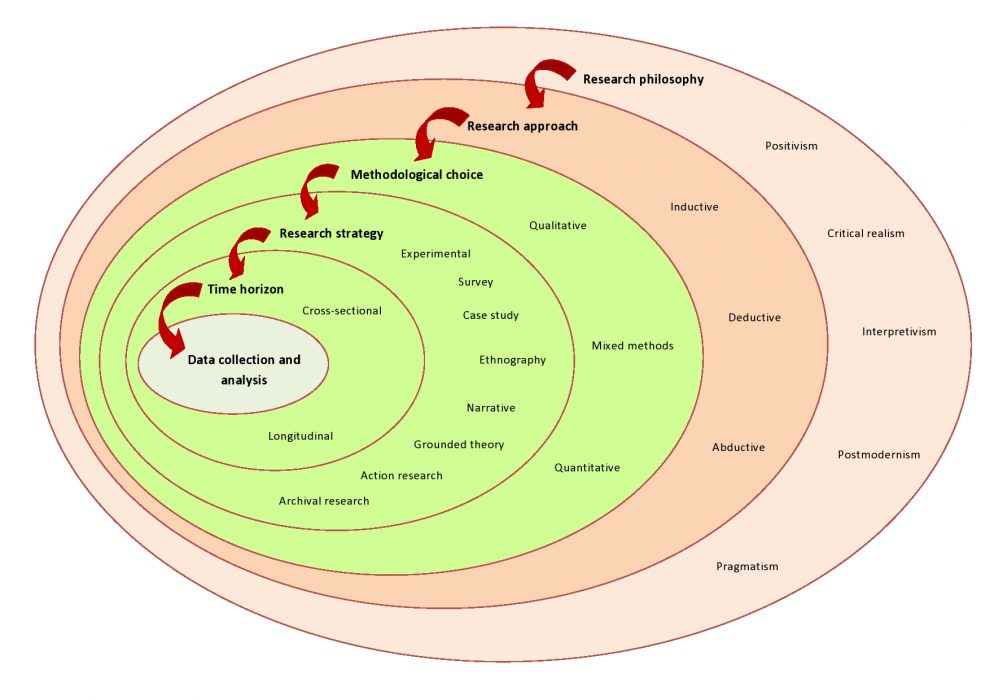
The methodology will determine the plans to guide the research and discuss the processes involved. Saunders (2009) research onion (Figure 4.1) will be used to provide a methodological approach to the research.
Figure 3.1 The research onion
Sources: Saunders et al, (2019)
According to Saunders et al (2019) research methods tend to derive from the research question that needs to be answered or from a problem that needs to be solved. Moreover, it is important to then start to think about data collection and methods used, such as questionnaires, interviews or focus groups. Saunders et al (2019) go on to say that how you collect data belongs to the centre of the research onion; a tool that helps to underpin the research journey; the what, how and why question. The research strategies and design for this project will follow the format of the research onion as shown above.
Sahay (2016) states that the outer layers of the onion provide boundaries and context within the data collection techniques, processing of data and analysis of the procedures to be selected, with the planning and designing stage of the research being the most important.
3.2 Research Philosophy
Research philosophy refers to a set of beliefs and assumptions with reference to knowledge development (Saunders, Lewis, & Thornhill, 2019). It is important for the researcher to clarify the research philosophy used, having read into the various philosophies, firmly believe in a pragmatists approach, not in a way of abstaining from the challenges of understanding other philosophies (Saunders, Lewis, & Thornhill, 2019, page 151) but as noted in Saunders (2019), pragmatism begins with an issue and aims to provide practical solutions, i.e. to encourage students to actively take part in work placements, irrespective of their social background. A pragmatist approach “strives to reconcile both objectivism and subjectivism, facts and values, accurate and rigorous knowledge in different contextual experiences” (Saunders, Lewis, & Thornhill, 2019, page 151)
According to McBride et al (2021) positivism leads to the generation of testable and repeatable results, that eventually will allow the researcher to make predictions, based on a fixed, knowable and on just one truth. Employability related to students requires a more flexible and interpretivist approach
By considering theories, concepts, and ideas, the pragmatist views research findings in terms of the roles they play as instruments of thought and action, in terms of their practical consequences in specific contexts. Pragmatists, according to Kelly and Cordeiro (2020) note that a key feature of a pragmatic enquiry is that all research should produce actionable knowledge, drawn from examination of effective habits or ways of acting. Furthermore, pragmatists are concerned with knowledge and forms of knowing that have practical consequences on real world problems. Johnson and Onwuegbuzie (2004) note that pragmatism is an ‘attractive philosophical partner’ for a mixed-method approach, “where the researcher mixes or combines quantitative and qualitative research techniques, methods, approaches, concepts and language into a single study” (Johnson & Onwuegbuzie, 2004, p. 17)
On that basis a mixed method approach was seen to be better suited for data collection for this study as it allows for both qualitative and quantitative methods; quantitative related to the numerical data collated from the questionnaires, qualitative from the focus group interviews, testing the outcomes of the quantitative data, Ivankova (2015) and a methodological approach that bridges both methods (Creswell and Poth, 2017). Moreover, as noted by Saunders et al (2019), the pragmatist starts with a problem in the hope of contributing practically in the drive to provide solutions that inform future practice. It is the researchers aim to provide practical processes and procedures that add value to Salford Business School’s stakeholders, and by working with other similar minded HE practitioners, share best practice.
3.3 Research approach
Conducting research may be done through deductive or inductive reasoning (Decarlo, 2019). Inductive reasoning follows a more qualitative approach, whereas with deductive reasoning methods tend to be more quantitative in nature. (Decarlo, 2019).
However, instead of moving from theory to data (as in deduction) or data to theory (as in induction) (Saunders, Lewis, & Thornhill, 2019) the author will use the mixed method or abductive approach. The deductive approach related to the conceptual framework developed within the literature review (Figure 3.4) and inductive due to the data collected in order to develop a story/theory explaining the phenomenon under focus. Saunders et al (2019) argue that because pure deduction or pure induction are so difficult to achieve, most management researchers tend to use at least some element of abduction (Saunders, Lewis, & Thornhill, 2019, page 156).
With a mixed method approach the researcher collects and analyses not only numerical data, as in a quantitative approach, but also narrative data, aligned to a qualitative method, to address the research question (Williams, 2007). Moreover, Williams (2007) goes on to say that the mixed method approach is an extension rather than a replacement for the quantitative and qualitative approach to research and enables the researcher to combine both in a single research study.
Proponents of the mixed methods approach advocate ‘what works within the study, and attempt to predict, explore, describe and understand the phenomenon (Carr,1994; Creswell, 2003; Johnson and Onwuegbuzie, 2004; Mingers, 2001) and that the approach to research make pragmatic assumptions governing claims about what knowledge is (Williams, 200)
To collect a mixture of data, the author distributed a survey containing closed-ended questions, to collect numerical quantitative data, and conducted focus group interviews using open-ended questions to provide a narrative, for qualitative data. The aims and objectives of the report will be addressed by using primary methods to address the reports objectives and secondary research statistical data to support the aims:
-
To evaluate current graduate outcomes data from 2016/17 and 201/18
-
To examine the impact work placements, have on graduate recruitment
-
To assess the social background of students who progressed from Salford Business School into employment
-
To identify the key behavioural and motivational factors that lead to successful graduate outcomes and employment
-
To put forward recommendations on how best to support ALL students in the pursuit of a graduate position
3.4 Research strategy
The research design indicates how the research goes about answering the research questions, containing clear objectives derived from the questions, specify the sources from where the data will be collected, how one intends to collect and analyse these and discuss the ethical considerations and constraints. It will highlight the thought process when working through the elements of the research design (Saunders et al, 2019).
The research onion lists the possible research strategies as a survey, experiment, case study, action research, grounded theory ethnography, and archival research (Saunders et al, 2017)
The research strategy for this project will be the use of a case study where Salford Business School will be used to provide context. The study of a case within a real life setting or context helps distinguish this research from others (Saunders, Lewis, & Thornhill, 2019, page 197) and has the capacity to generate insights into the study of a phenomenon in its real life context, leading to rich empirical descriptions and the development of theory
Within the management information systems there exists data related to graduate outcomes over a two-year period, that details the courses students were on; a placement year or not, and whether the students are employed within graduate type job roles. Following on from the research conducted by (Jackson & Tomlinson, 2022) and (Smith et al, 2018) as to the benefits work placements have on graduate outcomes, this project aims to identify whether those students on placements secured job roles quicker than those that didn’t, and what impact one’s social background has on the decision-making process of those students within the sample.
3.5 Time horizons
Prior to reaching the core of the research onion, the neighbouring layer details the time horizon over which the researcher undertakes their research. A research project tends to be either longitudinal or cross-sectional. Even though, due to time constraints, this project will be cross-sectional, there is scope for the data and corresponding conclusion be studied over a longer time period, i.e., longitudinal (Saunders et al, 2019). Cross-sectional research involves a study at a particular moment in time, and according to (Saunders, Lewis, & Thornhill, 2019) often employs a survey, and may also use qualitative or a mixed methods approach, as this project does. Cummings (2017) noted that cross-sectional designs provide a ‘snapshot’ of the population of interest, that contrast longitudinal design that continue and re-examine samples over time. So, on that basis, the time horizon for this project will be cross-sectional, however, the author is keen to work with others in order to identify best practice with reference to embedding employability within curriculum design, and possibly progress on to a PhD.
Continuing from the discussion related to the research following a mixed methods approach, there will be different methods used to obtain the relevant data. Salford Business School have provided a spreadsheet containing 1168 students who graduated in 2016/17 and 2017/18, including their grades, programme of study, quintile data and contact details. This secondary data will be used to identify those students who studied accounting and finance, completed a professional placement year, or not, with a view to developing some primary research instruments, namely individual interviews with 4 students; 2 who completed a placement year and 2 who didn’t. The students will be identified through their LinkedIn profiles, from the specific data set. None of the students were known to the researcher and their invitations to connect have been conducted via LinkedIn.
3.6 Data collection methods
3.6.1 Primary and Secondary Data – collection and analysis
In order to address the research questions and to meet the objectives, secondary data has been obtained to provide additional knowledge, interpretation and to draw conclusions in order to verify the results of the primary data collected. (Bishop and Kuula-Luumi, 2017; Bulmer et al. 2019). Secondary data includes both quantitative (numeric) and qualitative (non-numeric) to be used in a descriptive and explanatory manner to analyse the data in more detail (Saunders, 2019). These inner layers of the research onion will contribute significantly to the study’s overall reliability, and validity, and is a vital methodological approach to the data collection and analysis of the findings.
Details provided in the spreadsheet supplied by SBS management information systems contains personal email address and contact details of students who studied within the years noted above. Having sought ethical approval from the senior leadership team, a questionnaire was compiled (appendix 2) to identify a number of factors related to students who had completed a PPY, or not, their decision-making process and whether they had managed to secure job roles upon graduation.
3.6.2 Research instruments – Questionnaires
Marshall (2005, p132) noted that “with careful planning, questionnaires can yield high quality usable data, achieve good response rates and provide anonymity”, moreover in an article published by Hunter (2012) questionnaires are less expensive, easier to disseminate via online tools such as SurveyMonkey Zoomerang, and returned surveys can be seen immediately by the researcher: the questionnaire was sent to respondents using Google Forms, highlighting the efficiency of such methods. Disadvantages could include lower response rates (Aitken et al 2008) and/or the inability to control those responding (Stewart,2003)
For the purposes of this report, a spreadsheet from SBS management information systems was provided containing 1168 students, from a variety of subject areas including Business Management courses with economics, finance, or marketing, through to accounting and finance and operations management. Quota sampling has been chosen as it is based on the premise that the sample will represent the target population (Saunders et al, 2019) and has similar requirements for sample size as probabilistic sampling techniques. The population was sub-divided to only include Accounting and finance students (287) who had either done a Professional Placement year, or not, then subdivided in that all had achieved a first-class degree or 2:1 (212 students). Cameron and Price (2009) point out how sampling errors can arise in the research, factors that have been acknowledged later within the report: reliability, validity, and bias.
The data was subdivided into the following sections:
-
Accounting and Finance
-
Accounting and Finance with PPY
-
Degree classification
-
Socio-economic classification and description
-
Polar quartile
-
Personal details such as, names and email address
The data will enable the researcher to analyse the grades of those students who did a placement year against those that didn’t, their SEC/Polar quartiles to assess whether they had an impact on the grades. Furthermore, the questionnaire will then attempt to identify other factors that could have impacted on students’ decision to do a placement year or not.
For the focus group interviews the researcher wanted to ascertain respondents’ deeper thoughts with reference to the questions asked in the questionnaire. Not knowing what the respondents had stated when or if, they completed the questionnaire, students were contacted from both groups via their LinkedIn profiles, to take part in the focus group meetings via Teams.
There were 12 questions (see appendix 2), of which 6 were yes/no closed questions to get some background information about the students, for example did you complete a professional placement year, was it the right decision and did you progress directly into employment after graduating, The final two questions were related to students background, to provide some analysis of the human capital related to their previous educational journey (A Levels or BTEC), through to their cultural capital, and whether the students are a first to go to university from their respective families. Other questions were more open in that they were attempting to provide the researcher with more detail than yes/no by providing options related to skills required, the number of applications prior to getting a job, through to how helpful SBS employability team was in their pursuit for a career. Administrators from the alumni team sent out the questionnaire to the accounting and Finance students on the spreadsheet; all had either a First-class degree or 2:1 and had either done a Placement Year or not.
3.6.3 Thematic analysis
To analyse the data, thematic analysis will be used to pinpoint, identify and explore common themes within the quantitative data in a variety of ways (Ivankova, 2015). Thematic analysis will enable the researcher to make sense of the data available in order to draw conclusions and identify common themes, moreover Braun and Clarke (2006) noted that using thematic analysis finds meaning in the data. As noted above, this report data collection methods include a questionnaire and focus groups in an attempt to make sense of the data and identify if the aims have been met.
For the qualitative information, semi-structured interviews were conducted (appendix 3 and 4), based on the responses in the original questionnaire related to drawing out or to support conclusions made. One of the questions focused on students who had completed a professional placement year, the other not. For example, Section 1 and 2 asks why respondents felt doing a placement year, or not was the right decision, and how quicky they secured employment. The students graduated in 2017 and 2018 so looking back they could be able to look back on that decision with hindsight in mind. Sections 3 and 4 were more focused on their past academic experiences and socio-economic backgrounds to assess the impact on their decision-making process. Moreover, the questions attempt to assess Tuononen et al (2019) conclusions that students who grasp the concept of their employability as an undergraduate were able to articulate in preparation for their working lives three years later.
Details of the sampling method will be explained in more detail later in the report.
This will assist in achieving the following objectives:
-
To assess the social background of students who progressed from Salford Business School into employment
-
To identify the key behavioural and motivational factors that lead to successful graduate outcomes and employment
In order to address the aims and objectives of the study it is important to select a suitable sample that represents the population from which it has been taken in a meaningful way (Saunders et all, 2019).
3.6.4 Sampling
Probability or random sampling is where every item in the population has an equal chance of being selected (Taherdoost, 2016). Moreover, Berndt, (2020) highlights that common types of probability sampling include amongst others, random sampling, systematic sampling and cluster sampling, whereas non-probability sampling techniques is based on the subjective judgement of the researcher. Saunders et al (2019) note that non-probability sampling provides a range of alternative sampling techniques but share in Berndt (2018) point that there is an element of selective judgement.
For the purpose of the primary research questionnaire students were selected clustered based on their chosen field of study, accounting and finance. Furthermore, only those students who had achieved a 1 st class or 2:1 degree were chosen, some having completed a professional placement year, others not. The questionnaire, produced on google forms, was sent out by SBS’ Alumni office to 212 students through their individual email addresses, with 31 responding (15%). It is difficult for the author to determine who completed the questionnaire as who responded was not known.
In hindsight and for future research the sample size could have included all students within the spreadsheet, but the author wanted to ascertain the performance of students within their particular field of study.
3.7 Validity, Reliability and Bias
According to Saunders al (2019) reliability and validity are central to the judgements made about the quality of the research. Although the concepts are “closely related, they express different properties of the measuring instrument” (SÜRÜCÜ, 2020, p. 2496). The author goes on to say that whilst the results may be valid, they might not be reliable and vice versa
3.7.1 Validity
According to Saunders et al (2018) validity refer to how appropriate the measures are, the accuracy of the results and what do the finding represent; do they stand up. Moreover, Pantino (2018) note that the validity of the research study is related to how representative the results are of those outside of the study.
3.7.2 Reliability
Thanasegaran (2009, p 1) state that reliability is “the degree to which measures are free from error and yield consistent results, the consistency of the measurement procedure”. In order for the report to be considered valid and trustworthy, the data needs to be from a reliable source. This can be related to the literature provided in the literature review, the data collected, and the sample identified.
The research aims to analyse the benefits of work placements, the issues of self-selection, and students perceived capital with a view to embedding employability provision within Salford Business School to improve graduate outcomes. The data is provided by the MIS team within Salford Business School, used for both internal and external reporting purposes, so is reliable. The data is from 2016/17 and 2017/18, prior to the author becoming a member of staff, it provides a clear understanding of student’s thoughts, progress and experiences, prior to the pandemic.
With reference to the literature review cited throughout, the journals are produced by respected authors and governmental bodies, ensuring reliability.
3.7.3 Bias
Bias can arise in a number of guises; design, selection/participation, data collection and measurement, analysis, and publication (Smith & Noble, 2014). With reference to data collection and analysis bias, the researchers’ personal beliefs can influence the way the information data is collected, when analysis takes place, and may look to confirm those thoughts and beliefs. Respected journals within the literature review do highlight the benefits of work placements, supporting the authors view, but there seems to be issues related to why some students do embark on a work placement and others not. The aim of the report is to develop a framework that supports all learners in their quest to become employable; reasons one suspects students go to university.
In order to prevent bias, the respondents were not known to the author, the questionnaire produced on Google Forms was sent by the SBS alumni team and students had the right not to complete it
3.8 Ethical considerations
One of the main considerations when conducting this report were any ethical issues that might arise during data collection and analysis. Research ethics relates to the standard of behaviour that guide the researchers conduct with reference to the rights of the respondents who may be affected by it (Saunders, et al., 2019). To address these issues an ethical approval form was completed and sent to the authors supervisor to seek approval (appendix 1), this being granted.
Prior to taking part in completing the questionnaire, sent by the alumni at SBS, participants were asked to agree to a briefing and consent form (Appendix 2 and 3). It was also important to seek authorisation from the SBS senior management team (appendix 4) to send out the questionnaires to the sample, using their email addresses.
4.0 Data Analysis and discussions
This chapter will provide an analysis of the research that has been conducted. The first section will focus on the analysis of the data contained in the spreadsheet produced by Salford University’s management information systems. The following section will analyse the outcomes of the questionnaire sent out to 212 students. The final section will relate to interviews that have taken place with a view to providing some clarity related to the benefits or work placements, and in the decision-making processes of the students concerned.
4.1 QlikView secondary data
Figure 5.1 was compiled by a system called QlikView, to identify those students who graduated in 2017 and 2018 respectively. The table identifies students who completed a Professional Placement Year, or not, their degree classifications, their polar quartiles alongside their social economical class; to assess whether their background had an impact on their decision-making process or overall degree classification.
Figure 4.1: QlikView data 2016/17 & 2017/18
| Accounting and Finance students 2016/17 &2017/18 | |||||||||||||||||||
|---|---|---|---|---|---|---|---|---|---|---|---|---|---|---|---|---|---|---|---|
| Grade | 1st and 2:1 | 2.2 | 3rd | Totals | |||||||||||||||
| PPY | Not PPY | Total | PPY | Not PPY | Total | PPY | Not PPY | Total | |||||||||||
| Students | 30 | 182 | 212 | 0 | 48 | 48 | 0 | 27 | 27 | 287 | |||||||||
| % | 14.1% | 85.85% | 100% | 0.00% | 100% | 100% | 0.00% | 100% | 100% | 100% | |||||||||
| Average Polar | 2.4 | 2.4 | 2.4 | 2.4 | 2.4 | 2.4 | |||||||||||||
| SEC | 5.96 | 5.98 | 5.98 | 5.92 | 6.01 | 5.97 | |||||||||||||
| 1st class | 27 | 98 | 125 | 44% | |||||||||||||||
| % | 90.0% | 53.85% | 58.9% | ||||||||||||||||
| % of students on placements | 10% | ||||||||||||||||||
Source: The Author (2023)
Within the spreadsheet containing 1168 students from a cross-section of students from Salford Business School, a filter was used to identify how many of those students studied accounting and finance (287) and achieved a 1 st class or 2:1 degree (212). In order to assess students with a similar academic standard, the degree classification had to be the same, irrespective as to whether they had done a PPY, or not.
The spreadsheet provides only quantitative information, that will indicate that the vast majority of students who completed a PPY achieved a first-class degree (90%) as opposed to the 53.85% of students who achieved a first not taking a professional placement year. This supports the research conducted by Atfield et al. (2021) who noted that undergraduate work placements tend to be linked to positive outcomes for students.
It was interesting to note that the Figure 5.1’s data related to students polar quartiles (an average of 2.4) indicate a similar participation rate between each group, as does social economic class (semi-routine occupations, an average of around 6) had no significant impact on across all degree classifications.
4.2 Questionnaire responses
The questionnaire has 12 questions and was sent out to 212 accounting and finance students who graduated in 2017 and 2018. The questionnaire was sent out by Salford Business School’s alumni team via google forms, with 32 responses (15%). The following information relates to those findings:
Questions 1 and 2 was related to whether the students completed a PPY, or not and whether, in hindsight they made the right decision: 62.5% of respondents (20 out of 32) completed a PPY, with 75% of all respondents believing they had made the right decision. Incidentally 15.6% of respondents were employed by the company they did their placement year (question 6).
Some of the following questions will be more qualitative in nature, so will hopefully shed some more light on the questions asked, Question 3 asks the respondents to explain why they felt their decision was correct.
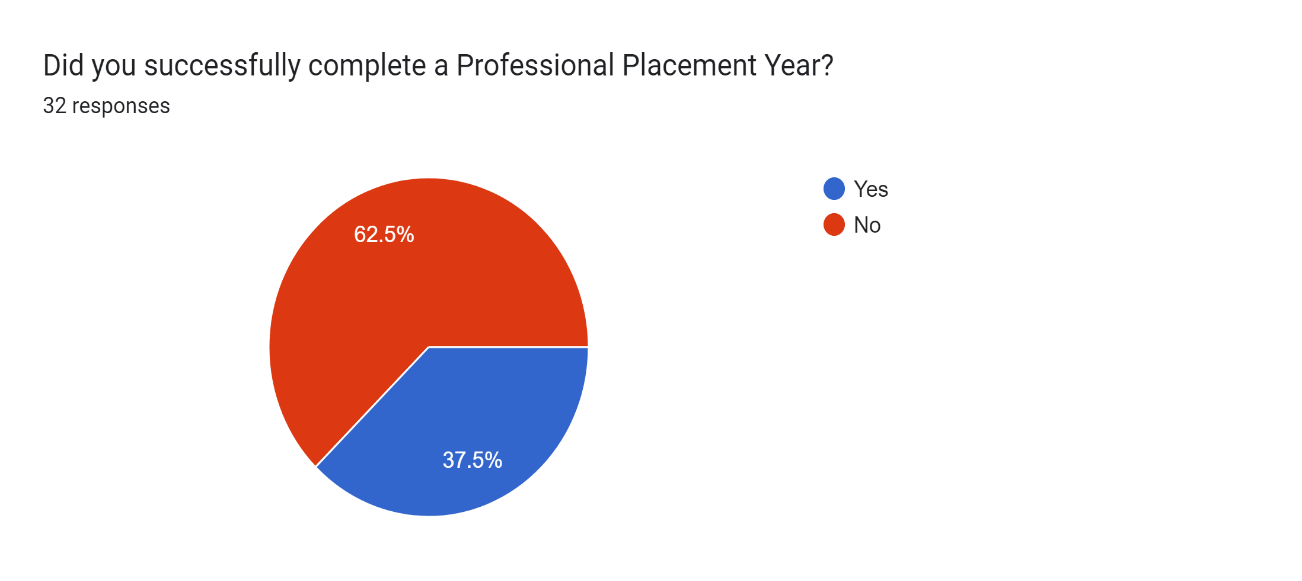 Question
1
Question
1
Question 2
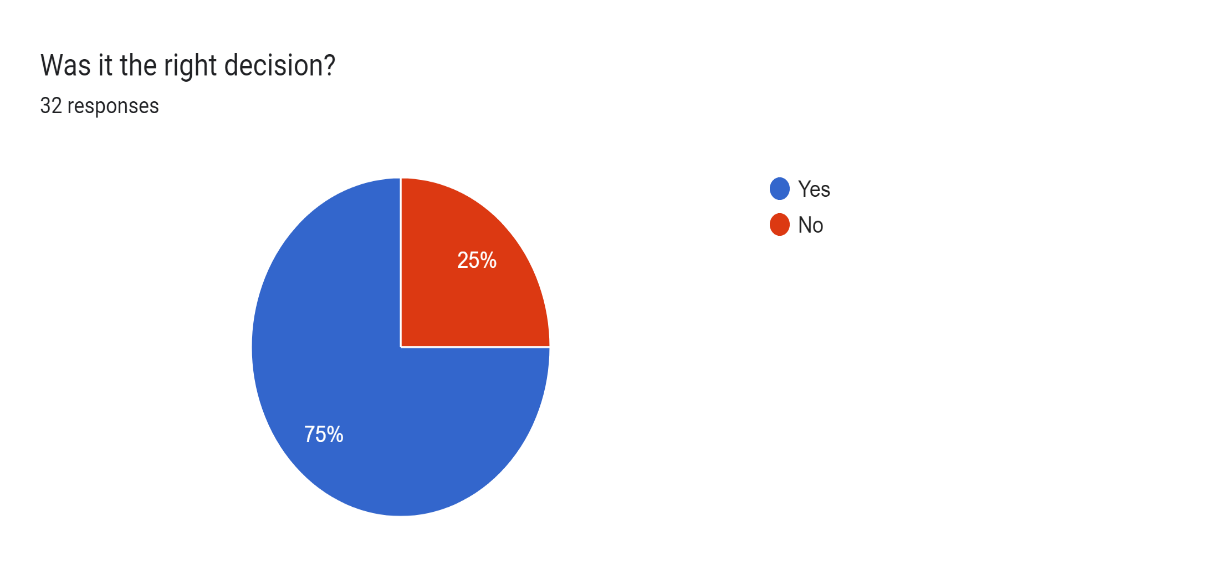
Questions 3
Question 3 sought to find out what students felt about the first two questions with a view to eliciting some of the reasons behind their choices. The responses were split between those who had completed a PPY and those that hadn’t. As the comments were anonymous, the researcher can only surmise the comments made, such as:
In support of a PPY:
“I regret not completing a placement year. I think this would have better prepared for me life after university. There are skills learnt on the job that can't be replicated in an academic environment which are important to know”.
“I believe if I had a placement year will have more confident to pass interviews and find a job, it will also improve my practical experience.”
“It gives a better understanding of the degree itself, helped give an idea of what area you wish to work in the future, but also made finding a job so much easier”.
“Having experience in a professional environment, I believe, was the best possible opportunity I could’ve given myself at securing a graduate position afterwards. If I hadn’t completed the placement year, I don’t believe I would’ve secured a graduate position as successful as I did.”
“My placement year helped me understand what I wanted to do after graduating. My placement allowed me to not only develop professionally but personally. I grew more in my placement year than the other 3 years at university. It shaped me to become the person I am now and allowed me to create vital connections within the industry I wanted to go into.”
“It gave me valuable working and office experience, as well as a break from exams and university. It gave me an idea of what I did and didn’t like from an office environment as well as a desirable addition to my CV when looking for grad jobs. The placement year was loosely finance related (my degree was accounting and finance), so whilst didn’t help me towards my professional exams, I learnt a lot and valued the experience.”
Comments made in support of students doing a work placement are supported by the report conducted by BIS (2016) relating to students feeling that experience improved their employability prospects overall, especially related to any area of interest. Moreover, Smith et al (2018) noted that the real-life experiences of being in a working environment improves employment prospects and provides students with an awareness of future career plans.
“I managed to complete education earlier and didn’t affect me finding a job, manage to secure a job whilst I was doing my exams, managed to get a first without a placement I don’t regret not having placement year.”
“I was able to continue in the mind frame of learning. If I went from work back to study, I'm not sure I would have been able to focus as much.”
“It didn’t benefit me when I graduated afterwards and meant I did my last year of uni without my friends”
“Right decision as I had already gained some experience before university”
With reference to students who didn’t complete a placement year, Atfield et al’s (2021) points about being a positive experience could also support the notion that student’s ability, could be a determining factor for them progressing directly into work upon graduation, i.e. the positive outcome was based more on students ability and not on a work placement. When you include high levels of social and psychological capital, Tomlinson, (2017), and those CareerEdge factors related to the three S’s: Self-awareness, self-efficacy and self-confidence (Dacre-Pool, 2020)
Question 4 asked how quicky did students’ progress directly from university into employment after graduating (91%), and a follow up question related to the timeframe (question 5).
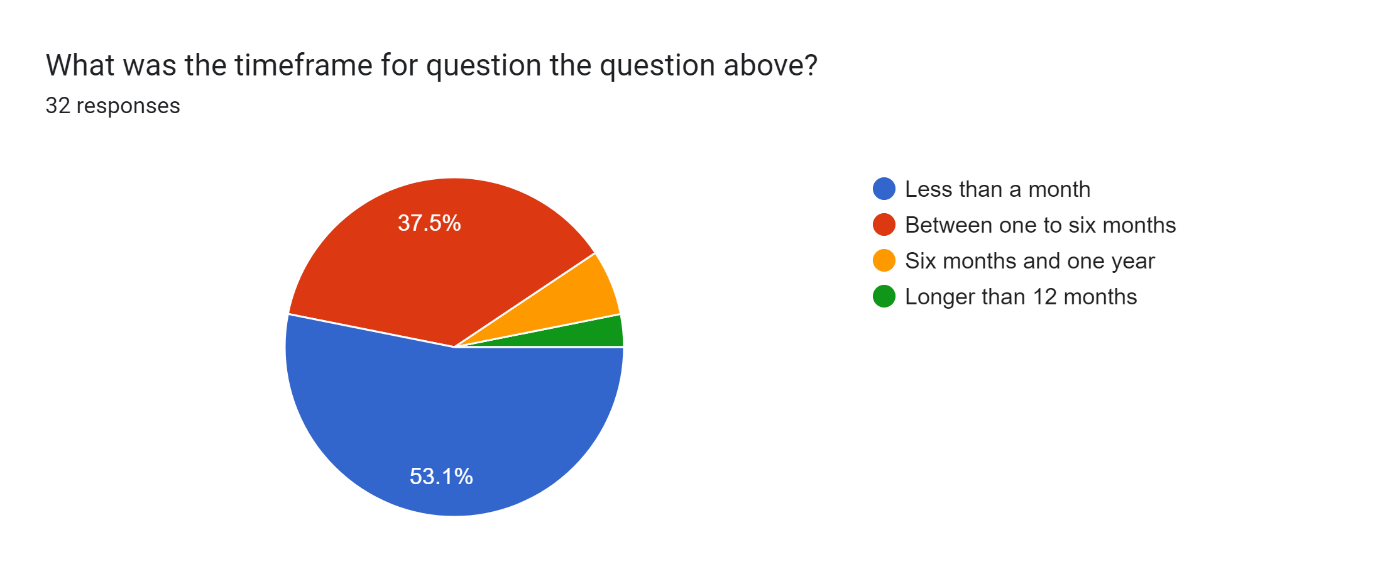
Interestingly 53% of the respondents secured employment in less than a month and 37.5% between one to six months. However, it is worth pointing out that question 10 asked all students how many application forms they completed prior to securing a job:
Question 10
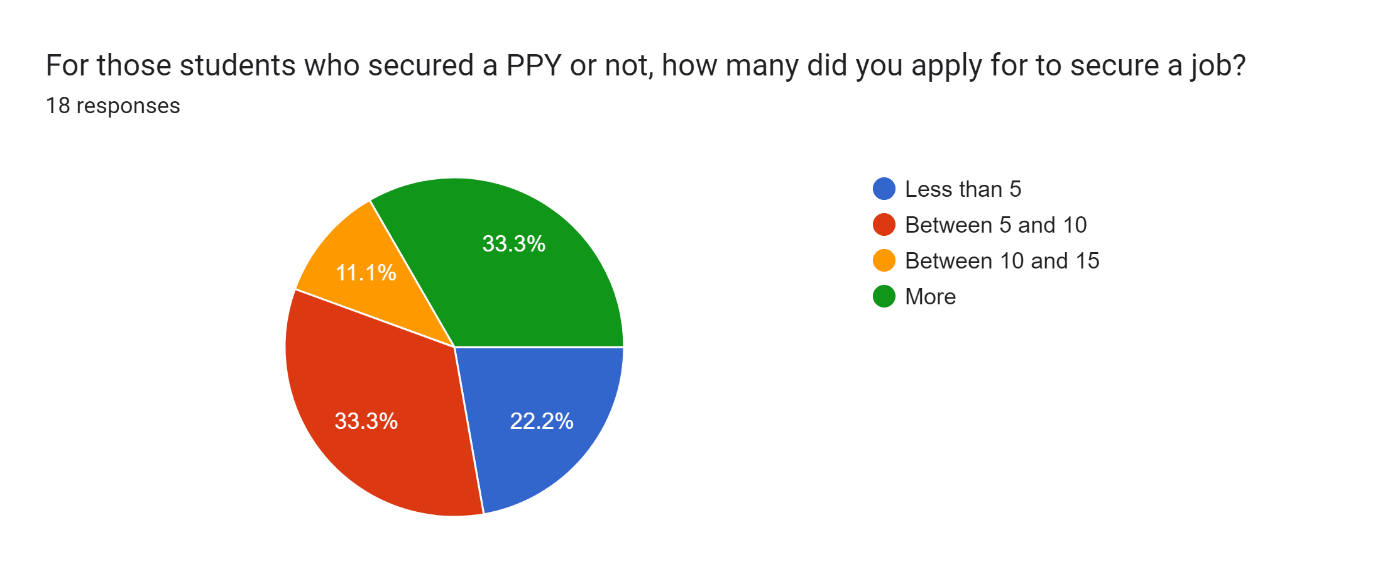
33.3% of respondents applied for more than 15 jobs prior to securing a position with an additional 44.4% between 5 and 15 applications. Tomlinson’s (2017) work psychological capital alongside Dacre-Pools’ emotional levels of self-confidence and self -efficacy can help support students’ resilience and develop a ‘never-give-up attitude (Dacre-Pool, 2020).
The final two questions were related to qualifications students studied prior to coming to university and whether they were the first in their families to attend. There is a perception that students who study A levels tend to perform better at university than those with BTEC’s, and that if your parents or siblings had been to university before, you were more likely to have higher levels of capital, whether they be psychological, identity or cultural.
Question 11
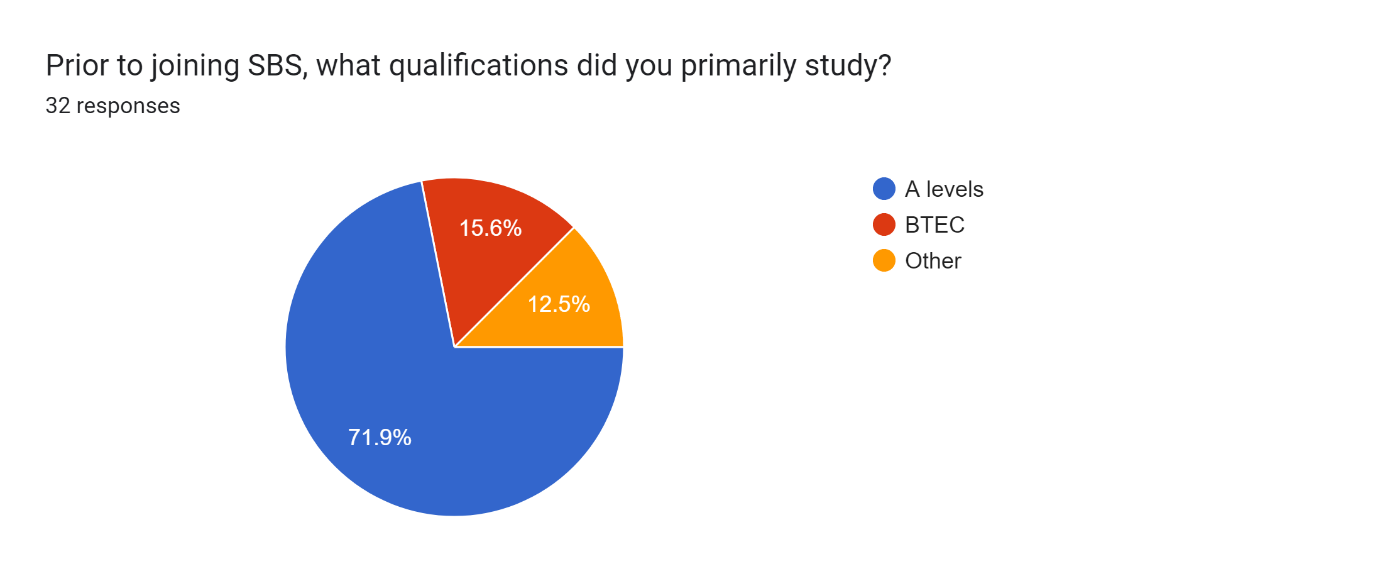
Question 12
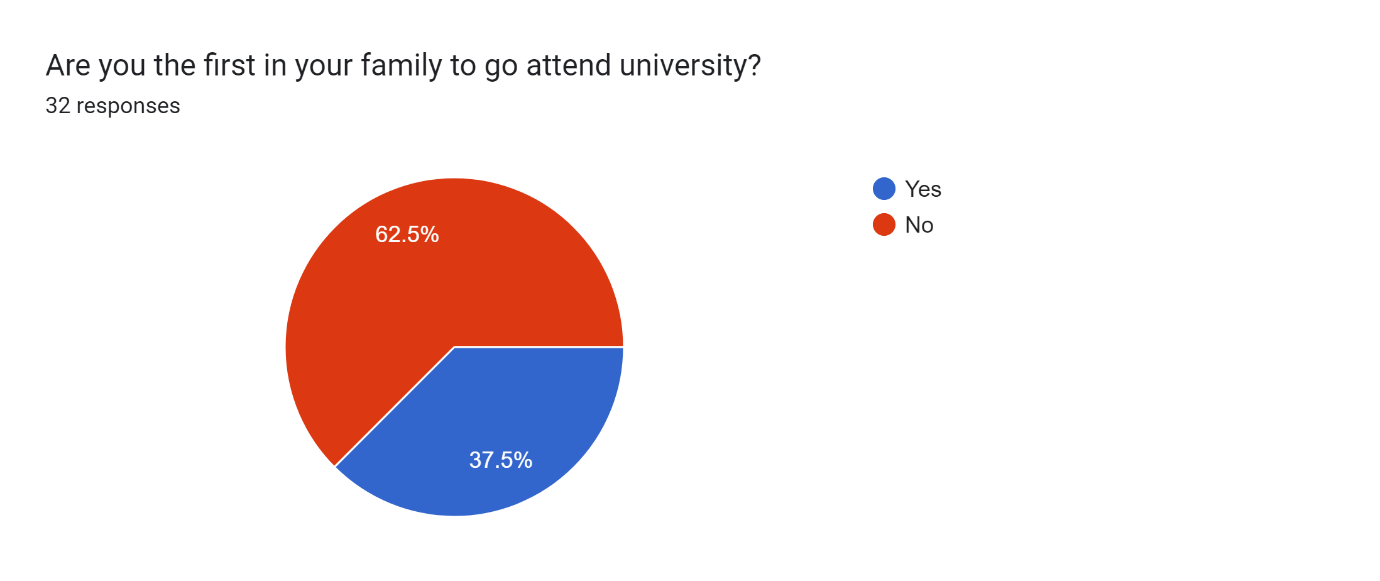
As it transpired 72% of respondents studied A levels with only 37.5% being the first in the family to attend.
Questions 10 were related to skills and what respondents felt are important when supporting students in the attempts to secure employment:
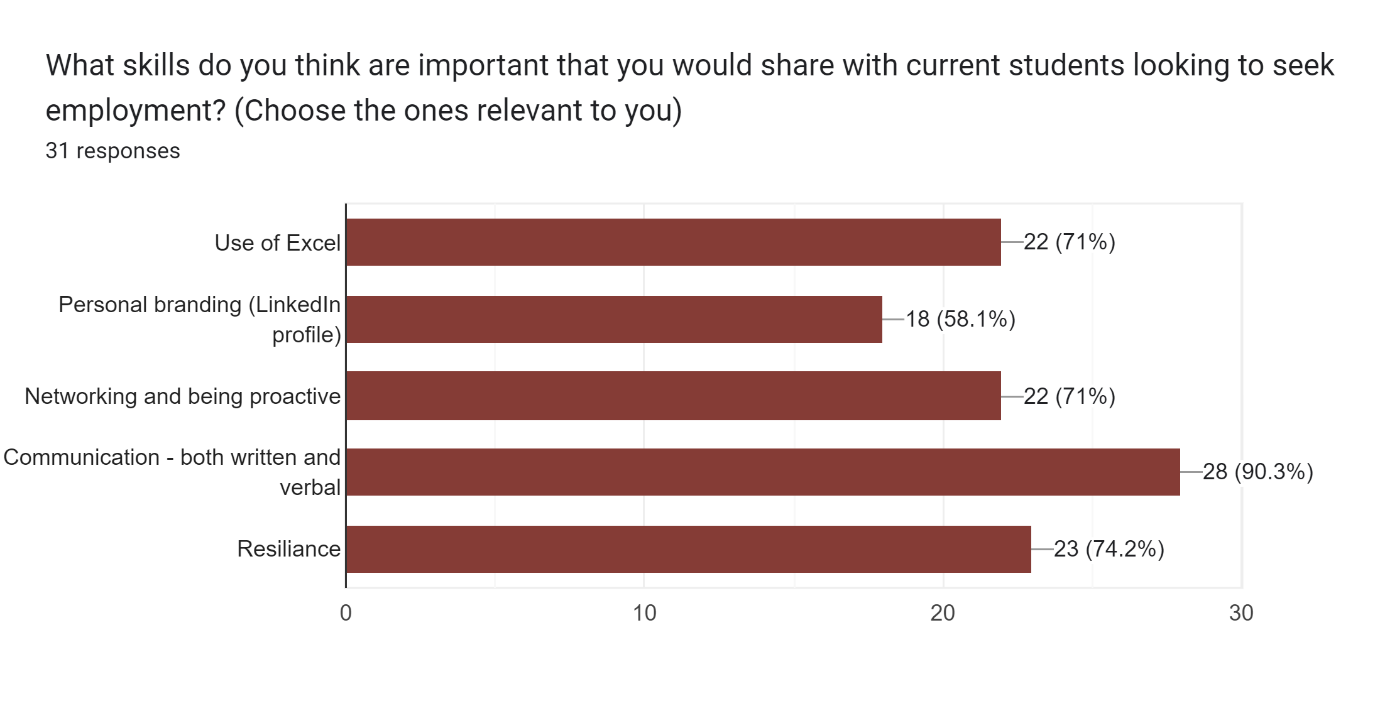
Students felt the most important skills were related to communication skills, in particular verbal and written, highlighting the importance of authentic assessments that develop graduate attributes related to student levels of human capital, what they know, and a greater emphasis on the social capability attributes of being a good networker (Batistic & Tymon, 2017).
4.3 Interview responses
It was the authors intention to interview 2 students who had completed a placement year and 2 that hadn’t, again with similar grades, and evaluate students’ response against the feedback from the questionnaire. Due to time commitments and students’ engagement, the author only managed to secure interviews with two students who had completed a professional placement year. Additional research related to students who didn’t, would be beneficial. However, qualitative comments made within the questionnaire do provide some context and their feelings.
As noted previously, 2 students who completed PPY were contacted via LinkedIn asked to take part in a short interview to ascertain their experiences on placement. The following interview had 11 open ended related to questions noted in the questionnaire, but more qualitative in nature to draw out a more in-depth analysis of the questions asked. Due to the amount of data in the transcripts (31 pages in total) the author hasn’t included them in the appendices but made note of the applicable comments made below; a copy of the transcripts is available for the researcher’s supervisor and for internal/external examination purposes.
Could you please say your first name, your current place of work?
Section 1 – Professional Placement Year
The data from the quantitative study suggests that doing the Professional Placement Year was the right decision.
-
In your opinions, explain why you felt it was beneficial to you?
Speaker 1
“My placement year was the best decision I made at university,
and it gave me so many skills and life experiences that I can't get a
university and it prepared me for when I graduated.
I'm back at the company that I worked for as my placement year and it
gave me a great kind of foot in the door to be able to start my career
once I graduated.”
Speaker 2
“I think it was beneficial in teaching me especially managerial skills, something I picked up because I had one manager that wasn't so great and one manager that was fantastic.”
-
Looking back, what were the key lesson learned from the experience?
Speaker 1
“I'd say the person that I was at the beginning of my placement year to the person I left was completely different, and I'd say in that one year I grew more as a person than I did in the three years at university.”
Speaker 2
“I really got to see both sides and it was also beneficial to see, especially like with technology skills, so that Excel skills, those kind of things like seriously developed during the course of the year because there's so many things I couldn't do at getting my I can do now.”
-
What would you consider would be the best ways to encourage other students to do a placement year?
Speaker 1
“I'd say not a lot of people like to do it because one, they get
comfortable with the people that are around them.
So you have to then when you come back, you'll join in a different
year.
Not many people like to do that, and it also obviously adds a year on to
your graduation time, but the experience and their skills that you gain
within that one year sets you up for when you graduate.”
Speaker 2
“Introduce them to someone who's already done the exact same placement as that person, and then they're also mentored by that person, which is what we have here.”
Section 2 – Progression
The data from the quantitative study suggests that most respondents progressed directly into employment after graduation.
-
How long after graduation did you manged to secure a job role within the accounting sector? How many did you apply for?
-
Did you have the option of working for your placement provider?
Both respondents did their placement year with the organisations they went on to join after graduation, so they progressed directly into employment after graduation
Section 3 – Social capital
The data from the quantitative study suggests that most respondents studied A levels prior to joining Salford Business School
-
Did you students A levels, BTEC or a foundation year?
-
Are you the first in the family to go to university?
-
Which of the following be describes you parents’ background:
-
Higher managerial and professional occupations
-
Lower managerial and professional occupations
-
Lower supervisory and technical occupations
-
Intermediate occupations
-
Semi routine occupations
-
Speaker 1
“I did two A levels and a BTEC, and neither my parents or my brother went to university, so I'm the 1st in my household to go.”
“No managerial, my mum is a kitchen designer”
“I always knew when I was applying to universities that I wanted to do placement year and Yep, so I looked apprenticeships and I didn't wanna stay where I lived.”
“I wanted to move away so I knew if I wanted to go to university, I also wanted that business experience, which is why I looked for courses which provided a professional placement year.”
Speaker 2
“I did A levels. I had a very traditional parenting style, so I didn't really have, so A levels were not a discussion to be had. It was just three levels go to university and that's it.”
“Yes I am the 1st to go to university”
“Intermediate occupations in retail”
Section 4 – Skills and attributes
In the quantitative study, the vast majority of students (89%) felt communication skills; written and verbal were important when seeking employment, followed by networking.
-
In your views, what skills do you feel are important employability skills?
Speaker 1
“So for me, whenever I did interviews or I've conducted interviews now myself and he, they don't look at your education, they go. What else have you done? You've done your course”
“They need to know.
Have you done a club?
Have you done extra committed?
Do you do any volunteering?
Have you got any skill sets?
They see your education to go OK, that's fine, but what else?
That gets you through the door.
You've got your degree.
Well done.
I need some helps, so that's where you need all your soft
skills.”
Speaker 2
“I feel like communications are #1 because you can't communicate, then you're always gonna be letting somebody down.”
“There was like a lot of times when you're using the time management skills and like month end is very, very tight and there's always gonna be something that's slips towards the side and gotta tell those people or they just get frustrated with you has got things like communication is really important.”
-
From your experience of being a SBS students, do you feel we do enough? What should we be doing?
Speaker 1
“I'd say it's a brilliant SBS. When speaking to other universities, nobody does the professional placement module and I think that's brilliant.”
Speaker 2
“OK, from my point of view, I think I was just unlucky because I feel like I didn't have enough support because I especially because for placement students it's their first ever role in the real working world.”
Section 5 – Final remarks
-
If you were in charge of employability within SBS, what would be your three key priorities for improving the student experience and how would you achieve them?
Speaker 1
“I'd say put it in first year two at have more people come in and talk about those experienced during the placement year.”
“And I know where I've spoken to a couple of people, but and when I was a student, probably one or two people came in. But it'd be good to have spoken to more people just to understand and kind of why they did it and where they went for their placement year and even not just those that have returned. But those that have been and like a few years ago, they've done their placement year and how they've don't in that career now and from doing it and maybe also probably more check-ins in your placement year from your university lecturer, so I think I had like 2 check-ins maybe and I have to complete A and yeah, and the final assessment.”
Speaker 2
“I feel like there needs to be a stronger push on Excel, especially for the accounting students because it's just so key like all of the other software’s, I feel that you can pick up really easily and it's and they're not really that transferable.”
“Maybe even ask her and those kind of things could be taught, because I've noticed that a lot of them don't know how to form an email in like a corporate sense. It's like they skipped the niceties and they go straight to the point and that and that's great, and that could be your style, but it's, but it's like saying the things like please could you do this right now it's not something you need to stay in the corporate world really to somebody else even never met before.”
4.3.1 Overview of interview responses (Dacre-Pool, 2020)
It must be noted, as in the analysis of the questionnaire, both students achieved 1 st class degrees and were employed by the same organisation where they completed their work placements. On that basis, the theories of Atfield et al (2021) appear to be aligned to the outcomes of the two students’ positive outcomes and Brookes and Youngson (2016) who noted that students not only achieved higher grades, but also likely to gain employment.
With reference to graduate attributes, it is clear from the students’ responses that both had the ability to articulate their skills in a clear and concise manner, whilst at the same time provide evidence of their development (Dunne, 2017)
The proposed conceptual framework (Figure 3.4) identified key personality traits that would be beneficial to encourage students to do work placements and make the most of the opportunities available, however the respondents psychological capital has not yet been tested due to securing employment prior to graduation, but does highlight the strengths related to identity/cultural capital and in the three S’s related to making the most of the opportunities available (efficacy), an awareness of their strengths and weaknesses and how to address them (confidence) thus relating to their belief in themselves (esteem) (Dacre-Pool, 2020).
Moving forwards, the research so far has demonstrated the importance of embedding employability with HE provision (Holmes & deMain, 2022) and as the authors noted their frustration of students not engaging in experiential learning opportunities. So what would be the best ways to support students along that journey?
The following amended conceptual framework will take note of the theory of change methodology, ensuring that all stakeholders, internal and external, play a pivotal role in supporting and encouraging students to take up the opportunity of completing a work placement and the benefits arising.
4.4 Revised Conceptual Framework
The theory of change model has been incorporated into the proposed conceptual model (Figure 3.4) to demonstrate the importance of having a structure that provides a visual insight into the resources needed and activities required, both short and long term, to meet the objectives of this report and provide clarity to all stakeholders.
Taking on board the comments made within the primary research (the questionnaire and interviews) alongside the information contained in the literature review, a refined conceptual framework is detailed below.
The initial conceptual framework focussed on the personality traits and student characteristics that will help them to enhance and develop their individual employability skills, irrespective of the starting points: capitals and three S’s.
The refined framework is related to making sure more students take on board the opportunities work placements provide, and respective benefits, with a framework that provides clarity for all stakeholders, and an awareness of key points of when interventions need to be made (Harries, et al., 2014)
4.4.1 Inputs and enablers
The inputs and enablers are related to the resources that go into the project, such as budgets and staffing, through to those internal and external stakeholders who are key to the success of the project: committed staff members within SBS and supportive employers, including alumni
4.4.2 Activities
The activities relate to developing a supportive network of professionals who make sure the project achieves its intended outcomes; guest speakers, embedding employability within the curriculum and motivating students through recent alumni, who can act as mentors to develop students’ levels of confidence, and encourage them to make the most of the opportunities available, including work placements.
4.4.3 Outcomes
As noted throughout the research, student outcomes improve when students go on work placements, resulting in employers and governmental bodies (OfS) being satisfied with HE institutions graduate outcomes data. On that basis the final outcomes will be to increase the amount of students going on work placements by enhancing the links with supportive employers, as students’ progress directly from education into work.
Figure 4.1 Refined Conceptual Framework
| Personality traits | Key characteristics | Student development | Theory of Change – inputs and activities – Harries et al (2014) | TOC - Outputs |
|---|---|---|---|---|
| Psychological | Managing the inevitable career challenges students will have with reference to rejection and tenacity | Resilience and never giving up attitude |
Inputs/enablers The resources going into the project:
Activities Things to be done:
|
Intermediate outcomes An active and collaborative group:
Final Outcome/goal
|
| Identity | The way in which you understand yourself and describe who you are to others. | Presentation and investing in you to achieve what you want to achieve | ||
| Cultural | Students’ backgrounds, socio-economic groups and understanding of the field rules | Empathy and teamworking | ||
| Self: | ||||
| Efficacy | Lower levels of self-efficacy related to the perception of not being able enough | Seeking opportunities available that help secure employment | ||
| Confidence | A sense of one’s own competence and capability | You know your strengths and weaknesses and a have a positive view of yourself | ||
| Esteem | How we value and perceive ourselves | Being worthy and capable | ||
Source: The Author (2020)
5.0 Conclusion and recommendations
The following chapter provides a conclusion with a view to demonstrating how the research objectives have been achieved, the limitations of the study and the opportunities to develop the subject matter going forward.
5.1 Research objectives
The literature review, secondary data collated from QlikView, and in-depth interviews appear to support the benefits of students doing work placements with reference to positive students and graduate outcomes (90%) of students achieving a 1 st class degrees in Figure 2.1 and the two students who took part in the interviews.
Student responses in the questionnaire sent out via google forms seem to indicate students were happy with the decisions they made with reference to doing a PPY or not, and that they all managed to secure a graduate job within the year. However, there is a need for additional research related to students who achieved a 2:2 or 3 rd class degree to determine why they didn’t choose to do a placement year and how they can be encouraged to.
It was also noted that the various capitals were important in helping students in their decision-making process as some students who self-selected not to do a placement year, had high levels of corresponding capital related to psychological, cultural and a strong sense of identity, managed to secure a graduate position without feeling the need to do a work placement. However, there is a strong body of evidence and research, and corresponding models, that try to encourage students with lower levels of capital (so all students) to building on the three S’s of self-awareness, self-efficacy and self-confidence in order to enhance their various levels of capital and become career ready.
5.1.1 Conceptual Framework and recommendations
Based on the literature review, the employability models and primary and secondary research, a conceptual framework has been devised to address the intended outcomes of the research and corresponding models, to encourage all stakeholders in working together to support students as they progress into the world of work, with the necessary skills and attributes to succeed within their chosen professions.
To achieve those goals, it is important that key personnel within SBS provide SMART action plans that track students throughout their individual learner journeys, through the new accounting and finance provision that has employability embedded in all levels of the course.
In 2016/17 there were only 7 students who completed a PPY, rising to 23 in 2017/18, 30 in 2021/22 and 33 in the current academic year. The plan is to significantly increase the number of students going on to placements (targets to be set) but possibly double the amount to 66 by 2024/25. This will require all stakeholders, especially employers to help support that process.
The more students with a positive educational experience, irrespective of their academic and cultural starting points, resulting in them securing graduate employment, will result in ensuring graduate outcomes of SBS improve significantly.
5.2 Limitations
Though factors related to reliability, validity and bias have been noted above there are limitations related to any research topic. There are 1169 students within the population of data, but the author decided to focus on just those students studying accounting and finance with a 1 st and/or 2:1 degree classification. This was due to try to provide a like-for-like comparison of students with similar levels of ability who had done a professional placement year or not, no students below a 2:1 did a PPY.
Due to time constraints and student responses, a number of students were contacted to take part in individual 1-2-1 interviews, but the researcher only managed to speak to 2 students who had successfully completed a PPY (appendices 2 and 3), to ascertain their thoughts related to the benefits, or not of doing a professional placement year. A more detailed analysis would have been beneficial in addressing the research questions.
5.3 Future research
The author is keen to develop their research skills and by working with other colleagues with a similar interest in embedding employability within HE provision and hope to complete a PHD. There are a number of factors that still need to be addressed, such as interviews with students who didn’t complete a PPY and what they have achieved.
The Conceptual Framework needs to be monitored clearly and the theory of change will bring about a number of interventions that need to be addressed and produce research opportunities throughout each stage. It is particularly interesting why some students, especially on level 4, don’t engage as SBS would like, and how can they be inspired to take note of the opportunities available. Equally, the tracking of alumni will help develop stronger links with SBS employers to support the students of today.
Further research is required to analyse student outcomes based on student’s background with reference to whether they studied A levels or BTEC, their socio-economic status and those of the parents, alongside the students who self-select doing a placement year against those who were ‘persuaded’. The benefits of doing a placement are evident, and arguably there is a strong correlation between students doing a placement year and their levels of competence, what about those students with lower-to-average grades with additional barriers deterring them from pursuing a placement?
Funding : This research received no external funding.
Conflicts of Interest : Declare conflicts of interest or state “The authors declare no conflict of interest.”
ORCID iD (if any)
Publisher’s Note : All claims expressed in this article are solely those of the authors and do not necessarily represent those of their affiliated organizations, or those of the publisher, the editors and the reviewers.
References
Adams, R. & Blair, E., 2019. Impact of Time Management Behaviors on Undergraduate Engineering Students’ Performance. Sage Open, 9(1).
AdvancedHE, 2020. Essential frameworks for enhancing student success: embedding employability. [Online]
Available at: https://www.advance-he.ac.uk/knowledge-hub/essential-frameworks-enhancing-student-success-embedding-employability
Aitken, C., Power, R. & Dwyer, R., 2008. A very low response rate in an online survey of medical practitioners. Australian and New Zealand Journal of Public Health, 32(3), pp. 288-289.
Ang, S. & VanDyne, L., 2009. Conceptualization of Cultural Intelligence. Definition Distinctiveness and Nomological Network. New York: Routledge.
Arthur, L. & Little, B., 2010. The REFLEX Study: Exploring Graduates’ Views on the Relationship Between Higher Education and Employment, Higher Education and Society:, Londn: Open University.
Ashton, D. & F, G., 1996. Education, training and the global economy, Cheltenham: Edward Elgar.
Atfield, G., Hunt, W. & Luchinskaya, 2021. Employability programmes and work placements in UK higher education, s.l.: Department for Education.
Baptiste, I., 2001. Educating lome wolves: Pedagogical implications of hjuman capital theory. Adult Education Quarterley, 51(3), pp. 184-201.
Bathmaker, A., Ingram, N. & Waller, R., 2013. Higher education, social class and the mobilisation of capitals: recognising and playing the game. British Journal of Sociology of Education, 34(5/6), pp. 723-743.
Batistic, S. & Tymon, A., 2017. Networking behaviour, graduate employability: a social capital perspective. Education and Training, pp. 374-388.
Berndt, A., 2020. Sampling methods. Jouranl of Human Lactation, 36(2), pp. 224-226.
BIS, 2011. Supporting Graduate Employability: HEIs practice in other countries, London: Department of Business, Innovation and Skills.
BIS, 2016. Computer Science Graduate Employability:qualitative interviews with graduates, London: Department for Business Innovation and Skills.
Blackmore, P., Bulaitis, Z., Jackman, A. & Emrullah, T., 2016. Employability in Higher Education. Exeter: Pearson.
Brookes, R. & Youngson, P., 2016. Undergraduate work placements: an analysis of the effects on career progression. Studies in Higher Education, pp. 1563-1578.
Brown, P. & Hesketh, A., 2004. The mismatch of talent: Employability and hjobs in the knowledge economy, oxford: Oford University Press.
Burke, C., 2015. Culture, Capital and Graduate Futures: Degrees of Class. London: Routledge.
CareerReady, 2023. We are Career Ready - About US. [Online]
Available at: https://careerready.org.uk/about-us/
Coffield, E., Markham, K., Crosby, C. & Athanassiou, M., 2023. Lcking subjects:Challenging the construction of the emplowered graduate in museum, gallery and heritage studies. Arts and Humanitoes in Higher Education, Volume 22, pp. 112-127.
Cole, D. & Tibby, M., 2013. Defining and developing your approach to employability: A framework for higher education institutions, York: Higher Education Academy.
Creswell, J. & Poth, C., 2017. Qualitative Inquiry and Research Design: Choosing among five approaches, USA: Sage Publications.
Cummings, C., 2017. Cross-Sectional Design. In: M. Allen, ed. The SAGE Encyclopedia of Communication Research Methods . Thousand Oakes: Sage Publications.
Dacre-Pool, 2020. Revisiting the CareereEDGE model of graduate employability. National Institute for Career Education and Training.
Dalrymple, R., Macrae, A., Pal, M. & Shipman, S., 2021. Employability: a review of the literature 2016-2021, s.l.: Advance HE.
Decarlo, M., 2019. Inductive and deductive reasoning. [Online]
Available at: https://socialsci.libretexts.org/Bookshelves/Social_Work_and_Human_Services/Scientific_Inquiry_in_Social_Work_(DeCarlo)/06%3A_Linking_Methods_with_Theory/6.03%3A_Inductive_and_deductive_reasoning
Dobbins, A. & Fell, P., 2020. Using the notion of ‘gift exchange’ to explore effective mentoring relationships in the placement setting. Teaching in Higher Education, pp. 334-349.
Donaldy, W., Baruch, Y. & Ashleigh, M., 2019. The undergraduate self-perception of employability: human capital, careers advice, and career ownership. Studies in Higher Education, 44(4), pp. 599-614.
Dunne, J., 2017. Work placement reflective assessments and employability enhanced through highlighting graduate attributes’. Journal of Teaching and Learning for Graduate Employability, pp. 40-59.
Dunne, J., 2017. Work placement reflective assessments and employability enhanced through highlighting graduate attributes. Journal of Teaching and Learning for Graduate Employability, pp. 40-59.
Fowlie, J. & Forder, C., 2020. Can students be‘nudged’to develop their employability? Using behavioural change methods to encourage uptake of industrial. JOURNAL OF EDUCATION AND WORK, 33(2), pp. 154-168.
Gazdula, J. & Atkin, C., 2017. Enterprise placements: Factors which support learning and prolonged attainment in students’,. Research in Post-compulsory Education, pp. 128-143.
Hackett, P., 2019. Quantiyative Research Methods in Consumer Psychology. 1 ed. New York: Routledge.
Harries, E., Hodgson, L. & Noble, J., 2014. CREATING YOUR THEORY O F CHANGE - NPC’s practical guid, London: NPC.
Holmes, H. & deMain, L., 2022. Why won’t they Engage in Extra-Curricula Opportunities?”: Demystifying the complexity of the student experience in preparing for the future of work, Manchester: Manchester Metropolitan University.
Hunter, L., 2012. Challenging the reported disadvantages of e-questionnaires and addressing methodological issues of online data collectio. Nurse Researcher, 20(1), pp. 11-20.
Ivankova, N., 2015. Mixed methods Application in Action Rseearch: From Methods to Community Action, USA: Sage Publications.
Jackson, J. & Tomlinson, M., 2022. he relative importance of work experience, extra-curricular and university-based activities on student employability, s.l.: Routledge Group.
Jaeger, M., 2011. Does Cultural Capital Really Affect Academic Achievement?. Sociology of Education, pp. 281-98.
Johnson, R. & Onwuegbuzie, J., 2004. Mixed methods research: A research paradigm whose time has come. Educational Researcher, 33(7), pp. 14-26.
Jones, C., Green, J. & Higson, H., 2017. Do work placements improve final year academic performance or do high-calibre students choose to do work placements?. Studies in Higher Education, pp. 976-992.
Karunanayaka, S. & Naidu, S., 2021. ‘Impacts of authentic assessment on the development of graduate attributes. Distance Education, pp. 231-252.
Kelly, L. & Cordeiro, M., 2020. Three principles of pragmatism for research on organizational processes. Methodological Innovations .
Kelly, W., 2002. Harnessing the river of time: A theoretical framework of time use efficiency with suggestions for counselors.. Journal of Employment Counseling,, Volume 39, pp. 12-21.
Koen, J., Klehe, U. & Vianen, A., 2012. Training career adaptability to facilitate a successful school-to-work transition. Journal of Vocational Behavior, 81(3), pp. 395-408.
Kornelakis, A. & Patrakaki, D., 2020. Embedding employability Skills in UK Education: Between digitalisation and marketisation. Industtry and Higher Education, Volume 34(5), pp. 290-297.
Lehmann, W., 2019. ‘Forms of capital in working-class students’ transition from university to employment. Journal of Education and Work,, pp. 347-359.
Leitch, S., 2006. Prosperity for all in the Global Economy - World Class Skills, London: HMSO/HM Treasury.
Leone, C., 2022. Self-monitoring, self-selection, and prospective employment:individual differences in finding a workplace niche. THE JOURNAL OF GENERAL PSYCHOLOGY, Volume 4, pp. 486-508.
Lew, D. & Schmidt, H., 2011. Self reflection and academic performance: is there a relationship?. Advances in health sciences education, pp. 529-545.
Maccabe, R., 2023. A narrative inquiry into the formation and deployment of graduate capitals by first-generation graduates over time, Lancaster: Lancaster University .
Marshall, G., 2005. The purpose, design and administration of a questionnaire for data collectioN. Radiography, 11(2), pp. 131-136.
Maslow, 1954. s.l.:s.n.
Mbride, Keegan & Misinkov, 2021. Discussing The Foundations for Interpretivist. Digital Government Research.
Miller, L., Baggart, ,. & Newton, B., 2013. Basic and employability skills. International Journal of Training and Development, pp. 173-175.
Minocha, S., Hristov, D. & Reynolds, M., 2017. From graduate employability to employment: policy and practice in UK higher education.. International Journal of Training and Development, pp. 235-248.
Misra, R. & McKean, M., 2000. College students’ academic stress and its relation to their anxiety, time management, and leisure satisfaction. American Journal of Health Studies, Volume 16, pp. 41-51.
Moores, E., Birdi, G. & Higson, H., 2017. Placement work experience may mitigate lower achievement levels of black and asian vs. white students at university.. Frontiers in Psychology,.
Muscat, M. & Mollicone, P., 2012. Using Kolb's learning cycle to enhance the teaching and learning of mechanics of materials. Internation Joiurnal of Mechanic Engineering , 40(1), pp. 66-78.
Nickerson, C., 2021. Herzberg's Motivation Two-Factor Theory. [Online]
Available at: https://www.simplypsychology.org/herzbergs-two-factor-theory.html
OfS, 2019. Condition B3: baselines for student outcomes indicators. [Online]
Available at: https://www.officeforstudents.org.uk/media/490d884f-03aa-49cf-907d-011149309983/condition_b3_baselines.pdf
O'Regan, S., Husebo, S. & Nestel, D., 2015. Reflective Practice and Its Role in Simulation. Clinical Simulation in Nursing, Volume 11, pp. 368-375.
Page, S., Trudgett, M. & Bodkin-Andrews, G., 2019. ‘Creating a degree-focused pedagogical framework to guide indigenous graduate attribute curriculum development’. Higher Education, pp. 1-15.
Parutis, V. & Howson, C., 2020. Failing to level the playing field: Student discourses on graduate employability. Research in Post-compulsory Education, pp. 373-393.
Parwanda, G., 2022. Reflective Approache in Nursing Education and Clinical Practice. s.l.:s.n.
Patino, C. M. &. F. J. C., 2018. nternal and external validity: can you apply research study results to your patients?.. Jornal brasileiro de pneumologia : publicacao oficial da Sociedade Brasileira de Pneumologia e Tisilogia,, 44(3), p. 183.
Pazur, K. & Divjak, B., 2020. Maturity model for supporting graduates’ early careers within higher education institutions. SAGE Open, p. 14.
PWC, 2022. PwC removes 2:1 criteria for undergraduate and graduate roles to ensure it doesn't miss out on talent. [Online]
Available at: https://www.pwc.co.uk/press-room/press-releases/pwc-removes-2-1-criteria-for-undergraduate-and-graduate-roles-to.html
Rehman, A., Sehar, S. & Afzal, M., 2019. Performance Appraisal: Application of Victor Vroom Expectanct Theory. Soudi Journal of Nursing and Health Care.
Reinholz, D. & Andrews, T., 2020. Change theory and theory of change: what’s the difference anyway?. International Journal of STEM Education, 7(2).
Sahay, A., 2016. Peeling Saunders research onion. Research Gate, pp. 1-5.
Saunders, M., Lewis, P. & Thornhill, A., 2019. Research Methods for Business Students 8th Edition. Harlow: Pearson Education Limited.
SBS, 2023. University of Salford Undergraduate Courses. [Online]
Available at: https://www.salford.ac.uk/courses/undergraduate/accounting-and-finance
[Accessed 31 05 2023].
Simon, B., 2013. Reflections on the omission of social capital from enterprise education and business start training. Education + Training, 55(8/9), pp. 889-910.
Smith, J. & Noble, H., 2014. Bias in research. Evidenced based nursing, pp. 100-101.
Smith, S., T.-S. E., Smith, C. & Webster, G., 2018. The impact of work placement on graduate employment in computing:Outcomes from a UK-Based study. International Jounral of Work-integrated Learning , pp. 359-369.
Stewart, S., 2003. Casting the net: using the internet for survey research. British Journal of Midwifery, 11(9), pp. 543-546.
SÜRÜCÜ, L. &. M. A., 2020. Validity and Reliability in Quantitative Research. Business and Management Studies: An International Journal, 8(3), pp. 2694-2726.
Synder, S., Berscheid, E. & Matwychuk, A., 1998. Orientations Toward Personnel Selection: Differential Reliance on Appearance and Personality. Journal of Personality and Social Psychology, 54(6), pp. 972-979.
Taherdoost, H., 2016. Taherdoost, Hamed, Sampling Methods in Research Methodology; How to Choose a Sampling Technique for Research. International Journal of Academic Research in Management, 5(2), pp. 18-27.
Tan, E., 2014. Human capital theory:A holistic criticism. Review of Educational Research, 84(3), pp. 411-445.
Thaler, R. & Sunstein, C., 2008. Nudge: Improving decisions about health, wealth, and happiness.. Journal of Social Policy, 38(4), pp. 726-727.
Thanasegaran, G., 2009. Reliability and Validity Issues in Research.. Integration & Dissemination, Volume 4, pp. 35-40.
Tibby, M. & Norton, S., 2020. Essential Frameworks for Enhancing Student Employability, York: Advanced HE.
TOC, 2023. Center for Theory of Change. [Online]
[Accessed 19 07 2023].
Tomlinson, M., 2008. The degree is not enough:students perceptions of the role of education credentials for graduate work and employability. British Journal of Sociology and Education, pp. 49-61.
Tomlinson, M., 2017. Forms of graduate capital and their relationship to graduate employability. Education and Training, 59(4), pp. 338-352.
Tomlinson, M., McCafferty, H., Port, A. & Maguirs, N., 2022. Developing graduate employability for a challenging labour market: the validation of the graduate capital scale. Journal of Applied Research in Higher Education, 14(3), pp. 1193-1209.
Tuononen, T., Parpala, A. & Lindblom-Yianne, S., 2019. Graduates’ evaluations of usefulness of university education, and early career success: A longitudinal study of the transition to working life’. Assessment and Evaluation in Higher Education, pp. 581-595.
Tymon, A., 2013. The student perspectice on employability. Studies in Higher Education, pp. 841-856.
Tymon, A. & Bastistic, S., 2016. Improved academic performance and enhanced employability? The potential double benefit of proactivity for business graduates. Teaching in Higher Education, pp. 915-832.
Useem, M. & Karabel, J., 1986. Pathways to top Corporate Management.. American Sociological Review, 51(2), pp. 184-200.
WhitePaper, 2011. Higher Education: Students at the Heart of the System, s.l.: Department for Business, Innovation and Skills.
Williams, C., 2007. Research Methods. Journal of Business & Economics Research, 5(3).
Wright, E. & Mulvey, B., 2021. Internships and the graduate labour market: how upper-middle-class students get ahead. British Journal of Sociology of Education,, pp. 339-356.
Wujema, B., Rasdi, R., Zaremohzzabieh, Z. & Alrari, S., 2022. The Role of Self-Efficacy as a Mediating Variable in CareerEDGE Employability Model: The Context of Undergraduate Employability in the North-EastRegion of Nigeria. Sustainability.
Yawson, D. & Yamoah, F., 2023. Towards a framework for the promotion of business management graduate employability: an extended CareerEDGE mode. Studies in Higher Education, 48(7), p. 1007.
Yorke, M. & Knight, p., 2006. Embedding Employability into the Curriculum. Learning and Employability .
Zboja, J., Jackson, R. & Grimes-Rose, M., 2020. An expectancy theory perspective of volunteerism: the roles of powerlessness, attitude toward charitable organizations, and attitude toward helping others. International Review on Public and Nonprofit Marketing, pp. 493-507.