Introduction
It is important to discuss leadership as, according to the Chartered Institute of Personnel and Development (CIPD), it affects the company and the working environment, as good leadership enhances the organisation’s engagement, productivity, and retention (CIPD, 2025b). Women’s leadership is important for HR as it links to the talent pipeline (Vinnicombe & Mavin, 2022). Women’s disbelief that they will be promoted encourages them to leave the company, known as the ‘leak pipeline’ (Heckbert, 2018). Samuelson et al. (2019) refer to it as the ‘sticky floor’, which leads to large gender disparities. This suggests that to ensure that a significant part of the talent is not missed, it is vital to discuss women's leadership (Baumann, 2017).
1.1 Retail Industry
The retail and wholesale sector is selected as it significantly contributes to the labour market, with the second-highest proportion of jobs in the UK at 12.8% (Hutton & Zaidi, 2024). The sector is also important to study due to its significance for women’s employment, as it has the 3rd highest employment of women at 12% (Francis-Devine et al., 2025). As the majority (56%) of retail employees are women, but the proportion of women decreases with the seniority of roles; therefore, it is important to investigate not only the barriers for women getting into senior roles but also how barriers are reduced and how those methods help to promote women's leadership (Dickinson, 2025).
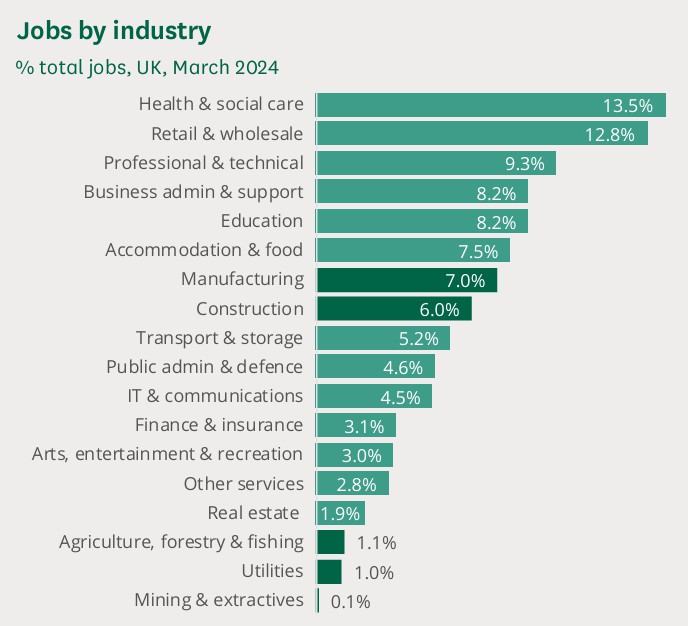
Figure 1: Industries by the Proportion of Jobs in the UK (Hutton & Zaidi, 2024)
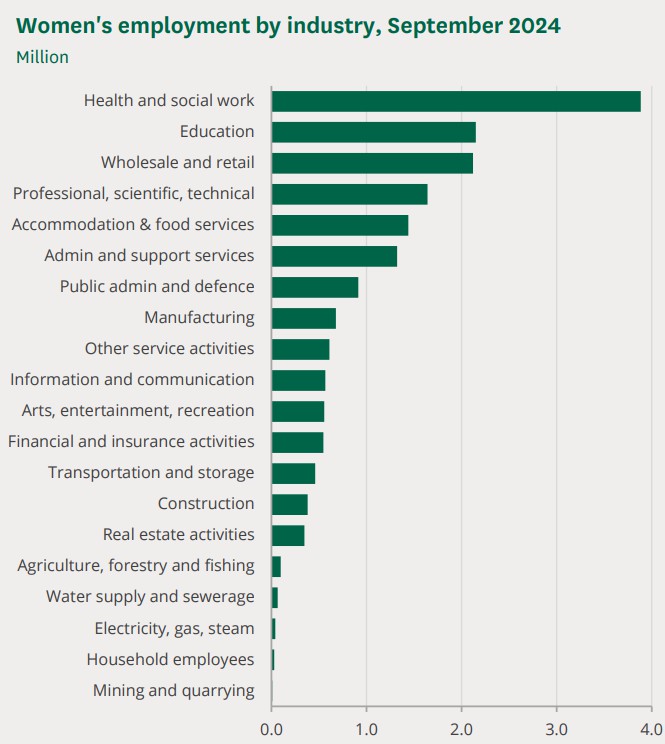
Figure 2: Industries by the Number of Women in the Industry in the UK, with Percentages Provided in the Report (Francis-Devine et al., 2025)
1.2 Marks and Spencer
Marks & Spencer (M&S) is the selected key retailer to focus on as it performed the best in terms of their industry’s women leadership, according to the latest FTSE Women Leaders ranking (FTSE Women Leaders, 2025). It was founded in 1884 by Michael Marks in Leeds, collaborating with Tom Spencer from 1894, marking the birth of the brand (M&S, 2025a; M&S,2024b; M&S, 2024a). The company currently has over 63000 employees, with over 40000 being women (M&S, 2025c; M&S, 2024c). M&S sells a variety of items such as food and clothes (M&S, 2025c).
1.3 Women's Leadership in the UK
Despite the UK performing well compared to other countries in terms of women leadership (ranking second after France from G7 countries) and it is increasing, however, the pace has decreased, with the rate for women's appointment to
leadership roles being below a third (Department for Business, Energy & Industrial Strategy, 2022; Department for Business and Trade, Baroness Gustafsson of Chesterton CBE, & The Rt Hon Rachel Reeves MP, 2025; Mills, 2022; Raval, 2025). This aligns with Baumann's (2017) observations that, although improvements in achieving gender equality have been made, further efforts are needed.
1.4 Women in the UK Labour Market
Estimates show more females than males in England & Wales (around 31.5M females, 30.3M males), with males increasing slightly faster due to migration and births, contributing to a growing UK population nearing 69.3 million, with roughly 51.1% female and 48.9% male overall for the UK (Demography Team, 2025).
It is important to analyse women's employment in the UK to identify their involvement in the labour market. In terms of women's employment, the UK performs well by scoring significantly above the OECD average of 64%, but as the highest scorer (Iceland) has a women's employment rate at 82%, improvements need to be made (Francis-Devine et al., 2025). The percentage of women in employment has increased, reaching 72.5% in July-September 2025, close to the record-high of 72.7% in December 2019-February 2020 (Labour Market Team, 2025). However, as men have a higher employment rate at approximately 78%, which is decreasing, suggesting that even though trends and findings show a smaller, decreasing disparity in gender participation in the labour market, there is still improvement to be made (Francis-Devine et al., 2025).
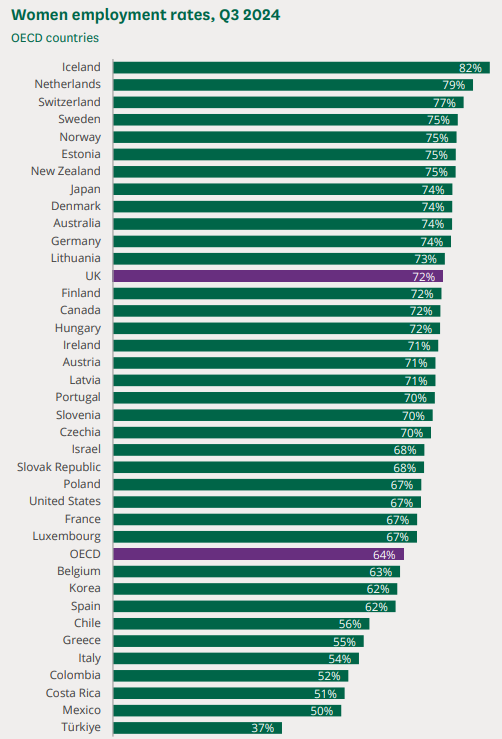
Figure 3: Women Employment Percentage in Different Countries (Francis-Devine et al., 2025)
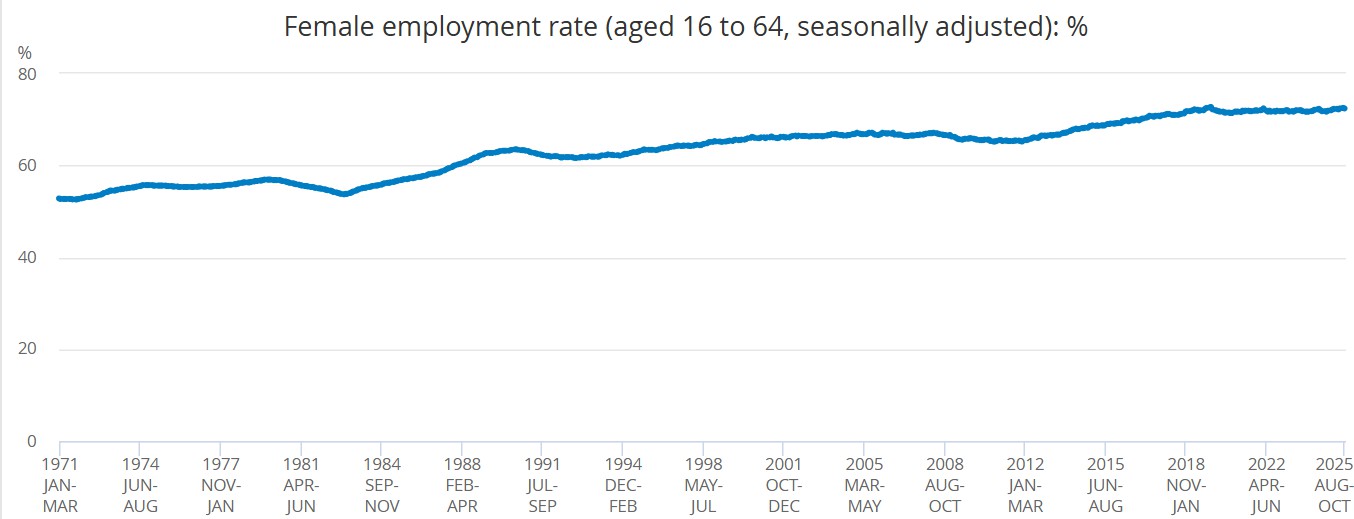
Figure 4: Women's Employment Rate in the UK (Labour Market Team, 2025)
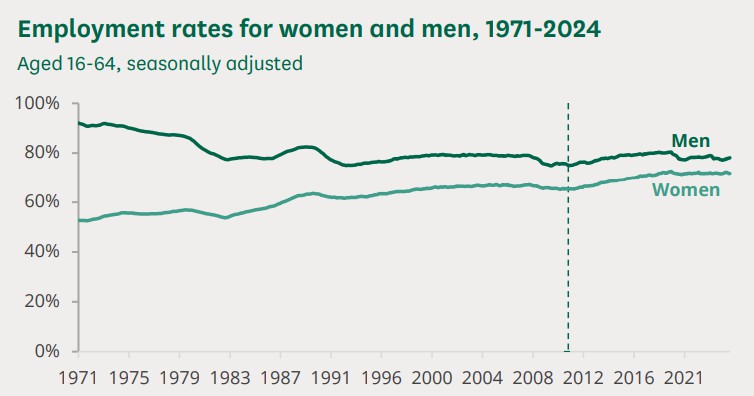
Figure 5: Men and Women Employment Rate in the UK (Francis-Devine et al., 2025)
The percentage of women working part-time declined due to an increase in women working full-time; however, more women work part-time (36%) than men (14%), despite an increase in men working part-time, showing a trend towards increasing equality in the type of employment, therefore, there is still significantly more women working part-time (Francis-Devine et al., 2025).
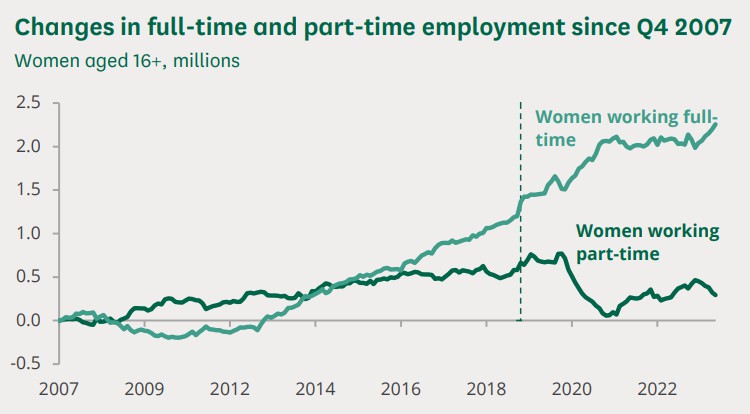
Figure 6: Changes in the Number of Women Working Part-Time and Full-Time, with the Percentage Provided in the Report (Francis-Devine et al., 2025)
1.5 UK Legislation Helping to Promote Women’s Leadership
The key UK legislation supporting gender equality at all stages of employment, including promotion, is the Equality Act 2010 (CIPDa, 2025). Also, quotas to increase gender diversity are not compulsory (Department for Business and Trade, Baroness Gustafsson of Chesterton CBE, & The Rt Hon Rachel Reeves MP, 2025). The decision to permit companies to set voluntary targets was made in 2011 (Vinnicombe & Mavin, 2022).
1.6 Research Aim
The project aims to observe the application of incentives to increase women’s leadership in UK retailers.
1.7 Research Objectives
To build an understanding of the topic of women's leadership and incentives by identifying why the topic of women's leadership is important, identifying barriers to women's leadership, and incentives that help to reduce their impact.
To ensure that the methodology is effective in fulfilling the research aim and answering research questions, it is crucial to select the most appropriate information and variables, and to ensure that the research philosophy is relevant to the methodology, including the type of data used, testing methods, and research approach. To ensure that research is ethical, ethical issues are considered at all stages, including their impact on the companies observed.
To ensure that the recommendations provided based on the research findings are appropriate and useful by ensuring that the research findings are correct and interpreted correctly, with a critical analysis of appropriate literature used to identify suggested recommendations.
1.8 Research Questions
-
What are the most common incentives applied to increase women's leadership by the UK retailers?
-
Do incentives increase women's leadership in UK retailers?
1.9 Paper Structure
Next, a literature review will be implemented, identifying the impact of women's leadership, barriers to women's leadership, and the evaluation of incentives by identifying initiatives suggested by the literature, as well as their advantages and disadvantages. It will be followed by methodology and research approach, identifying research design/approach, sources of information, methods of finding results, ethical considerations, and limitations. Next, secondary data analysis and findings will be presented, followed by a discussion and recommendations based on these findings . The paper will finish with a conclusion.
2. Literature Review
2.1 Impact of Women's Leadership on the UK
It is important to discuss women's leadership due to its contribution to the UK’s economic growth (Department for Business and Trade, Baroness Gustafsson of Chesterton CBE, & The Rt Hon Rachel Reeves MP, 2025).
2.2 Impact of the Women’s Leadership on the Company
Women's leadership improves inclusiveness due to improved link-building between the genders (less segregated networks) and better access to support for women subordinates with decreased leaving intentions (Alan et al., 2025). This is due to increased women's participation and influence, with women leaders standing as role models for other women, explaining why the lack of role models is a barrier to an inclusive culture (Blumenau, 2019; Cassel et al., 2022). However, having a woman leader does not necessarily increase the aspiration to become a leader (Kirgios & Chang, 2025). Also, women employees are not necessarily positively affected by women's leadership, as women working with women leaders stated lower workplace satisfaction and decreased the company’s meritocratic values (Alan et al., 2025).
Gender diversity improves the company’s financial performance (Brahma et al., 2020). This can be a consequence of gender diversity helping to enhance the
understanding of the customer market (Baumann, 2017). This is especially important for retail, as over 80% of purchasing decisions are made by women, with women making 58% of M&S customers (Dickinson, 2025; M&S, 2025b). However, Izad et al. (2024) partially disagree, stating that gender diversity and the number of women leaders do not necessarily increase financial performance, as other factors, such as past performance, determine financial performance.
Gender diversity increases innovation and CSR disclosure, explained by women's leadership increasing the probability of engagement in creative activities and
practices, including environmentally friendly actions (Khushk et al., 2022; Wu et al.,2021; Wang et al., 2022).
It is difficult to evaluate the impact of women's leadership due to factors that complicate the evaluation, such as women in leadership often being selected for difficult situations, with examples being store units closer to rivals, and being less likely to be assigned stores with higher sales potential (Richard et al., 2022; Chen et al., 2024).
2.3 Barriers
Women encounter barriers from the start of the journey up the corporate ladder, referred to as the ‘broken rug’ (Franczak & Margolis, 2022). These barriers include adverse working environments, stereotypes/biases, and perceived effectiveness concerns (Franczak & Margolis, 2022; Vinnicombe et al., 2024). Examples of biases/stereotypes include the perception of gender roles in the family (Brikett &
Forbes, 2019), with reduced commitment and ambition after maternity leave, even though that was not the case, being expected, and the association of leadership with masculinity (Taparia & Lenka, 2022; Manchester Metropolitan University, 2020).
Potential ratings disparities are a barrier to women's promotion due to women’s lower potential ranking, despite great performance rankings (Benson et al., 2024). This is partially agreed by Metcalfe et al. (2023), who argue that men are more likely to move stores than women, even though the move across stores is to the more productive. However, as managers who start at low-productivity stores are more likely to move and stayers have better sales and productivity than leavers, this suggests that women perform well (Metcalfe et al., 2023). As women are less likely to move in smaller cities and towns than in large cities, this indicates that family considerations are one of the reasons why women are less likely to move (Metcalfe et al., 2023). This is agreed by Francis-Devine et al. (2025), who identified that looking after family or home had the biggest disparity between men and women reporting this reason for their economic activity, at 0.2 million for men and 1.4 million for women, being the least common reason for men and the second most common for women, with more detail provided in the chart below.
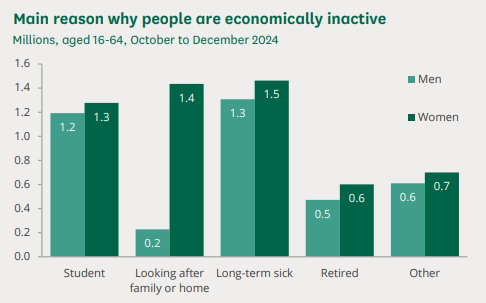
Figure 7: Reasons for not Working by Gender in the UK (Francis-Devine et al., 2025)
One of the barriers that negatively affects the occurrence of significant changes in leadership, including the representation of women, is bias in the selection process due to the tendency to search for someone similar to existing leaders (CIPD, 2025b).
Other barriers to building an inclusive culture include understanding the group's concerns and how to approach them, as well as ensuring that the company culture permits the group to fit in, as a masculine company culture and segregated networks
due to men networking amongst each other complicate women’s path to leadership (Cassel et al., 2022; Coleman, 2020).
Poor communication of what is available for employees, such as different working options, i.e., parental leave options, including shared parental leave, and the lack of HR specialists and managers' familiarity with parental leave options, leads to employees not utilising available options due to a lack of knowledge and poor explanation (Brikett & Forbes, 2019).
Despite the retail sector showing minimal significance of barriers, with the industry making significant progress to minimise them, continued incentives further reduce barriers, with the attempt to reduce them increasing gender-inclusive practices
(Vidal, 2025).
2.4 Incentives
Incentives help to increase women's leadership, as companies with smaller leadership gender gaps have more incentives and a visible commitment to inclusion and considerations of individual needs (Heckbert,2018; Cassel et al., 2022). One of the explanations is that incentives improve women's developmental opportunities and hiring rates, increasing women's representation (Samuelson et al., 2019).
Another reason is that incentives increase women’s aspiration to lead, even though the impact of incentives was not significant in the existence of a history of supporting women (Kirgios & Chang, 2025).
The drawbacks of incentives are that some incentives are expensive or might be ineffective on their own, as setting goals alone will not help to achieve them as effectively (Kirgios & Chang, 2025). Incentives may also increase questioning of the women’s competence due to allegations that they cannot succeed without the
company’s interference and are promoted due to their gender rather than their merits (Kirgios & Chang, 2025). However, there is no evidence that diversity incentives improved managers’ women’s evaluations or women’s ratings of themselves and no significant variances in qualification of those who aspired to lead under the different persuasion conditions (Kirgios & Chang, 2025).
Talent management processes were seen as less significant than sponsors who notice their potential and encourage them (Vinnicombe et al., 2024). It is important to
have incentives, such as family-friendly policies, that lead to good firm performance (Chen et al., 2024).
2.5 Incentives Applied
The approaches of increasing women's leadership can be divided into supply-side and demand-side strategies. Supply-side strategies create opportunities for women to become leaders, such as networks, mentoring, and training. Demand-side
strategies create demand for women leaders and support supply-side strategies.
However, demand-side strategies need to be accompanied by supply-side
strategies. An example of a demand-side strategy is targets (Sojo et al., 2016).
In terms of women's leadership enhancement techniques, mentorship is perceived as the most beneficial, especially formal mentorship implemented over a period of time. Its drawbacks are issues with availability, and its effectiveness depends on the individual's input (Mahmood & Jones, 2025).
Even though networks contribute to an inclusive culture as they support women's needs and career progress, one of the issues is the time available and willingness to access them, due to a more significant focus on the task than on connections and a negative view of the network by some non-members of networks (Mahmood & Jones, 2025; Cassell et al., 2022).
Even though flexible working is widely available, its availability needs to be improved (Mahmood & Jones, 2025). Job sharing, which is one of the flexible working approaches, is another suggestion to improve the talent pipeline (Vinnicombe & Mavin, 2022). One of its concerns is that flexible working can negatively affect colleagues, the company, and women wanting to progress, as it is associated with lower productivity (sometimes creates extra work for colleagues) and changes in promotion, especially for those who take flexible work due to caring responsibilities (Chung, 2020). However, women place more importance on work-life balance (Chen et al., 2024).
Setting formal targets (referred to as soft law) helps increase women's leadership; however, they create a negative perception of women’s abilities due to perceptions that they were recruited due to their gender and their help for women to progress above the target is questionable (Chambers, 2023; Mahmood & Jones, 2025; Lefley
& Janecek, 2022). This also reduces the women’s satisfaction as they want to be appointed based on their achievements and not be seen as ‘second-class’ leaders (Lefley & Janecek, 2022). They are widely applied and can affect the company’s policies (Vinnicombe et al., 2020). As an inclusive business culture that is supportive of women's leadership is more important than the number of women, it might not lead to an increase in women leaders (Cassell et al., 2022; Lefley & Janecek, 2022).
Training and development is recommended as it enhances career opportunities by also helping to gain experience and confidence (Vinnicombe et al., 2024). However, training and development paid for by recruiters is not widely available (Mahmood & Jones, 2025).
Parental leave and flexible working and workplace policies help to improve the chances of promotion, but this was not the case for mothers, which is explained by changing to a part-time role, decreasing the chance of promotion (Vidal, 2025; Wanger, 2023). Not only parental leave but also access to affordable childcare could be considered (Vinnicombe et al., 2024). It is also important to ensure that family-friendly policies are available to all employees. However, employees might refuse parental leave and flexible working options due to the negative financial impact (Brikett & Forbes, 2019).
Suggestions to increase leadership gender diversity include emphasising cognitive diversity in leadership positions, establishing company cultures accepting of diversity, making women in leadership roles visible, and supporting women’s leadership journey through mentorship and sponsorship (Franczak & Margolis, 2022). It includes ensuring that not only the recruitment process is unbiased, but the evaluation also (Taparia & Lenka, 2022). To reduce bias, it is suggested to challenge them by raising awareness (Taparia & Lenka, 2022). Retailers are also encouraged to collaborate with external organisations (Vidal, 2025).
3. Methodology and Research Approach
3.1 Research Philosophy
The research philosophy is important as it informs the research implementation.
3.1.1 Axiology
The axiology is critical realist by attempting to make sure that biases do not affect the research results (easily achieved due to having no previous experience researching the impact of incentives on women's leadership) (Saunders et al., 2019). However, it is acknowledged that researching a topic of interest and implementing research based on a personal understanding of robustness is interpretivist (Saunders et al., 2019).
3.1.2 Ontology
In terms of ontology, even though the observations are based on existing information as defined by critical realism and positivism, there is an interpretivist and critical realist view of reality that reality is highly dependent on social actors (Saunders et al., 2019).
3.1.3 Epistemology
Epistemology is critical realist and positivist due to employing publicly available information. However, there is an interpretivist element of secondary data being based on the worldview of the source authors, and findings are primarily valid to the analysed context, as different countries and industries have different circumstances affecting women's leadership, resulting in complexity (Mezmir, 2020; Saunders et al., 2019).
3.2 Methodology
The methodology is critical realist, as it aligns with the methodology that permits the application of a range of methods, as applied in the research. Positivist philosophy usually applies quantitative data, whilst interpretivism usually applies qualitative data.
3.2.1.Research Approach
Although the research approach incorporates elements of a deductive approach by searching for specific information to answer research questions, a predominantly inductive approach is applied by searching for companies' incentives in increasing women's leadership and categorising them, based on their interpretation. The advantage of an inductive approach is that it permits the research to follow the data collected (Saunders et al., 2019).
3.2.2 Data Collection and Analysis
Due to the research being based on qualitative and quantitative data, it involves a mixed approach to data and methods. Studies using mixed methods are suggested in the field (Taparia & Lenka, 2022). A mixed method approach is selected due to its advantages of allowing for answering the research questions with the required details (McCuster & Gunaydin, 2015). It also facilitates the application of the methods' strengths and mitigates their weaknesses (Gill & Johnson, 2010). Its disadvantages are that it is time-consuming and expensive (McCuster & Gunaydin, 2015). Those disadvantages are mitigated by ensuring that the selected sample size is feasible for conducting the research within the timeline and that no costs are incurred. Quantitative data collected includes the number of incentives, FTSE Women Leaders ranking, and the percentage of women board members from FTSE Women Leaders reports, which is used to find the average percentage of women on the board and the average position of the company in the industry in terms of women leadership. Qualitative data collected includes company incentives from company websites and reports, mainly from sections related to diversity and inclusion and employees, as well as sustainability and gender pay gap reports, due to their relevance (Please see table in appendices on the coding system employed).
Central tendency is applied to quantitative data. Mode is used to identify the most common incentives, and mean is used to find the average number of incentives applied due to its relevance in determining the effectiveness of incentives by examining whether companies with more incentives are more successful in increasing women's leadership (Saunders et al., 2019).
Thematic analysis is applied to qualitative data. It can be seen as a generic approach, but it is systematic by taking steps of familiarising with the data, coding the data, refining themes, and testing propositions. Thematic analysis is selected due to its relevance to the identification of themes and patterns to identify companies' incentives and their types to encourage women leadership, as well as
their commonality (Saunders et al., 2019). As it is flexible, it applies to the research philosophy and approach (Saunders et al., 2019).
3.2.3 Data Sources
Secondary research is employed by using already available information, ensuring that it is feasible to implement the research project over the timeframe, as primary data would require considering gaining permission, as well as arranging interviews (Saunders et al.,2019). Therefore, research can be implemented swiftly, without funding considerations (Pederson et al., 2022). Even though some secondary sources require payment, no such sources are used to eliminate funding considerations (Saunders et al., 2019). Also, data’s availability for observation enhances its credibility due to its openness to public observation (Saunders et al., 2019). One of the concerns of using secondary data is ensuring that the information is relevant to the location, topic, industry, research aims, and questions, and is recent enough to ensure that correct observations are made, which is subject to availability, explaining why some sources related to incentives and women leadership have a different location or unit of analysis.
To collect information on the background of women's leadership and incentives for women's leadership in the UK, sources such as Google Scholar, the University of Salford Library, Financial Times, CIPD, and government websites are used. This explains why increasing knowledge about the field and identifying research
opportunities are the acknowledged advantages of using secondary sources (Pederson et al., 2022). Please see Table 1 in the appendices.
FTSE Women Leaders 2025-2022 reports are used to identify the companies' women's leadership positions and the percentage of female board members over time. Company websites and reports are used to identify the incentives applied. Those years were chosen as they have the same type of reporting and facilitate the identification of patterns in terms of the women’s leadership performance.
The robustness check is implemented using the 2023-2025 FTSE Women Leaders Reports Data to reduce the impact of earlier events. It is also used for comparison due to differences such as sample size.
To increase the research robustness, companies in the same industry (retail) and country (UK) are analysed, as these companies are subject to the same country and industry-specific legal, social, and economic environments, and present and
historical developments in women's leadership that explain the current state of women's leadership.
3.2.4 Ethical Considerations
Ethical considerations are made for all stages of research (Saunders et al., 2019). Although using secondary data mitigates physical risk by eliminating the need for physical interviews, other risks and ethical issues are still considered (Blumberg et al., 2014). Using secondary data minimises the necessity for confidentiality and autonomy; the impact on the company's reputation needs to be considered (Saunders et al., 2019). This is implemented by considering the implications of the research, as results generating negative implications negatively correlate with a company's willingness to participate and accept research findings (Saunders et al., 2019). To ensure that the analysis is high quality, knowledge on the topic is enhanced by reading and understanding personal views, their impact, and considering mitigation strategies.
One of the concerns of secondary data is ensuring that sources used were obtained ethically and that their analysis and collection are appropriate, as secondary sources can be biased and subject to deliberate distortion, where inaccurate data is presented on purpose and conflict of interest is considered (Taquette, 2022; Saunders et al., 2019; Blumberg et al., 2014).
Due to legislation, such as the UK Data Protection Regulation 2018, storage of data is another concern to ensure that it does not disappear and/or is accessed by those who should not (Saunders et al., 2019). The issue is managed by ensuring that it is stored safely and appropriately labelled and disposed of, meeting the legislation (Saunders et al., 2019).
3.2.5 Limitations
To ensure that research is ethical, its limitations are considered (Blumberg et al., 2014). One of the issues is that M&S is listed in the Retail and the Personal Care, Drug & Grocery Stores sectors over the years, which complicates the identification of
competitors and ensuring that companies are affected by the same factors. To ensure that the compared companies are competitors, companies from both categories that are listed as retailers are analysed to ensure continuity.
One of the limitations is no consideration of the date of the incentive due to the significantly limited disclosure of the dates of incentive implementation. Even though it might affect the research results due to the recommended continuity of the application of incentives, its impact is insignificant, as available information identifies company performance over the researched years and the incentives that companies apply (Vidal, 2025).
Due to thematic analysis being based on the author's implementation, it is susceptible to subjectivity and bias. Codes are based on the incentives identified by the literature to ensure that they are appropriate.
4.Secondary Data Analysis and Findings
4.1 Barriers
Marks & Spencer suggests that performance ranking is not a barrier to women's leadership in their company, stating that they have no performance and talent ranking disparities between men and women (M&S, 2025e; Benson et al., 2024). However, low men’s flexible working and parental leave take suggests that there are struggles with enhancing gender equality (M&S, 2025b).
4.2 Application of Incentives
As approximately 80% of leading retailers have signed the British Retail Consortium (BRC) D&I Charter, enabling every individual to succeed (CIPD, 2022), this partially agrees with the findings, as all companies, except CDS (Superstores International) Ltd, applied incentives. Although the company includes a Diversity & Inclusion page alongside its gender reporting page, which indicates an acknowledgement of inclusion as part of its values and compliance requirements, there is no specific secondary data published, with irregularities in their reporting, as there is no concise webpage but rather different company pages (Wilko and the Range), providing different pieces of information.
4.2.1 Number of Incentives
Marks & Spencer applied the most incentives, together with Tesco at 8. The only type of incentive that M&S is not applying is external partnership. Frasers Group has the least recorded incentives for the 2025-2022 and 2025-2023 samples of 1. In
2025-2023, the mode was 4, 6, and 7, with 5 companies applying those numbers of incentives, and for the mode 2025-2022, it was 7. For the 2025-2022, the mean was
5.31 to 2 decimal places, and for the 2025-2023 it was 5.29 to 2 decimal places. The differences are caused by the change in the sample. Further information is provided in the tables below, created by the author of this paper.
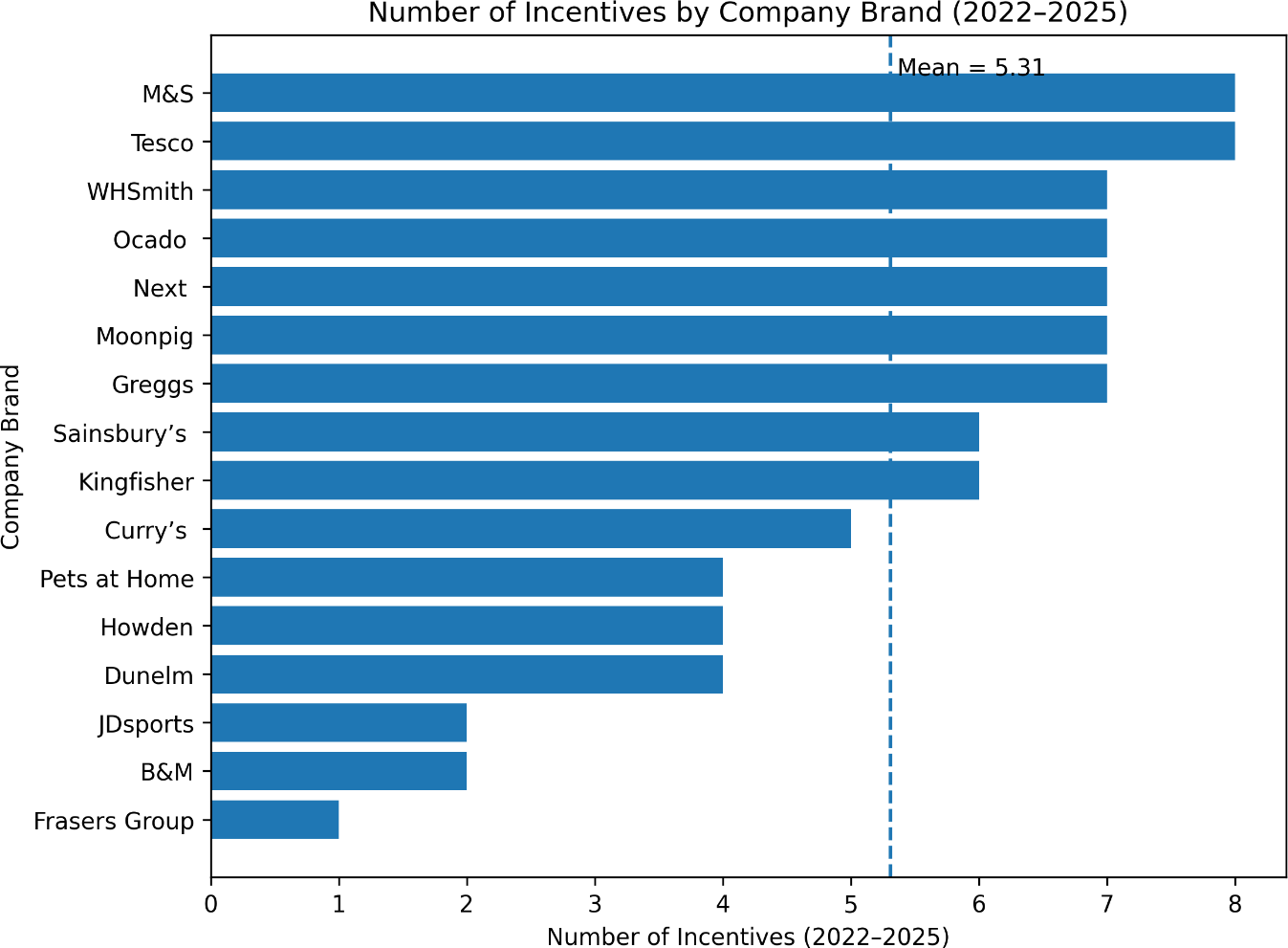
Figure 8: The number of incentives applied by companies in the 2025-2022 sample.
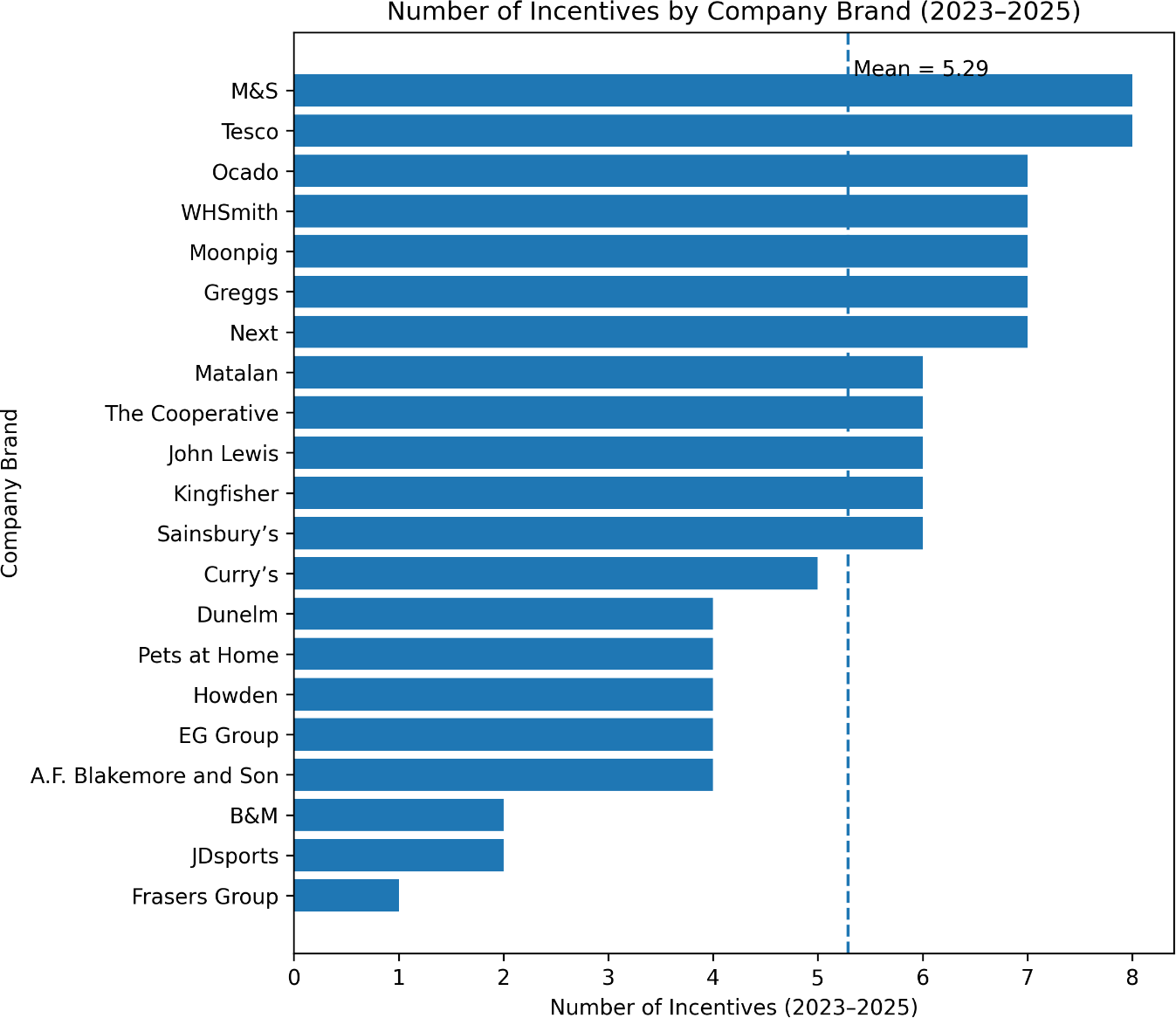
Fig 9: Number of incentives applied by the companies in the 2025-2023 sample.
4.2.2 Types of Incentives
Targets were the least applied incentives, while learning and development were the most applied incentives for both 2025-2023 and 2025-2022 samples, contrary to expectations from Vinnicombe et al. (2020), who expected targets to be widely applied and Mahmood & Jones (2025), who expected there to be few training and development opportunities. More details on the types of incentives are in the table below, and a detailed thematic analysis is in the appendix below, created by the author.
Companies applied a wide range of training opportunities that are targeted towards a wide range of employees, such as Next, adapting training to the individual and business needs, with some particularly targeting women, such as Matalan. M&S development programmes are important to the company as 70% of employees on internal development programmes are women (M&S, 2025e).
Networks, which some companies define as communities, are the 2 nd most used method across both samples in increasing women's leadership. The first M&S
women’s network was launched in 2014. The relevant networks are the Gender Equality Network, the Family and Careers Network, and the Menopause Network. Some other companies have other networks, such as the Adoption Network and Menopause and Fertility for Tesco, and Women for Curry’s. As over 23% of Greggs Women Development Network members were promoted into more senior roles in the business suggesting that they are useful, however M&S (2025b) suggests that perception (according to Cassel et al., 2022) and reach is an issues of networks as indicated by the literature due to the author identifying that he was an ‘only man in the room’ in an external women’s network event, and before the event, he
questioned the importance of the network.
Raising awareness about topics such as diversity and inclusion and biases, which is the 3rd most used incentive, is applied by M&S, addressing biases by continuously educating staff about them through training (M&S, 2024c, M&S, 2023a). There are also other methods that other retailers apply, such as Howdens using booklets and toolkits, as well as facilitating open conversations. Matalan has an online forum on women in the workplace, and Pets at Home has launched ‘DiversiTea’ podcasts and lunch. Also, some companies' ways of raising awareness target just managers
instead of all employees, as Next partners with an external training provider to create a diversity and inclusion awareness training session for managers.
Retailers are also encouraged to collaborate with external organisations (Vidal, 2025), being the 4th most used incentive in the 2025-2023 sample and the 5th most used incentive in 2025-2022, not applied by M&S. Despite companies collaborating with various external partners, the key external partner is Diversity in Retail, with some of them, such as EG Group being the founding members.
Supportive policies were the 4 th /5 th most applied incentives in 2025-2022 and the 6th most used in 2025-2023. Due to widespread claims such as fairness in their companies, policies that further support employees and proof of the company's commitment are categorised as supporting policies, with companies such as M&S having an enhanced emphasis on hiring, talent and performance routines to ensure women have equal access to development and progression opportunities. An example of a supportive policy that M&S has is that M&S signed Miscarriage
Association’s Pregnancy Loss Pledge, with menopause- women's health support being commonly applied (also by M&S). John Lewis promoted women’s businesses.
Even though Jones and Mahmood (2025) suggest that mentorship is the most effective method to increase women's leadership, it is one of the least applied
incentives, being 3rd least applied in 2025-2023 and 3rd/4th least applied method in the 2025-2022 sample, tying with flexible working as both have a score of 10 companies applying them. There are many ways to mentor women, and they are utilised by the companies as M&S provides informal mentoring, and they partner with a local school to provide 1:1 mentoring support for around 50 female students between the ages of 15 and 17. Other commonly applied types of mentorships is reverse mentorship.
Despite the suggested importance of family responsibilities on women’s leadership and how family-friendly policies and flexible working options help to support women's leadership, they are one of the least applied methods of supporting women's leadership, as flexible working was 3 rd /4 th least applied incentive in the 2025-2022 sample but 5 th least used incentive in the 2025-2023 sample and family-friendly incentives were the 2 nd least applied in both samples, showing that flexible working is significantly more used across the samples than family-friendly policies and that there is a change in the commonality of incentives applied across the samples. M&S has family-friendly policies of enhanced parental leave, also acknowledging that flexible working supports family responsibilities (M&S, 2024c). M&S has a variety of flexible working options, such as a four-day compressed week, a nine-day fortnight and the opportunity to job share using the Job Share Finder app (M&S, 2023b).
Another option for flexible working is hybrid work, applied by companies such as Matalan. Despite flexible working and parental leave are available to men and women, they are mostly used by women, as 5% of those on flexible working arrangements are male, and notwithstanding the introduction of shared parental leave in April 2015, its take-up is low (M&S, 2025b). This questions their
effectiveness of increasing women's leadership and agrees with Brikett & Forbes (2019), who suggested that the refusal to take up is one of its drawbacks. Other companies offer other types of childcare support, such as Next having its own nursery and Greggs having childcare vouchers, as suggested by Vinnicombe et al. (2024), who emphasise the significance of affordable childcare.
M&S had a specific target of at least 50% women representation by 2025, the largest target for the date, as only Sainsbury’s is also aiming to achieve 50%, but by 2028/2029. Some companies, such as Moonpig, did not have a specific target set by a firm, but the expected number of women is tied to the FTSE listing (Moonpig, 2025c).
As literature suggests that targets lead to other actions to increase women's leadership, it is partially agreed by the findings that the companies with the highest number of incentives (M&S and Tesco with 8) and the lowest number of incentives applied by a target-setting company (EG Group) are 4 (Vinnicombe et al., 2024).
Table 2: Incentives applied by companies in 2025-2022
|
|
|
|---|---|---|
|
|
|
|
|
|
|
|
|
|
|
|
|
|
|
|
|
|
|
|
|
|
|
|
|
|
|
Table 3: Incentives applied by companies in 2025-2023
|
|
|
|---|---|---|
|
|
|
|
|
|
|
|
|
|
|
|
|
|
|
|
|
|
|
|
|
|
|
|
|
|
|
4.3 M&S and Other Retailers' Performance in Terms of the Percentage of Women on the Board
An average percentage of women on the board over the sample period is applied to facilitate the comparison due to the lack of dates of incentive introduction, leading to assumptions of the same number of incentives over the sample period. M&S records an increase in the percentage of women on boards in both samples of 60% in 2025, increasing from 54.5% in 2024 and 2023 and 40% in 2022, leading to a larger average for the 2025-2023 sample of 54.8% (2 nd largest average) compared to the
2025-2022 of 51.1% (being the largest average), showing that incentives are helping to increase women's leadership. However, not all companies experienced an increase in average, for example, Next. However, the declines are less significant than the increases as Next has the largest decline, below 1% whilst M&S has an over 3% increase.
In terms of industry, even though the top performers have an above-average number of incentives and women leaders, in both samples, and no low performers have 7-8 incentives, with Frasers Group being the 2 nd lowest performer in the 2025-2022 period, having only 1 incentive. However, as some companies with 4-6 incentives, which is quite close to the average, are amongst the worst performing, with the worst performer being EG Group with 4 incentives, followed by Matalan with 6 incentives in the 2025-2023 sample, incentives are not as effective for all companies. Other
factors, such as how those incentives are applied, as well as the impact of specific incentives, could further explain the company's performance. More information is provided in the tables below and the appendix created by the author, showing the annual percentage of women on the board for the tested period. The averages are rounded up to 2 decimal points.
Fig 10: Companies ranked by the average percentage of women on the board 2025-2022
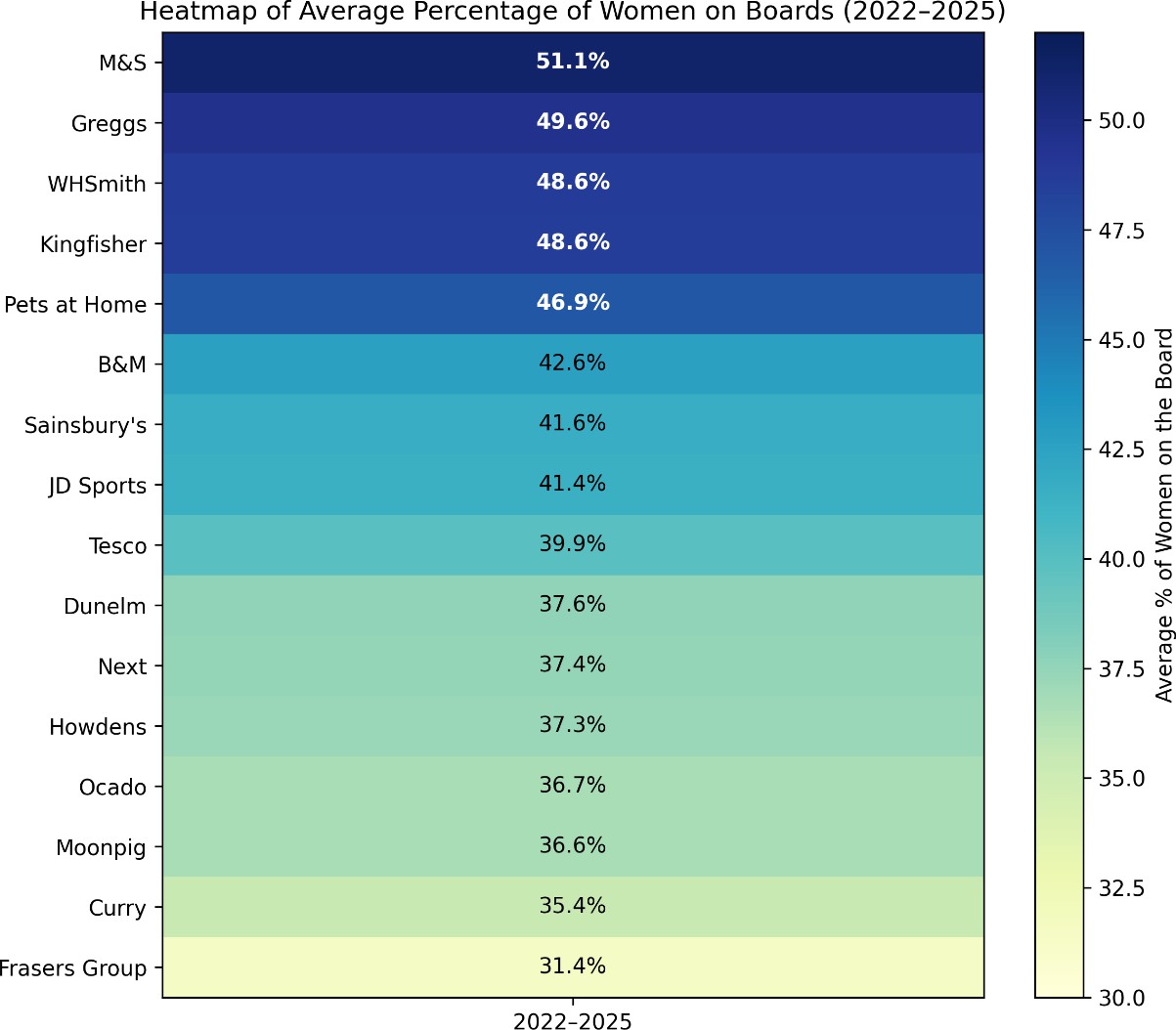
Table 4: Percentage of women on the board compared to the number of incentives 2025-2022
|
|
|
|---|---|---|
|
|
|
|
|
|
|
|
|
|
|
|
|
|
|
|
|
|
|
|
|
|
|
|
|
|
|
|
|
|
|
|
|
|
|
|
|
|
|
|
|
|
|
|
|
| Frasers Group | 31.45 |
|
Fig 11: Average percentage of women on the board for the 2025-2023 sample
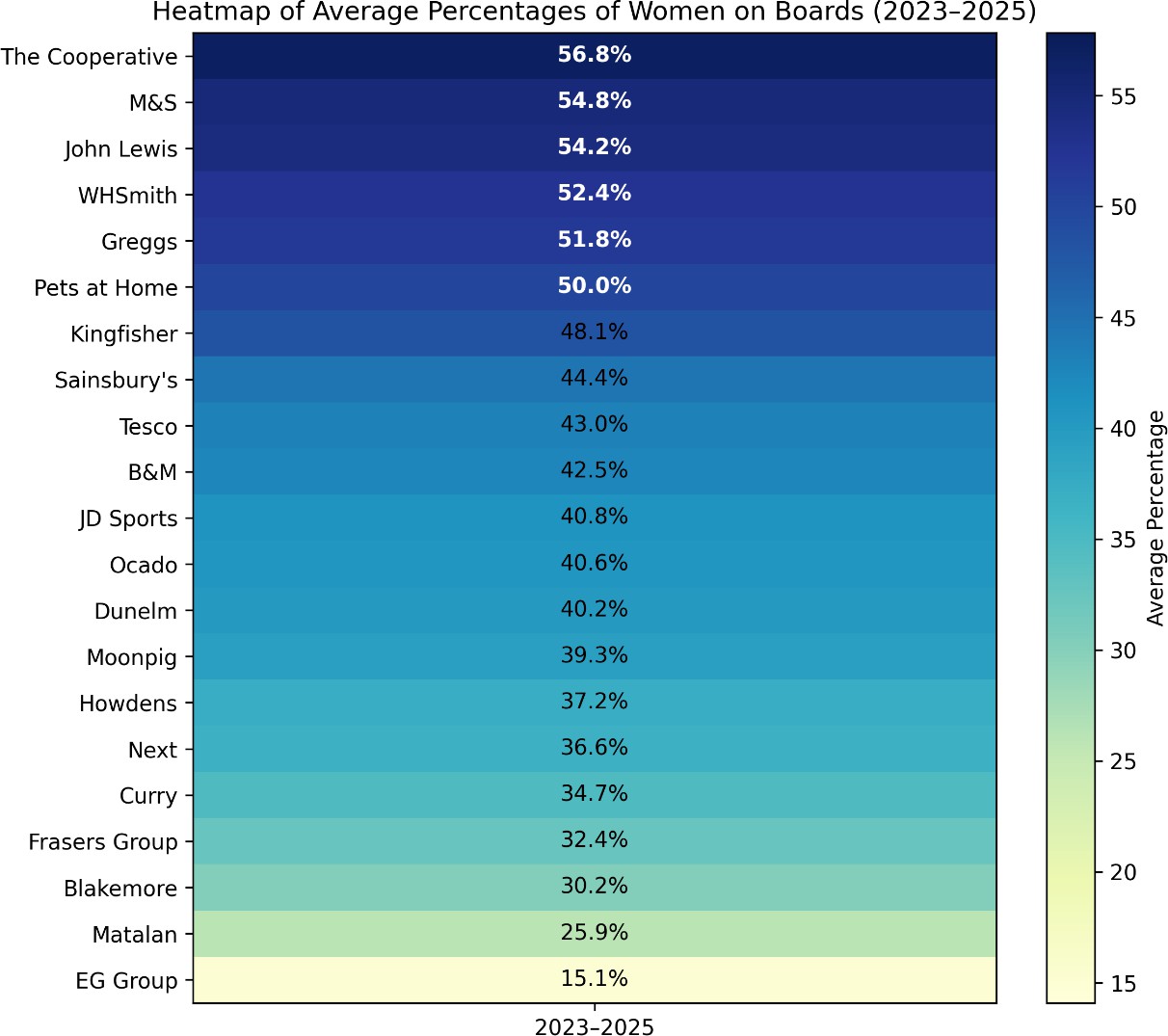
Table 5: Comparison between the average percentage of women on the board to the number of incentives 2025-
2023 sample
|
|
|
|---|---|---|
|
|
|
|
|
|
|
|
|
|
|
|
|
|
|
|
|
|
|
|
|
|
|
|
|
|
|
|
|
|
|
|
|
|
|
|
|
|
|
|
|
|
|
|
|
|
|
|
|
|
|
|
|
|
|
|
|
|
|
|
4.4 M&S and Retailers' Performance in Terms of Positioning in the Industry
In terms of company positioning for women leadership, as M&S is 6 th in both of the samples,(Sainsbury’s is 1 st in the 2025-2022 sample and John Lewis in the 2025-2023 sample) and the majority of the companies performing better than M&S had above average performance had above average number of incentives but lower number of incentives than M&S, applying a wide range of incentives that support women leadership help the company to achieve high women leadership FTSE industry ranking, but it is not the main factor. This is also supported by the Frasers Group performing the worst in terms of its position in the industry for women in leadership in both samples, with only 1 incentive, but there is a significant difference in terms of the number of incentives used from the other low-performers, showing that other factors, such as how incentives are applied and what incentives are applied, are important. Further information is provided in the tables below and the appendix created by the author.
Fig 12 : Average company ranking 2025-2022 sample
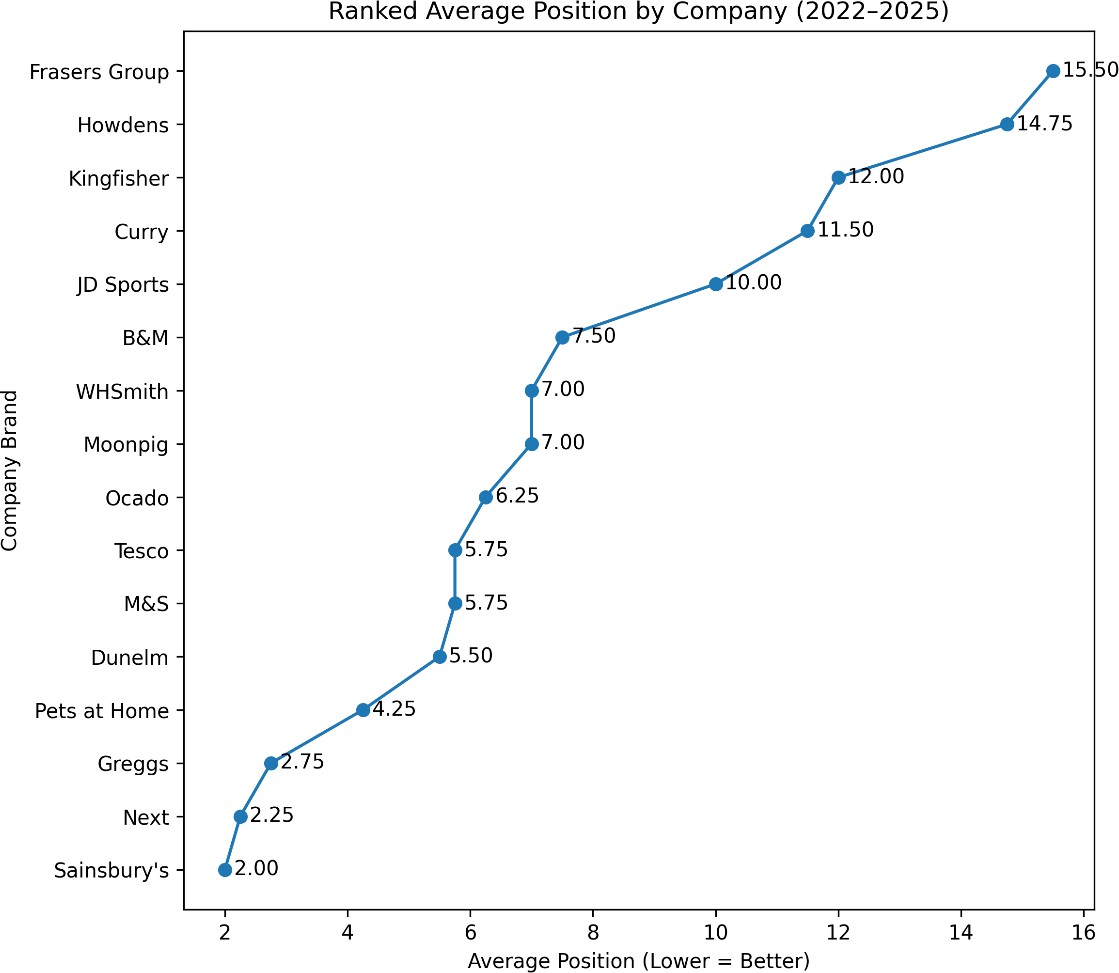
Table 6: Comparison of the average company position to the number of incentives 2025-2022 sample
|
|
|
|---|---|---|
|
|
|
|
|
|
|
|
|
|
|
|
|
|
|
|
|
|
|
|
|
|
|
|
|
|
|
|
|
|
|
|
|
|
|
|
|
|
|
|
|
|
|
|
|
|
|
|
Fig 13: Average company position 2025-2023
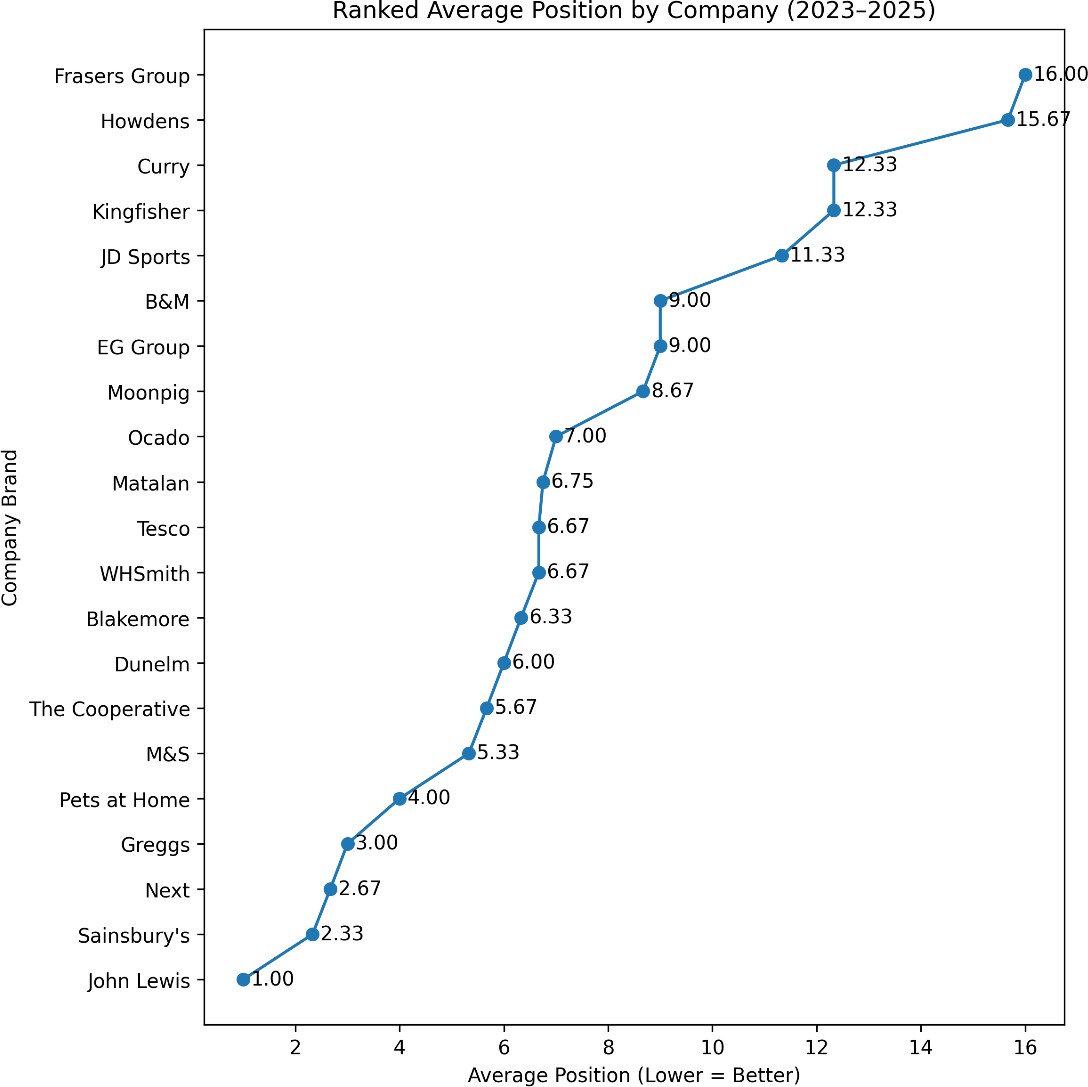
Table 7: Comparison between the average company position to the number of incentives in the 2025-2023 sample
|
|
|
|---|---|---|
|
|
|
|
|
|
|
|
|
|
|
|
|
|
|
|
|
|
|
|
|
|
|
|
|
|
|
|
|
|
|
|
|
|
|
|
|
|
|
|
|
|
|---|---|---|
|
|
|
|
|
|
|
|
|
|
|
|
|
|
|
|
|
|
|
|
|
5. Discussion and Recommendations
5.1 Comparison to the Literature Review
Even though literature focusing on women's leadership, the impact of incentives on women's leadership, and the types of incentives used to increase women's leadership incentives is applied as they are key themes of research, which also help set the expectations of the research, such as incentives increasing women's representation (Samuelson et al., 2019), there are some differences from the literature. One of the differences is that despite the expectations being set by the literature, such as incentives improving women's developmental opportunities and hiring rates, increasing women's representation (Samuelson et al., 2019), suggesting that incentives are expected to increase women’s leadership, having a positive correlation with the company's average percentage of women on the board and company average position. However, the research does not necessarily agree with it, as despite the presence of incentives showing the expected relations, such as M&S with 8 incentives having excellent performance in terms of average percentage of women on the company board and number of incentives, some companies are
performing better or worse than expected, as Tesco, who also has 8 incentives is underperforming compared to some other companies due to some firms that have less incentives performing better in terms of women leadership, showing that not all companies are impacted the same by the number of incentives they apply.
One of the novel contributions of the study is that it focuses on the quantity of incentives rather than the impact of specific incentives on the company's women’s leadership performance, as some authors have focused on the general impact of the application of incentives, whilst some focused on specific types of incentives, such as Mahmood and Jones (2025). This also explains why one of the differences between the literature, such as Mahmood and Jones (2025), is in the focus of research, as they focus on key details on the advantages and disadvantages of various incentives, whilst this paper focuses on how the incentives are implemented. It also has a different sample size, as it does not focus on a specific UK region, i.e., Mahmood and Jones (2025) focusing on the UK Midlands area, or another country in any form, i.e. USA for Vidal (2025), by focusing on the UK retailers enlisted in the FTSE Women Leaders.
The research contributes to the field by applying mixed methods, as suggested in the field (Taparia & Lenka, 2022).
5.2 Usefulness to Other Retailers
Kulkarni and Mishra (2021) suggest that the findings are valid in different countries, as women leaders face similar obstacles in both developed and developing countries. However, differences such as legislation i.e. some countries having mandatory quotas whilst for UK they are voluntary, with the thresholds varying across countries, history of the country, and other country-related factors such as culture, with expectations from women correlating with history and variances in the industry performance compared to others, the validity may be limited to the UK context (Wanger, 2024; Goryunova & Madsen, 2024; Al-Rawahi, 2024).
Additionally, the results suggest that the number of incentives had a varying impact on the companies' women's leadership performance. Factors such as company
history, ownership and purpose, as well as the extent the employees are willing and provide personal information and feedback on the company such as their satisfaction with the business and support for the incentives and reasons, and how incentives are implemented, and the extent to which the incentives are applied, i.e., the percentage of women participating, may also contribute to the results. Examples include companies historically supporting women negatively correlating with the significance of incentives (Kirgios & Chang, 2025), and a shortage of data, resources, and opposing priorities being barriers to diversity and inclusion (CIPD,2022a). Also, implementation of incentives is an important consideration, which possibly affects the findings (Cassel et al., 2022). Despite the considerations mentioned above, the implications that apply to M&S and other retailers are provided.
5.3 Recommendations and Implications for HR
Even though companies are attempting to reduce the barriers to women becoming leaders, there are improvements to be made.
5.3.1 Considering to Whom the Incentives are Applicable
Marks and Spencer is attempting to increase women's leadership correctly, as they are doing as suggested by Cassel et al. (2022), by having general HR policies, such as flexible working, as well as those targeting specific groups (in this case, women), such as networks, which shows that the incentives should be continued for M&S and companies that apply their incentives similarly to M&S. But for companies that do not have incentives targeted towards all employees and women, consider launching incentives targeting both groups or amending the current incentives for them to target the mentioned groups.
5.3.2 Considering Raising Awareness and Checking for Systematic Obstacles
Also, M&S, together with other 15 companies in 2025-2023 and 11 companies in the 2025-2022 samples, attempt to deal with bias as suggested by Taparia & Lenka (2022). This helps to achieve the CIPD (2022b) recommendation of using ways such as training to promote an inclusive workplace. However, it is still important to consider whether current approaches to raising awareness are useful, and for those that do not attempt to raise awareness, attempt to raise awareness. It is important to eliminate bias as it is important in all aspects of business operations, including recruitment (Taparia & Lenka, 2022). Not only personal bias but also systematic bias is likely due to the tendency to search for someone similar to existing leaders (CIPD, 2025b). This can lead to little changes in the percentage of women leaders, analysis if any systematic issues are complicating the recruitment of women leaders and eliminate them.
5.3.3 Revisiting Family-Friendly Policies
Due to M&S having issues with flexible working and parental leave take-up, look at the amendment of the current application of incentives as affordable childcare is recommended by Vinnicombe et al. (2024), which is not provided by M&S and parental leave and flexible working options are refused due to the negative financial impact, according to Brikett & Forbes (2019), therefore there needs to be a further consideration of how the company could decrease the impact of incentives drawbacks.
5.3.4 Considering HR Training
CIPD (2022a) emphasises the need for continuous training, which is important not only for employees but also for decision-makers, HR specialists, and managers, due to their 5.3.4 lack of familiarity with parental leave options, leading to employees not utilising available options (Brikett & Forbes, 2019). Due to suggestions on the provision of training to employees and managers, which is already applied by many companies, there needs to be considerations in ensuring that HR has the updated knowledge about company policies and country legislation as despite Brikett and Forbes (2019), mentioning that HR’s lack of knowledge is an obstacle to implementing incentives but no companies mentioned training for HR.
5.3.5 Considering Launching New Incentives
As literature emphasises the positive effect of incentives, which was the case for some companies and previous recommendations focus on a variety of different types of incentives, companies with a low number of incentives, especially for those that are performing poorly, should consider launching new incentives. In the M&S case, they could collaborate with external organisations for women-based incentives (e.g., Diversity in Retail, as it is suggested by Vidal (2025), but M&S is not currently collaborating with any external organisation for these types of incentives. After launch, expect the results over the long term (CIPD, 2025b). This also highlights the importance of monitoring progress (CIPD, 2025a).
5.3.6 Taking a Long-Term Approach
As CIPD (2022b) suggests, taking a long-term view, and Vidal (2025) suggests that continued incentives further reduce barriers, it is recommended to continue with the currently applied incentives. To facilitate the achievement of aims, qualitative and quantitative, it is important to review practices constantly (CIPD, 2022a).
5.3.7 Base Actions on the Available Resources
As resources are one of the key barriers to the implementation of incentives and achieving the diversity and inclusion (in this case, women’s leadership) expectations, as they can be expensive (Kirgios & Chang, 2025), this is an important consideration when making changes; therefore, companies are suggested to launch incentives that meet their resource availability.
5.3.8 Ensuring Detailed Information Collection
Information collection is key to understanding the needed talent pipeline and areas for improvement as it facilitates the identification of employee views on the incentives and the situation in the company. Companies should aim to collect as much detailed information as possible on personal details as well as feedback on the company to see if they are achieving their diversity and inclusion, around women leadership aims, if there are any concerns that employees have (CIPD, 2022a; CIPD, 2022b).
Even though it is important to have incentives, it is also important to gain support for them and understand all employees' and specific groups' concerns, as an inclusive culture. This includes understanding the group's concerns and how to approach them.
This can be implemented by considering the incentives' impacting on all employees and all employees' needs. Also, as collected information acts as evidence for making decisions, it helps to gain all stakeholders' support (CIPD, 2022b).
5.3.9 Ensuring a Helpful Implementation
Due to varying company needs caused by factors such as varying performances, the implementation must meet the company's needs and be supported by the organisational culture (Cassel et al., 2022; CIPD, 2022a).
5.3.10 Ensuring that Communication is Helpful
Despite (Brikett & Forbes, 2019) suggesting that poor communication of incentives is one of the issues with implementing incentives, which suggests that communication of incentives to employees needs to be revisited. This is important reason being given that M&S has issues with flexible working and parental leave take-up. CIPD (2022a) suggests that communication with external partners and with other decision-makers within the business is important.
Future research implications
Based on the findings conducted, this sub-section addresses the future research implications.
5.4.1 Intersectionality
Due to literature suggestions, we suggest the need to study how other characteristics, such as race/ethnicity and social class, impact the leadership journey (Vinnicombe & Mavin, 2022).
5.4.2 Implementation
As Cassel et al. (2022) suggest, the implementation of incentives is one of the issues that affects the impact of incentives and explains why not all companies showed a positive impact of incentives on the company's women leadership performance. Identifying whether companies with a more significant women's participation in the incentives are more successful in increasing women's leadership is useful. Also, it is useful to investigate the reasons for the significant and insignificant women's participation to ensure that the implementation is as effective as possible.
Due to the identification of the existence of barriers at the middle management to the enhancement of women's representation, including the implementation of incentives, which is crucial for the effectiveness of incentives and can explain why not all companies showed a positive impact of the incentives (Vinnicombe & Mavin, 2022). Examining what the potential reasons for issues with implementation are and how they could be approached is further useful.
As the codes were applied by categorising incentives into key types, and there are many ways that they could be implemented. We therefore suggest analysing the types of incentives by further dividing them into subtypes, i.e., family-friendly incentives could be divided into parental leave, childcare vouchers, and company nursery, to see if a particular method of implementing the incentives helps increase women’s leadership.
5.4.3. Scope
As the research focuses on the quantity of the incentive application and its relation to company performance which varied amongst companies, studying the impact of specific women's leadership incentives to identify if particular types of women's leadership incentives are more significant contributors to women's leadership performance than others, is useful. This could help determine if companies utilising specific types of incentives i.e. flexible working performed better than those that did not.
5.4.4 Company-Specific Factors
Different companies are subject to varying circumstances that might lead to varying impacts of incentives, such as type of ownership and purpose, history, and the sale of different items and customer base. Studying how these factors affect the relationship between company performance in terms of women's leadership and incentives is useful. For example, Kirgios & Chang (2025) suggest that having a history of supporting women is associated with low importance of incentives. Also, literature such as Blumeau (2019) emphasises the importance of women leaders in increasing women's involvement, and Baumann (2017) also emphasises the importance of the customers.
5.4.5 Impact of Data Collection
The lack of data is one of the identified barriers around implementing effective diversity and inclusion approaches, which might be the reason for varying impact of number of incentives on the companies women’s leadership performance (CIPD, 2022a). Identifying whether companies with better availability of employee personal information, as well as employee feedback on the company have a better performance, can have varying impacts of the number of incentives on companies. Due to the importance of continuous review of practices (CIPD, 2022a), investigating how the frequency of reporting, getting feedback, and measuring results to aims affects company performance is thus useful.
6. Conclusion
The research findings are that all analysed companies apply incentives, partially aligning with CIPD (2022), which indicates that approximately 80% of leading retailers have signed the British Retail Consortium (BRC) Diversity and Inclusion (D&I) Charter, supporting the success of every individual. The most applied incentive is learning and development, and the least applied incentive is targets in both 2025-2022 and 2025-2023 samples, contrary to Mahmood & Jones (2025), who suggested that training and development are not widely provided by the companies, and Vinnicombe et al. (2020), who suggested that targets are widely applied. M&S, together with Tesco, applies the most incentives at 8, and the Frasers Group applies the fewest incentives at 1. The research results suggest that despite some companies experiencing a positive impact of the number of incentives on women’s leadership, it is not the case for all companies. The project’s aim of observing the application of incentives to increase women’s leadership in UK retailers is achieved by investigating what the most common incentives applied to increase women's leadership are. The most common type of incentives is found by setting types of incentives according to the literature and identifying if companies are applying incentives by reviewing information provided by them, using thematic analysis. Also, the impact of incentives is investigated by examining whether the incentives increase women's leadership in UK retailers by identifying if the number of incentives positively correlates with the average number of women on the company board and average company position in the industry, using the data collected from FTSE Women Leaders Reports.
This paper contributes by using the suggested methodology of mixed methods by using qualitative and quantitative data (Taparia & Lenka, 2022). Also, this paper focuses on the impact of the number of incentives and the methods of applying different types of incentives rather than the impact of specific types of incentives. This paper also has a different sample from others by focusing on FTSE Women Leaders retailers. Due to findings showing that not all companies face the same impact of incentives, the investigation of factors that affect the results is needed. The implications for HR are launching new incentives, such as collaborating with external partners i.e. Diversity in Retail to increase women leadership for M&S, revisiting current incentives such as ensuring that ensuring that there are general HR policies, as well as those targeting women Cassel et al. (2022), ensuring effective implementation, having information collection as detailed as possible as not only it helps with identification of issues with policies, it also helps with persuasion of stakeholders to support the incentives (CIPD, 2022a; CIPD, 2022b), taking a long-term view, ensuring excellent communication as issues with communication leads to negative results such as low take-up (Brikett & Forbes, 2019), and basing decisions on the resources of the firm as the resources required are one of the issues of the incentives (Kirgios & Chang, 2025).
References
A.F. Blakemore & Son. (2025a). Careers | A.F. Blakemore & Son Ltd . https://afblakemore.com/about-us/careers
A.F. Blakemore & Son. (2025b). Responsible Business | A.F. Blakemore & Son Ltd . https://afblakemore.com/about-us/responsible-business
Alan, Ş., Çörekçioğlu, G., Kaba, M., & Sutter, M. (2025). Female Leadership and Workplace Climate. Management Science . https://doi.org/10.1287/mnsc.2024.05507
Al-Rawahi, M. W. (2024). Unveiling the Cultural Dynamics of Women’s Leadership Aspirations: A Comparative Study Between Western and Eastern Societies - ProQuest . Proquest.com. https://www.proquest.com/openview/ee1a7530aae4beaa5201dbc5c1da335e/1?pq-
origsite=gscholar&cbl=2026366&diss=y
B&M Careers. (2023). Our B&M Benefits . https://careers.bmstores.co.uk/our-bm-benefits/ B&M Careers. (2023). Talent & Development . https://careers.bmstores.co.uk/talent-
B&M. (2025). Big Brands Big Savings B&M European Value Retail S.A. Annual Report and Accounts 2025 Welcome to our 2025 Annual Report and Accounts Financial highlights . https://www.bandmretail.co.uk/~/media/Files/B/Bmstores-Corp/documents/investors/company-meetings/agm/2025/bm-ar-and-accounts-2025-v1.pdf Baumann, H. (2017). Stories of women at the top: narratives and counternarratives of women’s (non-)representation in executive leadership. Palgrave Communications , 3 (1). https://doi.org/10.1057/palcomms.2017.9
Benson, A., Li, D., & Shue, K. (2024). Potential and the Gender Promotions Gap. SSRN . https://papers.ssrn.com/sol3/papers.cfm?abstract_id=4747175
Birkett, H., & Forbes, S. (2019). Where’s dad? Exploring the low take-up of inclusive parenting policies in the UK. Policy Studies , 40 (2), 205–224. https://doi.org/10.1080/01442872.2019.1581160
Blumberg, B. F., Cooper, D. R., & Schindler, P. S. (2014). Business Research Methods (4th ed.). Mcgraw-Hill Education. https://ebookcentral-proquest-com.salford.idm.oclc.org/lib/salford/reader.action?docID=6212393&c=RVBVQg&ppg=1 Blumenau, J. (2019). The Effects of Female Leadership on Women’s Voice in Political Debate. British Journal of Political Science , 51 (2), 1–22. https://doi.org/10.1017/s0007123419000334
Brahma, S., Nwafor, C., & Boateng, A. (2020). Board gender diversity and firm performance: The UK evidence. International Journal of Finance & Economics , 26 (4), 5704–5719. https://doi.org/10.1002/ijfe.2089
Cassell, C., Watson, K., Ford, J., & Kele, J. (2022). Understanding inclusion in the retail industry: incorporating the majority perspective. Personnel Review , ahead-of-print (ahead-of-print). https://doi.org/10.1108/pr-02-2020-0083
Chambers, S. (2023). Women on Boards Quotas, Targets, and Their Unintended Effects: Evidence From the United Kingdom. Journal of Business Diversity , 23 (2). https://doi.org/10.33423/jbd.v23i2.6169
Chen, J., Jing, C., Keasey, K., Lim, I., & Xu, B. (2024). Gender, workplace preferences and firm performance: Looking through the glass door. European Financial Management , 30 (1). https://doi.org/10.1111/eufm.12421
Chen, R., Lu, S. F., Lu, L. X., & Huang, S. (2024). Why Do Women Struggle to Climb the Corporate Ladder? Evidence from Retail Frontline Managers. SSRN Electronic Journal .
https://doi.org/10.2139/ssrn.3758149
Chung, H. (2020). Gender, Flexibility Stigma and the Perceived Negative Consequences of Flexible Working in the UK. Social Indicators Research , 151 (2), 521–545. https://doi.org/10.1007/s11205-018-2036-7
CIPD. (2022a, 4 August). Report identifies poor diversity in the retail industry . https://www.hr-inform.co.uk/news-article/report-identifies-poor-diversity-in-the-retail-industry
CIPD. (2022b, 7 December). CIPD | Inclusion at Work 2022 . https://www.cipd.org/uk/knowledge/reports/inclusion-work/ CIPD. (2025a, 25 April). CIPD | Discrimination in the Workplace .
https://www.cipd.org/uk/knowledge/factsheets/discrimination-workplace-factsheet/ CIPD. (2025b). Role of HR in selecting and developing senior leaders .
Coleman, M. (2020). Women leaders in the workplace: perceptions of career barriers, facilitators and change. Irish Educational Studies , 39 (2), 1–21. https://doi.org/10.1080/03323315.2019.1697952
Cooperative. (2024). Co-op Gender Pay Gap Report 2023 . https://assets.ctfassets.net/5ywmq66472jr/BuRA0K8GGcli0StDKbLMT/6544c9ed5e6576642 55dc19484e99c5d/REP_COP98437_GenderPayGapReport2023_649820.pdf
Cooperative. (2025a). Co-op Pay Gap Report 2024: Our Report on Gender, Ethnicity, Socioeconomic Background and Disability Pay Gaps .
https://assets.ctfassets.net/5ywmq66472jr/6pLKd9wqtB7dFgdVnDmOzM/c77b884ad5536fe bc646f506e7157241/Co-op_Pay_Gap_Report_2024_v5.pdf
Cooperative. (2025b). Diversity and Inclusion . https://jobs.coop.co.uk/diversity-inclusion
Cooperative. (2025c). Our commitment to diversity and inclusion . https://www.coop.co.uk/diversity-and-inclusion
Cooperative. (2025d 7, February). Co-op launches inaugural ‘Women in Leadership’ apprenticeship programme in Logistics . https://www.co-operative.coop/media/news-releases/co-op-launches-inaugural-women-in-leadership-apprenticeship-programme-in
Cooperative. (2025e). Owned by You. Right by You. Our Member-Owned Annual Report and Accounts for 2024. https://downloads.ctfassets.net/5ywmq66472jr/1W93mGy9fdYncqBiLna6Gw/bdcc2ed4d68e b86a8306ff3cf4e78226/Annual_Report_2024.pdf
Cooperative. (2025f). Social Mobility, Inclusion and Belonging . https://assets.ctfassets.net/5ywmq66472jr/a2l5gXRIDbAqs79Ry2Q1S/76c37186e8b41fa9635 63289c65c2f8a/SocialValueSustainabilityReport2024_SocialMobilityInclusionBelonging.pdf CPD. (2025). Management Without Limits - Courses | The CPD Certification Service .
Cpduk.co.uk. https://www.cpduk.co.uk/courses/frasers-group-management-without-limits Curry’s. (2025). UK Gender Pay Gap Report 2025 . https://www.currysplc.com/media/n3vp4box/1588389227_genderpayreportuk_2025_v1-final.pdf
Curry's Careers. (2025). Inclusion and Diversity . https://curryscareers.co.uk/content/Inclusion-and-Diversity/?locale=en_GB
Curry's. (2024). We help everyone enjoy amazing technology Annual Report & Accounts 2023/24 Non-financial and sustainability information statement . https://www.currysplc.com/media/domlnwb3/currys-annual-report-2023-24-web.pdf
Demography Team. (2025, 25 September). Population estimates for the UK, England, Wales, Scotland and Northern Ireland . Ons.gov.uk. https://www.ons.gov.uk/peoplepopulationandcommunity/populationandmigration/population
estimates/bulletins/annualmidyearpopulationestimates/mid2024
Department for Business and Trade, Baroness Gustafsson of Chesterton CBE, & The Rt Hon Rachel Reeves MP. (2025, 25 February). UK businesses lead the way with record numbers of female leaders . GOV.UK. https://www.gov.uk/government/news/uk-businesses-lead-the-way-with-record-numbers-of-female-leaders
Department for Business, Energy & Industrial Strategy. (2022, 22 February). Sea-change in UK Boardrooms as Women Make up Nearly 40% of FTSE 100 Top Table Roles . GOV.UK. https://www.gov.uk/government/news/sea-change-in-uk-boardrooms-as-women-make-up-nearly-40-of-ftse-100-top-table-roles
Dickinson, H. (2025). The Employment Rights Bill risks failing women . Brc.org.uk. https://brc.org.uk/news-and-events/news/corporate-affairs/2025/ungated/the-employment-rights-bill-risks-failing-women/
Dunelm. (2024a). Our Gender Pay Gap Report 2024 . https://corporate.dunelm.com/media/kr2p3w1p/gender-pay-report-2024.pdf Dunelm. (2024b). The Home of Homes: Committed to being Good & Circular . https://corporate.dunelm.com/media/ddwbib5k/dunelm_sustainabilityreport2024.pdf
Dunelm. (2025a). Building The Home of Homes: Delivery and Ambition Dunelm Group plc Annual Report and Accounts 2025 . https://corporate.dunelm.com/media/0oskygbo/annual_report-2025.pdf
Dunelm. (2025b). Building The Home of Homes: Good & Circular . https://corporate.dunelm.com/media/5mupzlt3/dunelm_sustainabiity_report_2025_interactive
Dunelm. (2025c). Dunelm | Sustainability - People . https://corporate.dunelm.com/sustainability/people/
EG Group. (2025a). 2024 Annual Reports and Financial Statements .
EG Group. (2025b). Colleagues . https://www.eg.group/en/esg-sustainability/esg-sustainability-segments/colleagues/
EG Group. (2025c). Environment, Social and Governance (ESG) Report . https://www.eg.group/media/fh3ddpyz/2024-esg-report.pdf?culture=en
Findlater, S. (2025). Worklife: Our new flexible working offering . Marks & Spencer. https://corporate.marksandspencer.com/newsroom/blog/worklife-our-new-flexible-working-offering
Francis-Devine, B., Zaidi, K., & Murray, A. (2025, 28 February). Women and the UK Economy . Parliament.uk. https://researchbriefings.files.parliament.uk/documents/SN06838/SN06838.pdf
Franczak, J., & Margolis, J. (2022). Women and great places to work: Gender diversity in leadership and how to get there. Organizational Dynamics , 51 (4), 100913. https://doi.org/10.1016/j.orgdyn.2022.100913
Frasers Group. (2024). UK Gender Pay Gap Report 2024 . https://frasers-cms.netlify.app/assets/files/pay-gap-report-2024-final.pdf
Frasers Group. (2025). Our Responsibility . https://frasers.group/responsibility
FTSE Women Leaders. (2022). FTSE Women Leaders Review Achieving Gender Balance . https://ftsewomenleaders.com/wp-content/uploads/2022/03/2021_FTSE-Women-Leaders-Review_Final-Report_WA.pdf
FTSE Women Leaders. (2023). FTSE Women Leaders Review Achieving Gender Balance . https://ftsewomenleaders.com/wp-content/uploads/2023/03/ftse-women-leaders-review-report-2022-v2.pdf
FTSE Women Leaders. (2024). FTSE Women Leaders Review: Achieving Gender Balance .
FTSE Women Leaders. (2025a, 10 January). Company Rankings . https://ftsewomenleaders.com/company-rankings/
FTSE Women Leaders. (2025b). FTSE Women Leaders Review Achieving Gender Balance . https://ftsewomenleaders.com/wp-content/uploads/2025/03/ftse-report-master-2025-online-v3.pdf
Gill, J., & Johnson, P. (2010). Research Methods for Managers (4th ed.). Sage. Greggs Plc. (2024). The Greggs Pledge to do More Good Sustainability Report 2023 . https://a.storyblok.com/f/162306/x/3d6a84d1e5/the-greggs-pledge-2023-annual-sustainability-report.pdf
Greggs Plc. (2025a). Decades Filled with Flavour . https://a.storyblok.com/f/162306/x/85edb88f68/greggs-annual-report-and-accounts-2024.pdf Greggs Plc. (2025b). Greggs Corporate | Better business . https://corporate.greggs.co.uk/doing-good/better-business#embracing-diversity
Greggs Plc. (2025c). Our 2024 Pay Gap Report . https://a.storyblok.com/f/162306/x/da01c53313/greggs-pay-gap-report-2024.pdf Heckbert, L. A. (2018). Closing the Gender Gap in Corporate Advancement: Insights and
Solutions from Behavioural Economics. Windsor Yearbook of Access to Justice , 35 , 187–225. https://doi.org/10.22329/wyaj.v35i0.5689
Howdens. (2024a). Diversity And Inclusion . https://careers.howdens.com/life-at-howdens/diversity-and-inclusion
Howdens. (2024b). Gender Pay Gap Report 2024 . https://www.howdenjoinerygroupplc.com/docs/librariesprovider25/archives/governance/gend er-pay-gap-reports/gender-pay-gap-report-2024.pdf
Howdens. (2025a). People EDI and wellbeing| Howden Joinery Group Plc . https://www.howdenjoinerygroupplc.com/sustainability/people-edi-and-wellbeing.asp Howdens. (2025b). The UK’s number 1 trade kitchen supplier Annual Report and Accounts 2024 . https://www.howdenjoinerygroupplc.com/docs/librariesprovider25/archives/annual-reports/2024-annual-report.pdf
Hutton, G., & Zaidi, K. (2024, 3 October). Industries in the UK . Commonslibrary.parliament.uk. https://commonslibrary.parliament.uk/research-briefings/cbp-8353/
Izadi, J., Shetra, M. K., Foroudi, P., & Palazzo, M. (2024). The effect of CSR on corporate financial performance, considering the role of female representation in the retail industry. Corporate Social Responsibility and Environmental Management , 32 (2). https://doi.org/10.1002/csr.3045
JDsports. (2025). JD Sports Fashion - ESG - Social - Our
people . https://www.jdplc.com/esg/social/our-people/default.aspx
John Lewis. (2025a). Annual Report and Accounts 2025 . https://www.johnlewispartnership.co.uk/~/media/Files/J/john-lewis/corp/documents/jlp-plc-ara-2024-25.pdf
John Lewis. (2025b). Belonging at JLP Report 2025 . https://www.johnlewispartnership.co.uk/~/media/Files/J/john-lewis/corp/documents/belonging-at-jlp-report-2025.pdf
John Lewis. (2025c). Diversity and Inclusion . https://www.johnlewispartnership.co.uk/ethics-sustainability/governance/diversity-and-inclusion
John Lewis. (2025d). Partner Benefits | John Lewis Partnership Careers . https://www.jlpjobs.com/about-the-partnership/benefits/
Khushk, A., Zengtian, Z., & Hui, Y. (2022). Role of female leadership in corporate
innovation: a systematic literature review. Gender in Management: An International Journal ,
38 (3). https://doi.org/10.1108/gm-01-2022-0028
Kingfisher. (2024). Kingfisher plc UK Gender Pay Gap Report 2024 . https://www.kingfisher.com/~/media/Files/K/Kingfisher-Plc/Universal/investors/corporate-governance/gender-pay-gap-report/Kingfisher-PLC-Gender-Pay-Report-2024.pdf Kingfisher. (2025a). 2024/25 Annual Report and Accounts . https://www.kingfisher.com/~/media/Files/K/Kingfisher-Plc/Universal/investors/result-reports-presentation/2025/Kingfisher-Annual-Report-2024-25.pdf
Kingfisher. (2025b). Better Homes. Better Lives. For Everyone. Kingfisher Responsible Business Report 2024/25 . https://www.kingfisher.com/~/media/Files/K/Kingfisher-Plc/Universal/documents/responsible-business/RB-Report/2025/NEW/Kingfisher-plc-Responsible-Business-Report-2024-25.pdf
Kingfisher. (2025c). Colleagues . https://www.kingfisher.com/responsible-business/our-priorities/colleagues
Kirgios, E. L., & Chang, E. H. (2025). Diversity Incentives Can Increase Women’s Aspirations to Lead. Academy of Management Journal , 00 (00), 1–27. https://doi.org/10.5465/amj.2024.0691
Kulkarni, A., & Mishra, M. (2021). Aspects of Women’s Leadership in the Organisation: Systematic Literature Review. South Asian Journal of Human Resources Management , 9 (1), 232209372110561. sagepub. https://doi.org/10.1177/23220937211056139
Labour Market Team. (2025, 11 November). Female employment rate (aged 16 to 64, seasonally adjusted) - Office for National Statistics . Ons.gov.uk.
https://www.ons.gov.uk/employmentandlabourmarket/peopleinwork/employmentandemploye etypes/timeseries/lf25/lms
Lefley, F., & Janecek, V. (2022). What is an equitable target percentage for women on
corporate boards? Corporate Communications: An International Journal , 28 (3). https://doi.org/10.1108/ccij-10-2022-0120
M&S. (2023a). Inclusion & Diversity . https://corporate.marksandspencer.com/sustainability/our-people/inclusion-and-diversity M&S . (2023b, 12 May). Making flexible working work for you and our business . https://jobs.marksandspencer.com/our-stories/making-flexible-working-work-you-and-our-business
M&S. (2024a). Our History . https://corporate.marksandspencer.com/about-us/our-history
M&S. (2024b). The M&S Story Timeline . https://archive.marksandspencer.com/timeline/the-
M&S. (2024c, 4 March). Empowering women in retail: Reflecting on a year of support and progress at M&S . https://jobs.marksandspencer.com/our-stories/empowering-women-in-retail M&S . (2025a). About Us . https://corporate.marksandspencer.com/about-us
M&S. (2025b). Gender equality - time for change . https://corporate.marksandspencer.com/gender-equality-time-change
M&S. (2025c). Key Facts & Figures . https://corporate.marksandspencer.com/about-us/key-facts-figures
M&S. (2025d). Our differences make us stronger . https://corporate.marksandspencer.com/newsroom/blog/our-differences-make-us-stronger M&S . (2025e). Remuneration Committee Report (p. 5). https://corporate.marksandspencer.com/sites/marksandspencer/files/2025-05/M-and-S-Remuneration-Overview-2025.pdf
Madsen, S. R., & Goryunova, E. (2024). Chapter 1: The current status of women leaders worldwide. In Handbook of Research on Gender and Leadership (pp. 2–22). Edward Elgar Publishing. https://doi.org/10.4337/9781035306893
Mahmood, S., & Jones, J. (2025). From insight into action: advancing women in business leadership in the Midlands. In the University of Wolverhampton . https://wlv.openrepository.com/items/0240549c-48dd-4bc8-80be-67005a8c49aa
Manchester Metropolitan University. (2020, 12 February). Women in retail no less ambitious after having children, research says . https://www.mmu.ac.uk/news-and-events/news/story/women-retail-no-less-ambitious-after-having-children-research-says Matalan. (2021). Gender Pay Gap Report -2021 . https://ml.thcdn.com/design-assets/documents/matalan/Gender%20Pay%20Gap%20Report%202021-FINAL%20%283%29.pdf
Matalan. (2024). Working Environment – Matalan - Matalan . https://www.matalan.co.uk/esg/people.list
McCusker, K., & Gunaydin, S. (2015). Research Using qualitative, Quantitative or Mixed Methods and Choice Based on the Research. Perfusion , 30 (7), 537–542. https://doi.org/10.1177/0267659114559116
Metcalfe, R., Sollaci, A., & Syverson, C. (2023). Managers and Productivity in Retail. SSRN Electronic Journal . https://doi.org/10.2139/ssrn.4437351
Mezmir, E. A. (2020). Qualitative Data Analysis: An Overview of Data Reduction, Data Display and Interpretation. Research on Humanities and Social Sciences , 10 (21), 15–27. https://doi.org/10.7176/RHSS/10-21-02
Mills, E. (2022, 7 March). Senior women bring experience and resilience to corporate leadership. Financial Times . https://www.ft.com/content/162a607c-4072-4706-91fd-5a7fb252be91
Moonpig. (2024). Equality, Diversity, Inclusion and Human Rights Policy . https://www.moonpig.group/media/jcpf5oki/moonpig-equality-diversity-inclusion-and-human-rights-policy-september-2024.pdf
Moonpig. (2025a). Annual Report and Accounts 2025 . https://www.moonpig.group/media/xfpd5o4c/moonpig-group-plc-annual-report-2025-full-version.pdf
Moonpig. (2025b). Creating better, more personal connections between people who care about each other . https://www.moonpig.group/media/zwmbaz2t/moonpig-group-plc-fy25-sustainability-report-final-version-website.pdf
Moonpig. (2025c). Gender Pay Gap Report April 2025 . https://www.moonpig.group/media/pxkksyxn/moonpig-group-plc-fy25-gender-pay-gap-report-final-website.pdf
Next. (2022). Our People . https://www.nextplc.co.uk/~/media/Files/N/Next-PLC-V2/documents/corporate-responsibility/cr-2022-our-people.pdf
Next. (2024). Making Next a Great Place to Work . https://www.nextplc.co.uk/~/media/Files/N/Next-PLC-V2/documents/corporate-responsibility/cr-2024-our-people.pdf
Next. (2025a). Annual Report and Accounts January 2025 . https://www.nextplc.co.uk/~/media/Files/N/next-plc-v4/about-next/annual-report-and-accounts-jan-2025.pdf
Next. (2025b). Corporate Responsibility Report to January 2025 . https://www.nextplc.co.uk/~/media/Files/N/next-plc-v4/about-next/corporate-responsibility-report-2025.pdf
Next. (2025c). Gender Pay Gap Report 2024 . https://www.nextplc.co.uk/~/media/Files/N/next-plc-v4/documents/2025/next-gender-pay-gap-report-2024.pdf
Ocado. (2024a). Community: Fostering a diverse & inclusive workplace and building skills for the future . https://www.ocadogroup.com/sustainability/community
Ocado. (2024b). Diversity and Inclusion | Ocado Group . https://www.ocadogroup.com/sustainability/diversity-and-inclusion
Ocado. (2024c). Solutions that deliver, innovations that inspire Annual Report and Accounts 2024 Strategic Report . https://cdn.prod.website-files.com/667974bf1bf45146cf81ef19/67c887581dbf2beb596268c5_884b7ae9885b9b12628e 1c291e2ce521_Ocado%20Group%20Annual%20Report%20FY24.pdf
Pederson, L. L., Koval, J. J., & Vingilis, E. (2022). Analysis of secondary data: Considerations revisited. Journal of Addiction Medicine and Therapeutic Science , 8 (1), 010–
013. https://doi.org/10.17352/2455-3484.000054
Pets at Home. (2024a). Creating a better world for pets and the people who love them . https://www.petsathomeplc.com/media/cq2dzimy/45921-pets-at-home-sustainability-report.pdf
Pets at Home. (2024b). Gender Pay Gap Report 2024 . https://www.petsathomeplc.com/media/2eypvovl/48584-pets-gender-pay-gap-report-2024-aw-08525.pdf
Pets at Home. (2025a). Bringing together the very best in pet care Annual Report and Accounts 2025 . https://www.petsathomeplc.com/media/o31layvn/47627-pets-ar25-web-230725.pdf
Pets at Home. (2025b). Sustainability Report 2025 . https://www.petsathomeplc.com/media/a21mv2st/48145-pets-at-home-sustainibility-report-2025-10625-1305-linked.pdf
Raval, A. (2025, 25 February). FTSE 350 on track to miss 40% target for female executives . Financial Times. https://www.ft.com/content/dfb8ebef-677d-4962-92ab-d8c43890e09b Richard, O., Triana, M. del C., & Stewart, M. (2022). Store leader gender and store sales performance: When and why do women and men underperform? Human Resource
Management , 61 (6). https://doi.org/10.1002/hrm.22108 Sainsbury's. (2024). Gender and Ethnicity Pay Report 2024 .
https://corporate.sainsburys.co.uk/media/0non0pw0/gender-ethnicity-pay-gap-report-24.pdf Sainsbury's. (2025a). 2024/25 Sustainability update Contents . https://corporate.sainsburys.co.uk/media/dfkfh1jr/sainsburys-plan-for-better-report-2024-25.pdf
Sainsbury's. (2025b). Diversity, equity & inclusion . https://corporate.sainsburys.co.uk/sustainability/explore-by-a-z/colleagues/our-approach-to-
Sainsbury's. (2025c). Good food for all of us Annual Report and Financial Statements 2025 . https://corporate.sainsburys.co.uk/media/e1lfnybd/sainsbury-annual-report-and-financial-statements-2025.pdf
Samuelson, H. L., Levine, B. R., Barth, S. E., Wessel, J. L., & Grand, J. A. (2019). Exploring women’s leadership labyrinth: Effects of hiring and developmental opportunities on gender stratification. The Leadership Quarterly , 30 (6), 101314. https://doi.org/10.1016/j.leaqua.2019.101314
Saunders, M., Lewis, P., & Thornhill, A. (2019). Research Methods for Business Students (8th ed.). Pearson. https://ebookcentral-proquest-com.salford.idm.oclc.org/lib/salford/reader.action?docID=5774742&c=UERG&ppg=1 Sojo, V. E., Wood, R. E., Wood, S. A., & Wheeler, M. A. (2016). Reporting requirements, targets, and quotas for women in leadership. The Leadership Quarterly , 27 (3), 519–536. https://doi.org/10.1016/j.leaqua.2015.12.003
Taparia, M., & Lenka, U. (2022). An integrated conceptual framework of the glass ceiling effect. Journal of Organizational Effectiveness: People and Performance , 9 (3). https://doi.org/10.1108/joepp-06-2020-0098
Taquette, S. R. (2022). Ethical Dilemmas in Qualitative research: a Critical Literature Review. International Journal of Qualitative Methods , 21 (21), 1–15. https://doi.org/10.1177/16094069221078731
Tesco Careers. (2025). Career development and opportunities . https://www.tesco.com/careers/en-GB/our-culture/why-work-here/career-development-opportunities
Tesco. (2023). Our 2023 report. Everyone’s Welcome . https://www.tescoplc.com/media/btxmk3vi/tesco-everyones-welcome-report-2023_final_060324_130pm.pdf
Tesco. (2024a). Diversity, Equity and Inclusion at Tesco . https://www.tesco.com/careers/en-GB/everyones-welcome/diversity-equity-and-inclusion
Tesco. (2024b). Our Colleagues Factsheet 2024 . https://www.tescoplc.com/our-colleagues-
Tesco. (2025a). Making a positive impact . https://www.tescoplc.com/media/wvkj1yic/tesco-sustainability-report-2025.pdf
Tesco. (2025b). Tesco PLC Annual Report and Financial Statements . https://www.tescoplc.com/media/ky0bfwpo/tesco_ar25_interactive.pdf
Vidal, R. O. (2025). Retail Industry Challenges and Opportunities in Advancing Gender Equality Insights to Policy Directions. Canadian Journal of Business and Information
Studies , 7 (2), 380–391. https://www.universepg.com/public/img/storage/journal-pdf/1747587609_Retail_industry_challenges_and_opportunities_in_advancing_gender_equal ity_insights_to_policy_directions.pdf
Vinnicombe, S., & Mavin, S. (2022). Reflections on women’s progress into leadership in the UK and suggested areas for future research. Gender in Management: An International
Journal , 38 (2). https://doi.org/10.1108/gm-07-2022-0240
Vinnicombe, S., Doldor, E., Battista, V., & Tessaro, M. (2020). The Female FTSE Board Report 2020 Taking Targets Seriously. In Cranfield University . https://dspace.lib.cranfield.ac.uk/server/api/core/bitstreams/9b70fe7e-a44b-48bf-bc2b-8810c2093e75/content
Vinnicombe, S., Tessaro, M., & Battista, V. (2024). The Female FTSE Board Report 2024: 25 years on: Milestones and Misses. In Cranfield School of Management . https://www.cranfield.ac.uk/femaleftseboardreport
Wang, Y., Yekini, K., Babajide, B., & Kessy, M. (2022). Antecedents of corporate social responsibility disclosure: evidence from the UK extractive and retail sector. International Journal of Accounting & Information Management , 30 (2), 161–188. https://doi.org/10.1108/ijaim-08-2021-0158
Wanger, S. (2024). Support on the way to the top? The effects of family-friendly flexible working arrangements in organisations on the promotion of women to management positions—the case of Germany. International Journal of Human Resource Management , 35 (15), 2475–2513. https://doi.org/10.1080/09585192.2024.2347637
WHSmith. (2022). Inclusion work is never done: Diversity, equity, wellbeing and inclusion
https://whsmithcareers.co.uk/about-us/diversity-equity-inclusion
WHSmith. (2024). The global travel retailer : Annual Report and Accounts 2024
https://www.whsmithplc.co.uk/~/media/Files/W/WH-Smith/documents/investors/result-
report-presentation/annual-report/2024/whsmith_ar24_web.pdf
WHSmith. (2025a). Diversity, Equity and Inclusion Policy . https://www.whsmithplc.co.uk/~/media/Files/W/WH-Smith/documents/policies/whs-diversity-equity-and-inclusion-policy-jan-2025.pdf
WHSmith. (2025b). People . https://www.whsmithplc.co.uk/sustainability/people WHSmith. (2025c). WHSmith Gender Pay Gap Report 2024 .
Wu, J., Richard, O. C., Triana, M. del C., & Zhang, X. (2021). The performance impact of gender diversity in the top management team and board of directors: A multiteam systems approach. Human Resource Management , 61 (2). https://doi.org/10.1002/hrm.22086